Gasparini S.p.A.

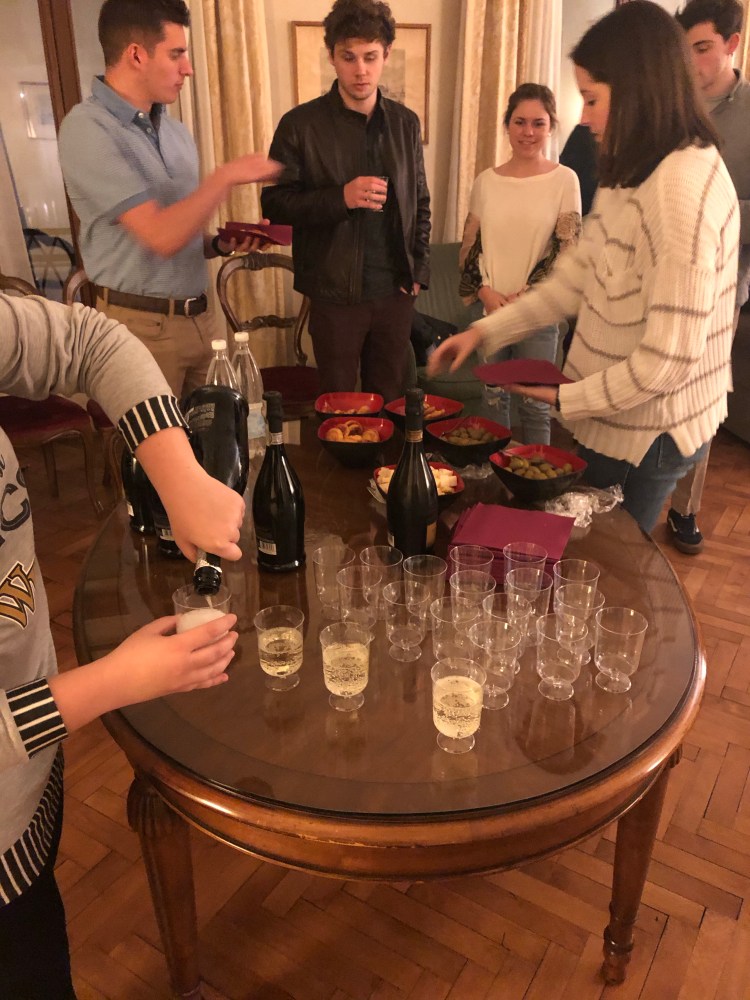
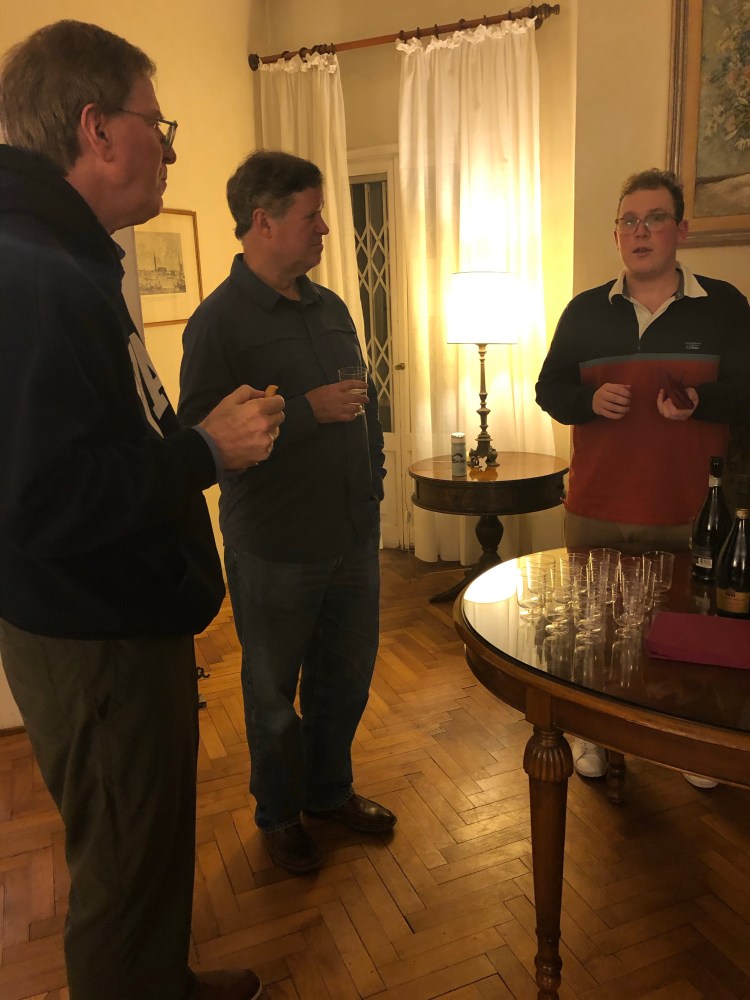
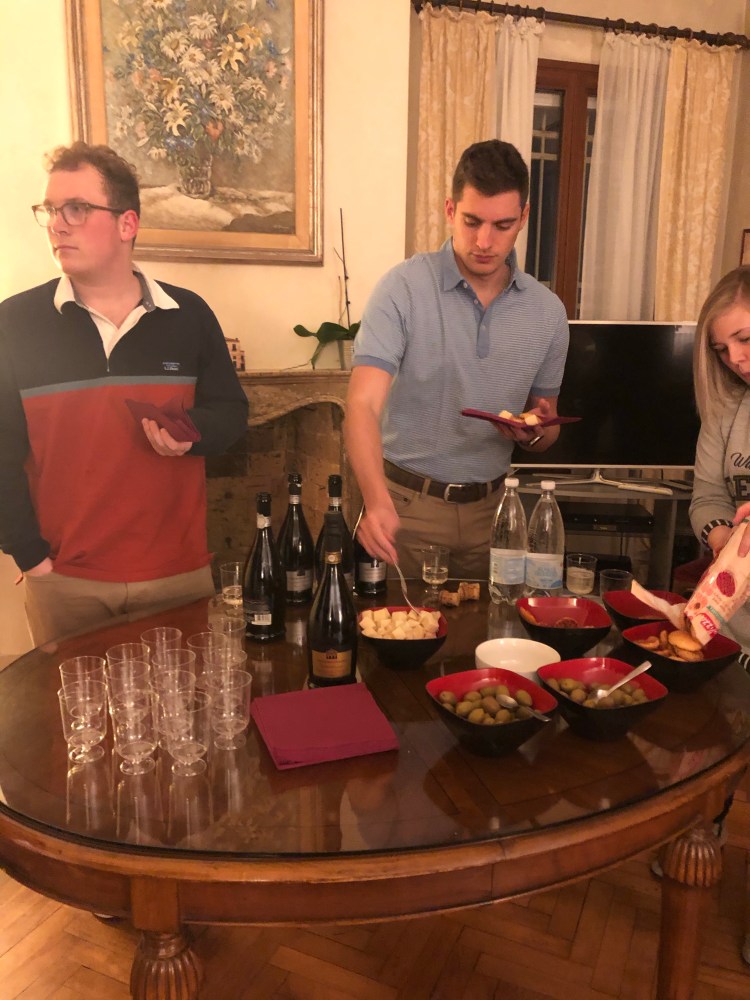
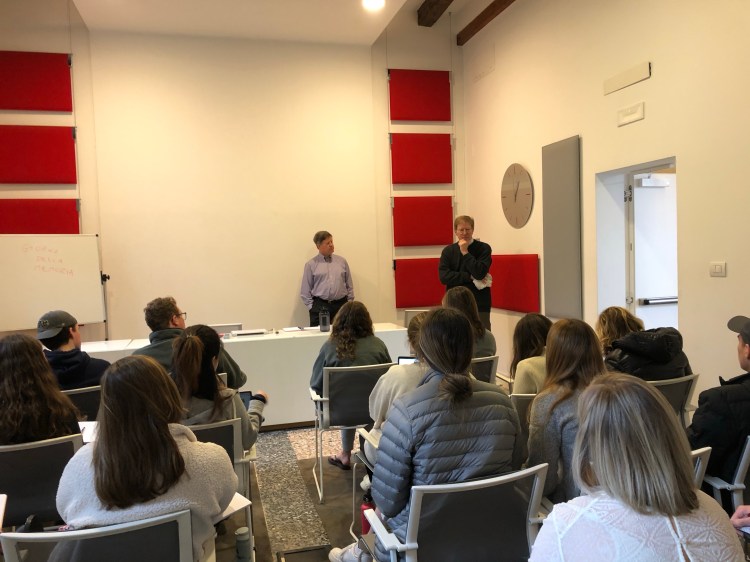
This spring we have arranged for a whole series of meetings with business people and companies for our students. Last week our friend Mike Calder, head of the global division of First American Financial’s title insurance operation, came through here on his way to London from California HQ.

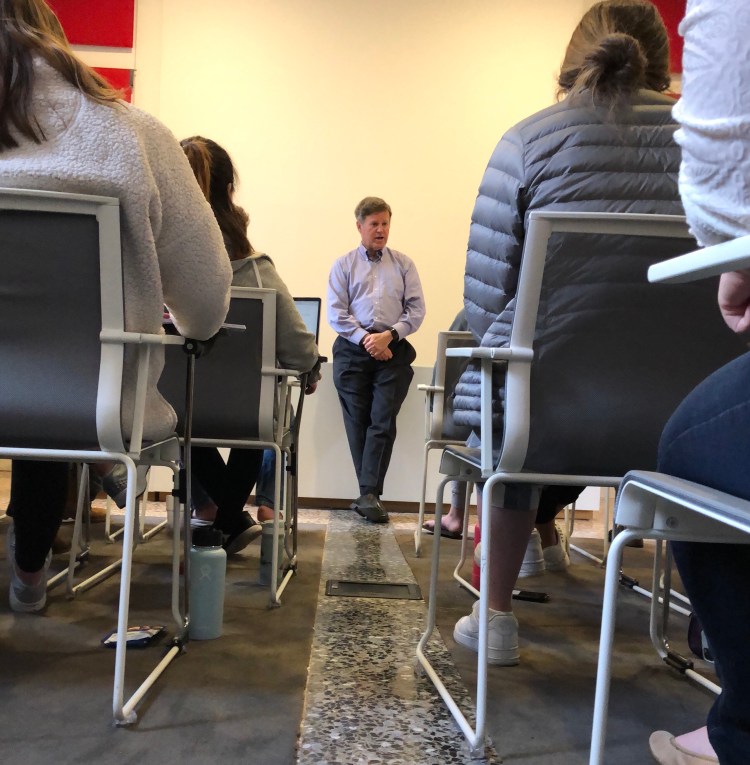
This week we visited Gasparini, one of the world’s premiere manufacturers of metal roll forming machinery and machine tools. It is industrial manufacturing for B2B (business to business) sales and marketing, so it’s a bit out of the comfort range of most 19-20 year olds. But the meetings, talk, and factory tour were super.
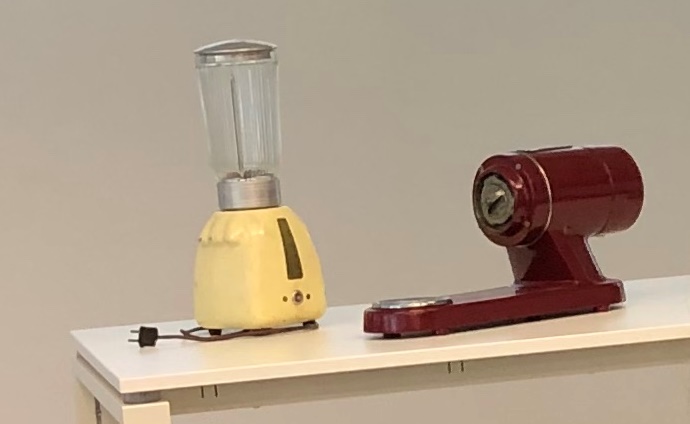
Gasparini is located in Mirano, about 25 km outside Venice. The business started up in 1952 by the two Gasparini brothers, who had previously worked in machine and metal fabrication shops after World War II. They were creative and adventurous, and thought they could run their own business. At first they made small kitchen appliances like blenders and mixers. But then another company came to them and asked them if they could fabricate special pieces of metal that had bends, punched holes, and cuts. They studied the problem, and then decided they could. Shortly thereafter, instead of fabricating the metal pieces themselves, they decided it made more sense to manufacture the machines that fabricate the pieces.
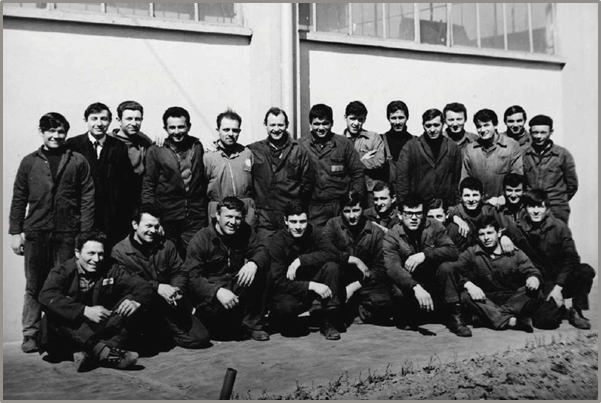
Gasparini S.p.A. in the 1950s

In 2019 Gasparini sold about 40 million euros of such machines. They are one of five companies around the world that specialize in custom-made metal rolling machines for the special needs of their customers. They can uniquely bring together engineering, design, software, manufacturing, and local suppliers to solve any design issue presented by their customers. Their customers include Mercedes Benz and other automotive companies, as well as major power generation and construction firms across Europe and Asia. The machines they sell cost anywhere from 500k to 6 million euros each.
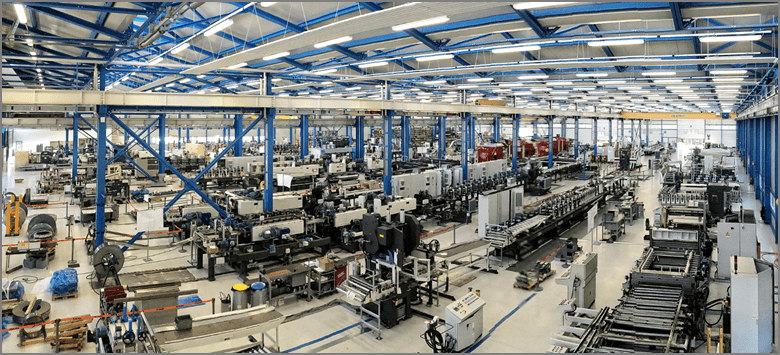
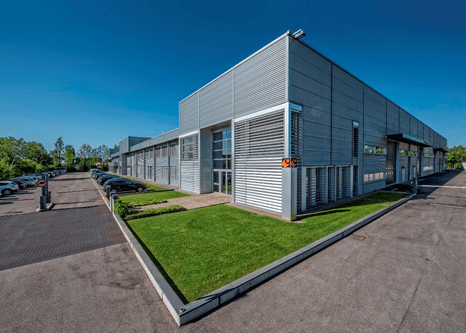
Three years ago they needed to expand, so they built a new facility. They purchased materials from companies who made the materials using roll forming machines that Gasparini had previously sold them. Their new 10k square meter facility is powered with photovoltaics, saving 250 tons of CO2 emission every year.
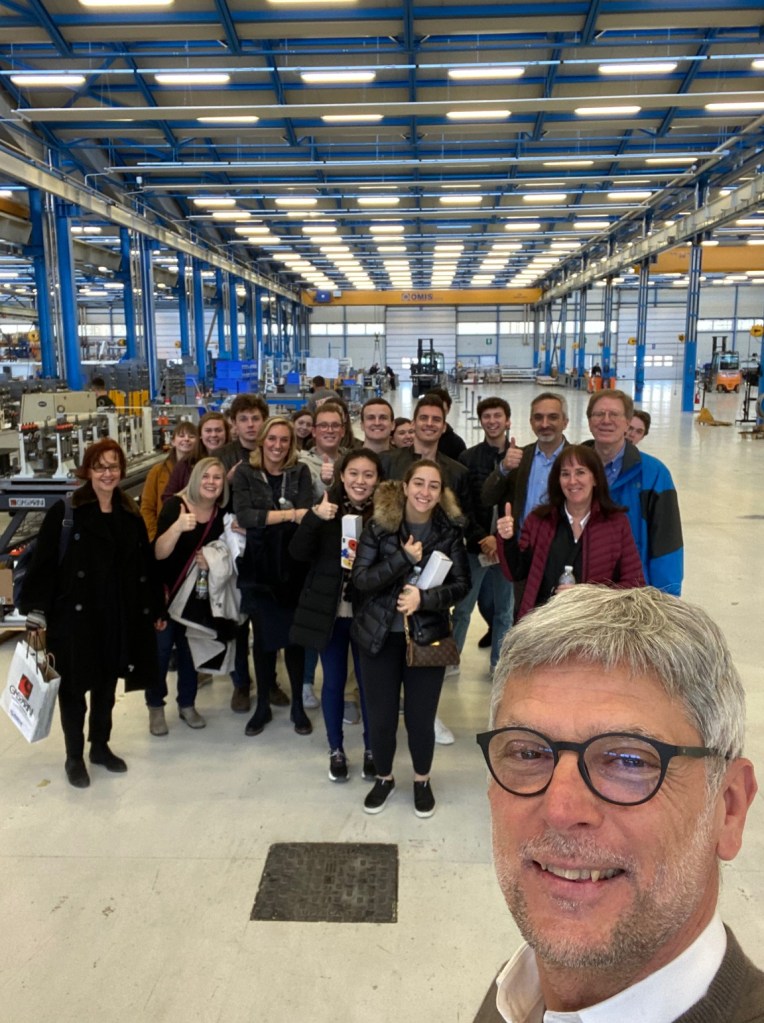
Today Gasparini is run by the two sons of the original founders, Filippo and Francesco Gasparini. After a presentation and Q&A session with Marco Brazzolotto, head of global marketing, Filippo walked around the factory with us. I commented that they were the cleanest factory floors I had ever seen, to which he responded “part of the culture of excellence we seek to create and maintain.”

To see a short video about Gasparini, click on this Youtube link:
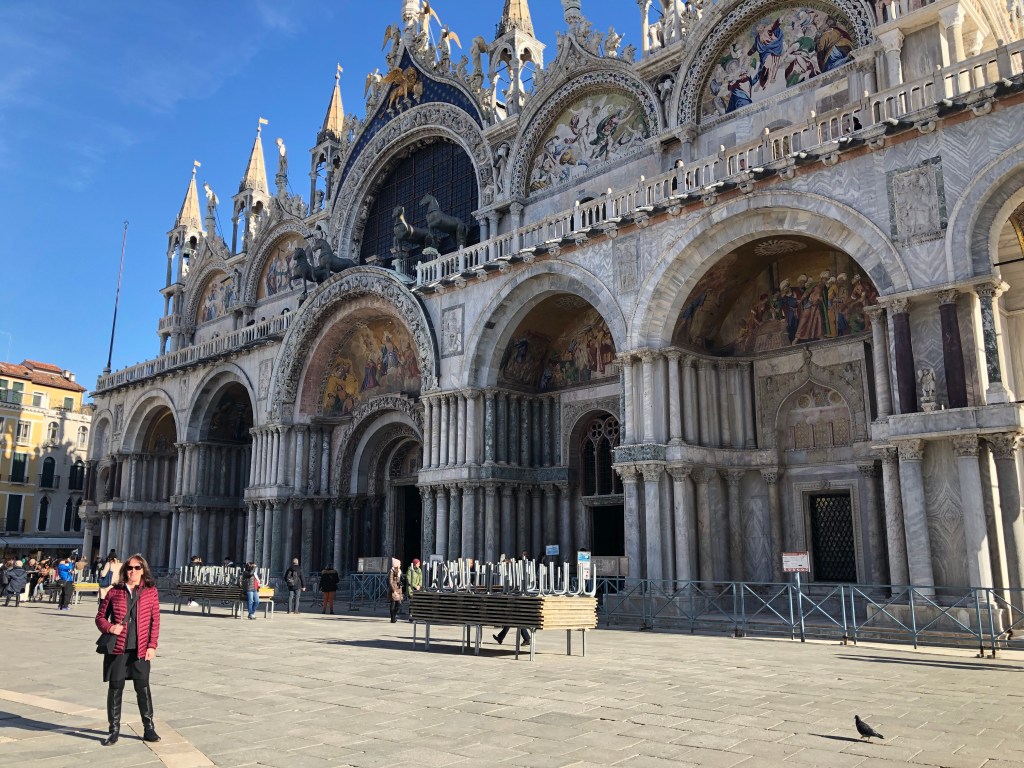
St. Mark’s Bascilica

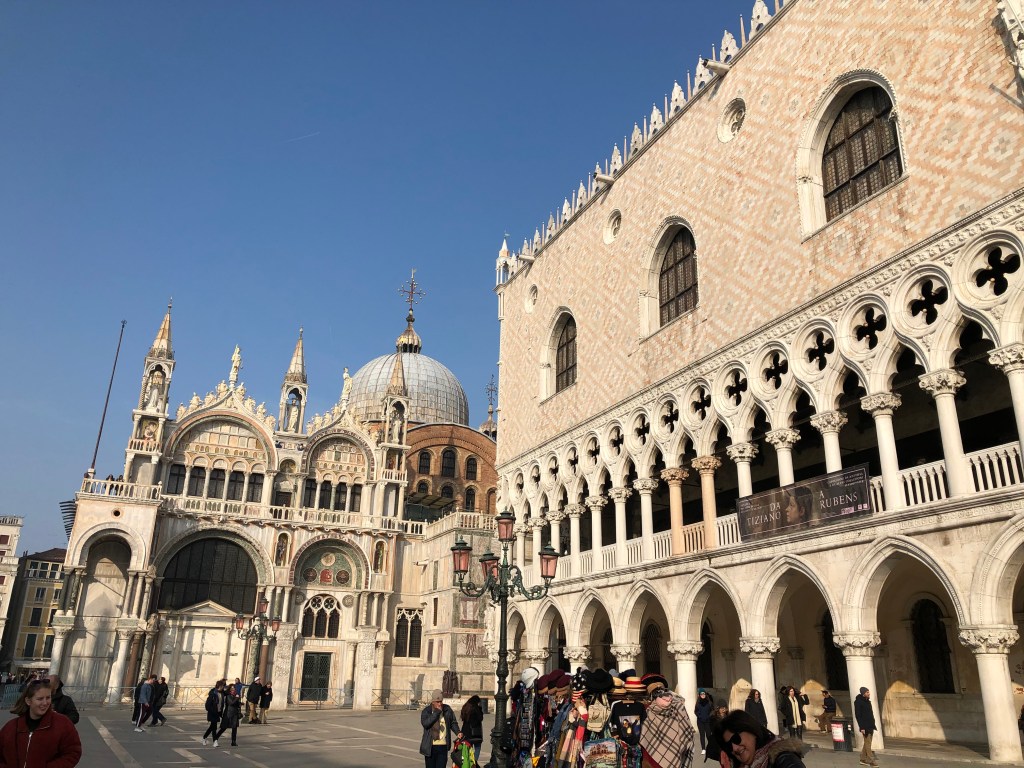
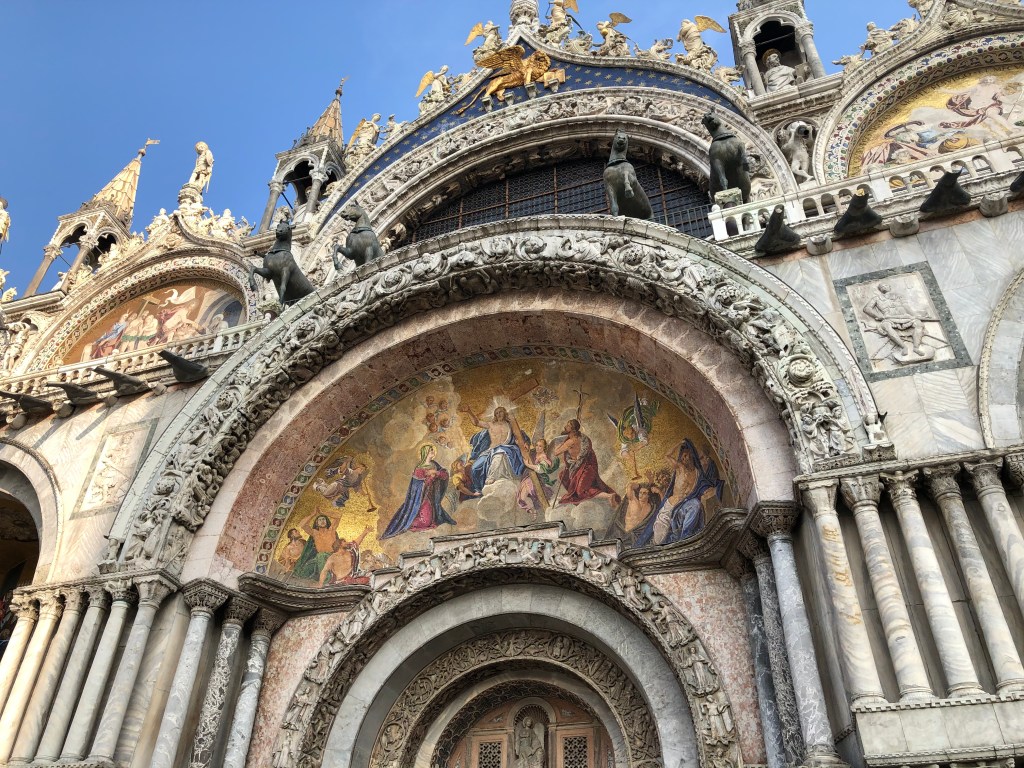
There is a reason for the timing of our class tours.  I probably would have stormed inside this church on first sight, but I knew the guided tour with our instructor would be worth waiting for.  Of course, we had to read about the Fourth Crusade first!  It made this visit that much more meaningful.

Entering is free and we have no crowds this time of year.  It was the crowds that kept us away our previous two visits to Venice.  First impression:  dark and dirty.  Yikes!  I said it!  Where are those restoration people when you really need them?  I am guessing they are down in the under level which is closed for that purpose considering what the flooding in November did as we saw in the 60 Minutes segment last month.  Anyway, back in the classroom, we were each given a book on the mosaics that I failed to read first.  Our guide was so good that I believe I got more from her anyway.  The mosaics, various colored marble, Byzantine icons, the nave, five domes, and St. Mark’s symbol, the winged lion, are all inspiring. 
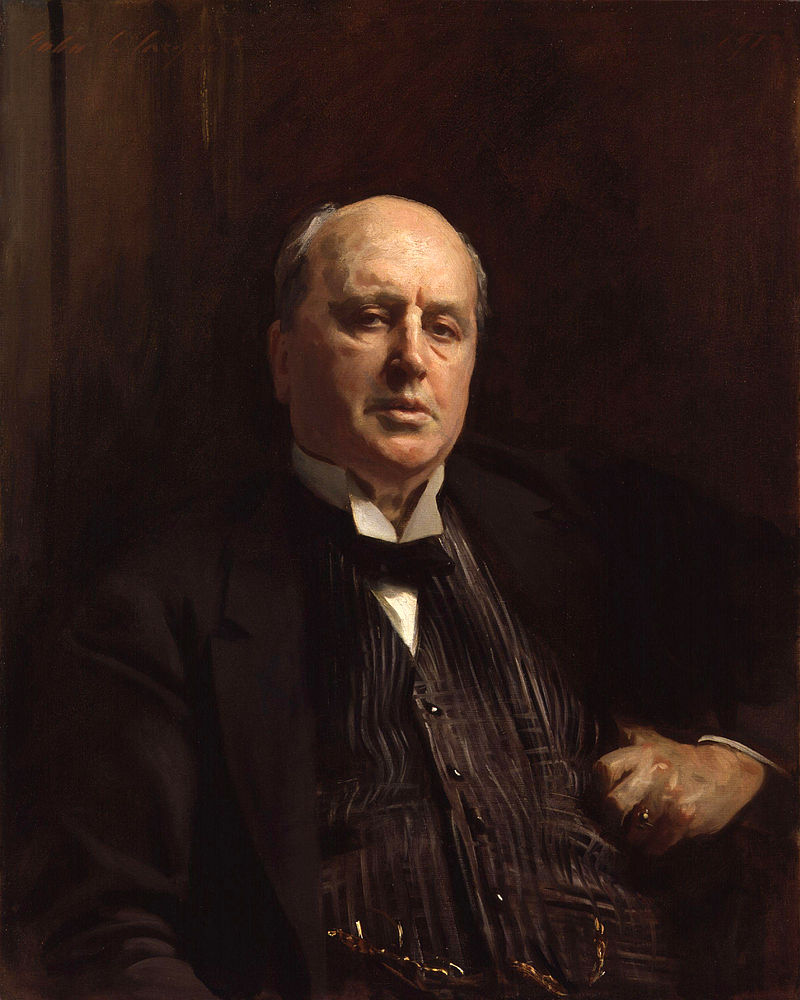
However….

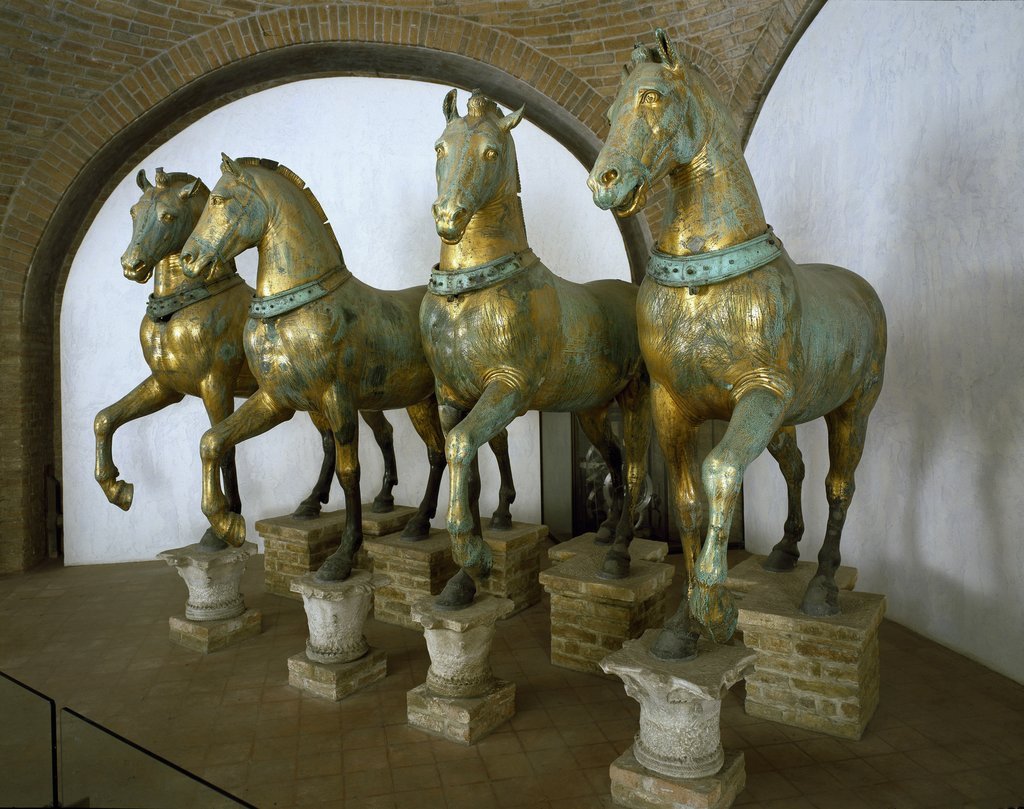
Picture found on the internet – no pictures allowed inside the bascilica!

It was the “extra” rooms and places inside the basilica (that cost a fee) that were really interesting!  The upper museum had fascinating views and artifacts.

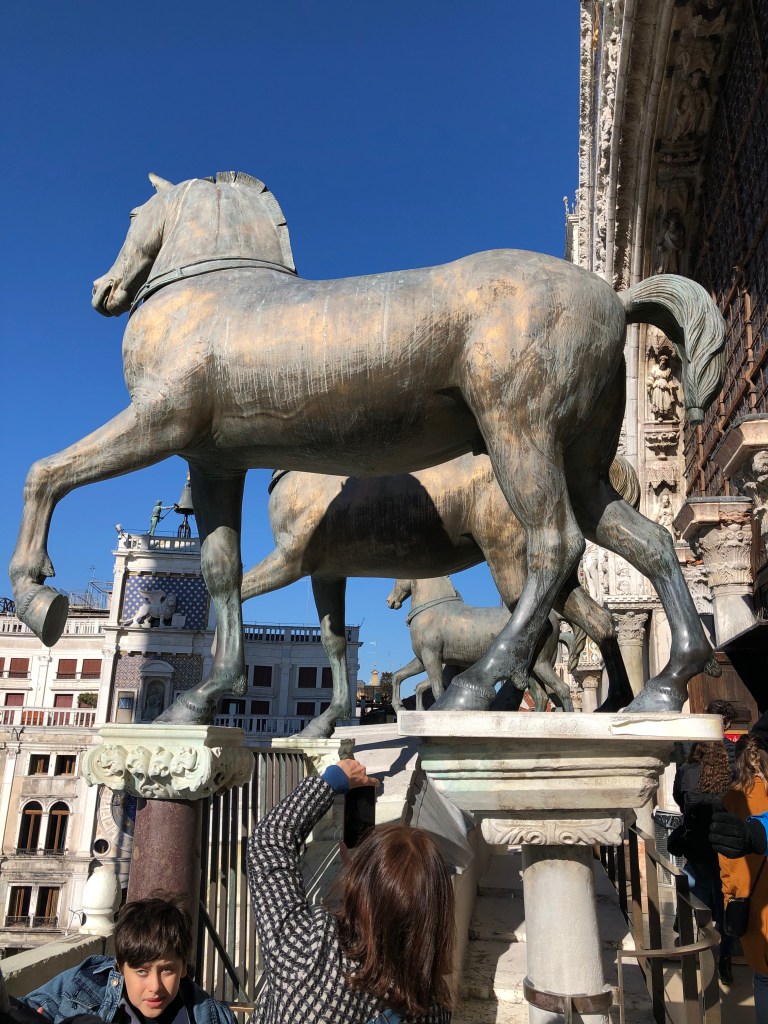
Because the Fourth Crusade (1202 – 1204 ) ended up in Constantinople instead of Jerusalem in the Holy Land, the Venetians took care of their own business and sacked the Byzantine capital and left it wide open for plunder.  Most of those riches ended up in Venice including the four bronze horses.  Acid rain has caused these horses to begin deteriorating so they are now housed upstairs inside the basilica in this museum and those outside are replicas put there in the early 1980s.  What I found interesting:  In 1797, Napoleon had the horses forcibly removed from the basilica and carried off to Paris.  In 1815 the horses were returned to Venice. What goes around comes around, right?
Again, picture found on the internet!

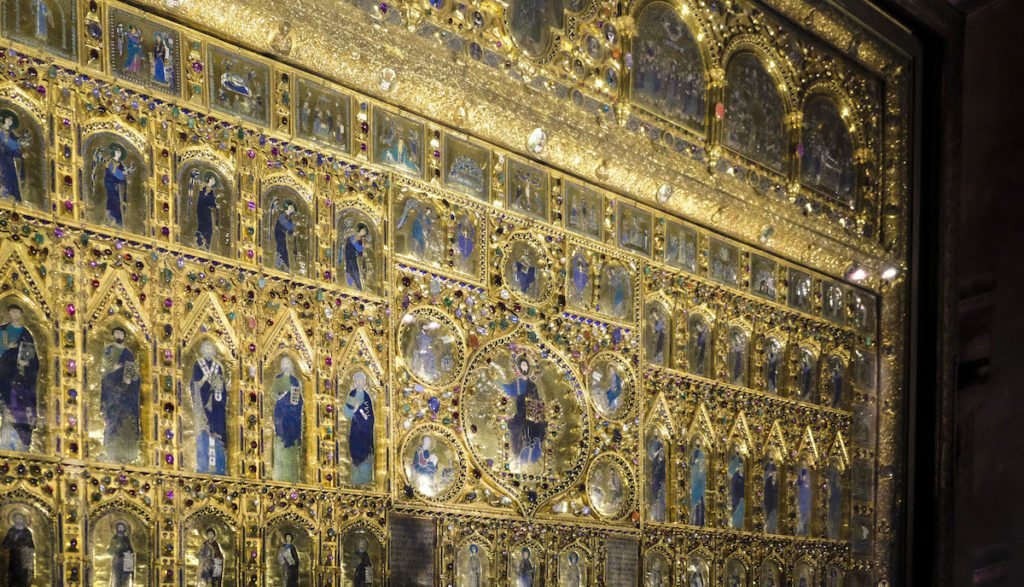
We spent a bit of time with the Golden Alterpiece (Pala d’Oro) which faces backward behind the main alter.  It faces forward during services, but this setup is good for charging a fee to go back there to see.  Good strategy! It is about 10’ x 7’ and framed made of gold and silver, enamel plaques, and 1,927 gems. These gems include pearls, garnets, emeralds, sapphires, amethysts, rubies, and others.  Over 1,000 years old, it was already ancient when taken from Constantinople. 

So much to absorb!

Family Dinners

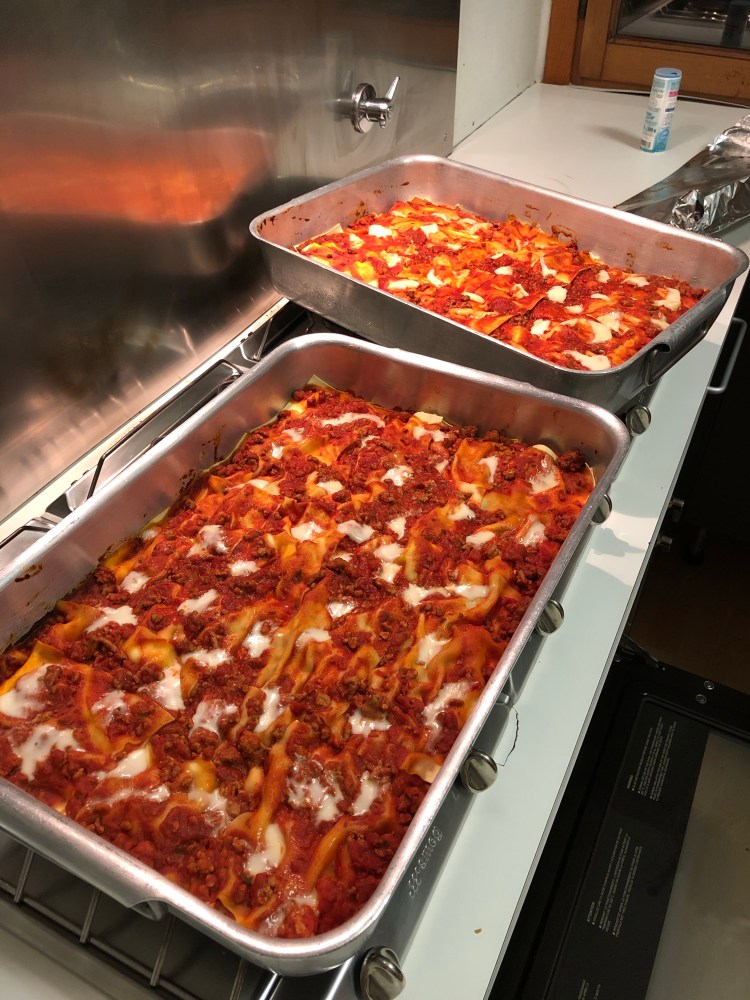
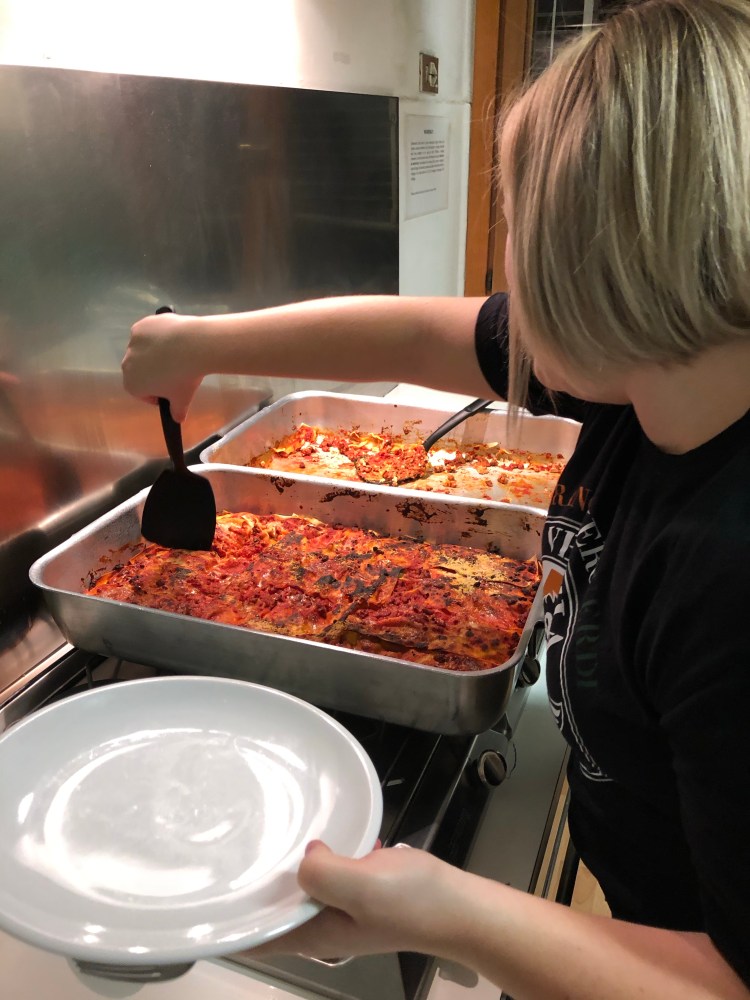
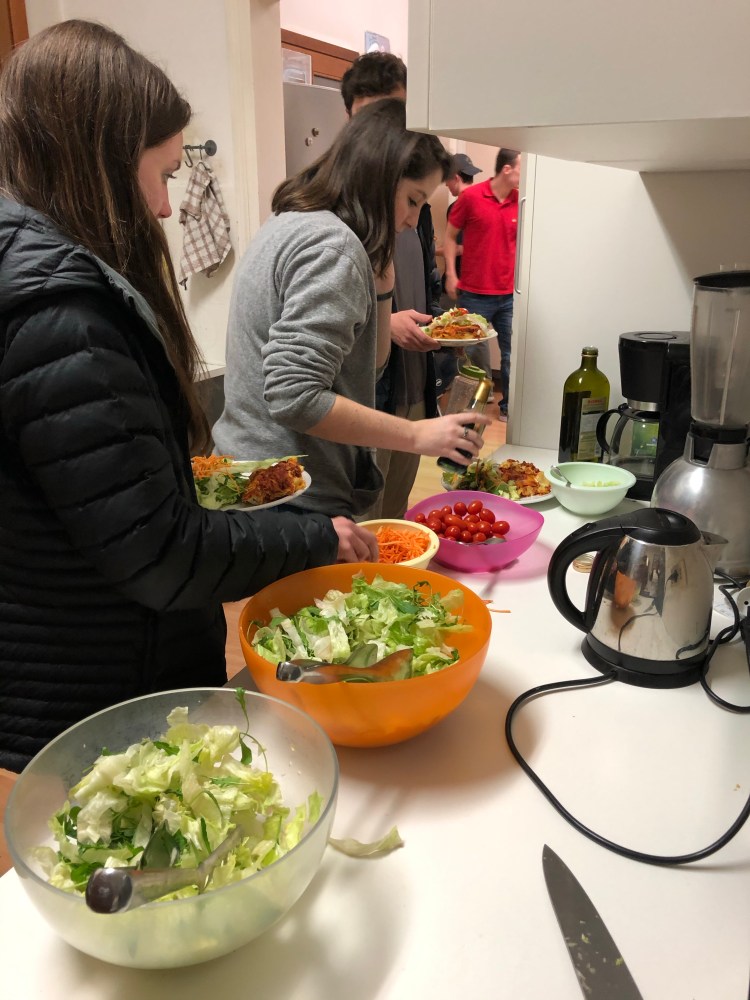
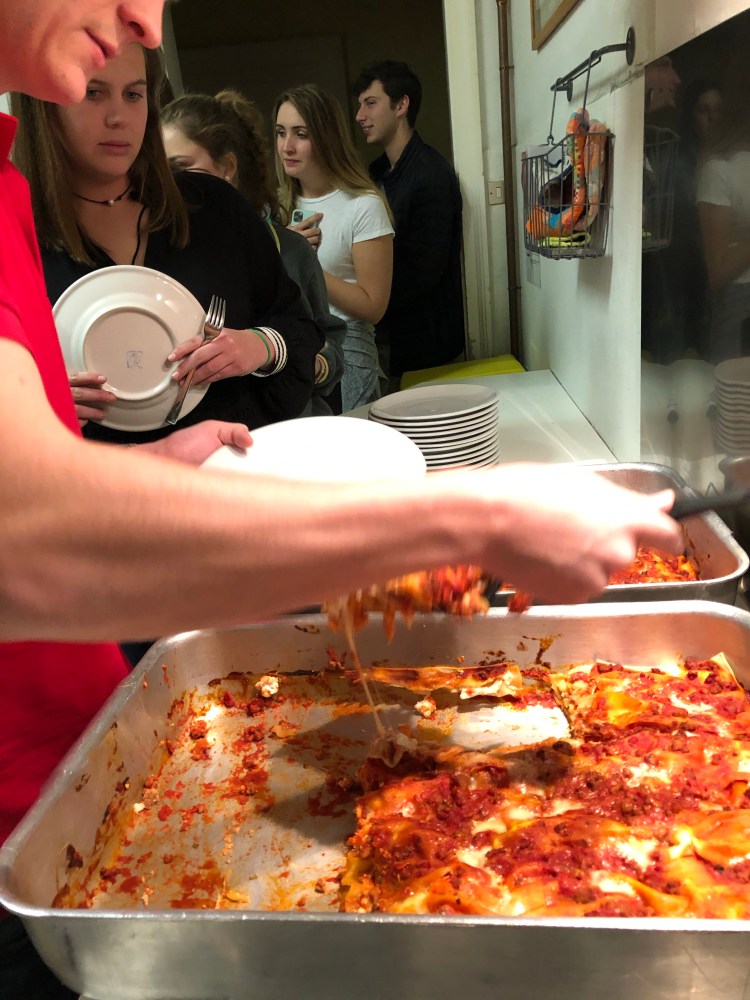
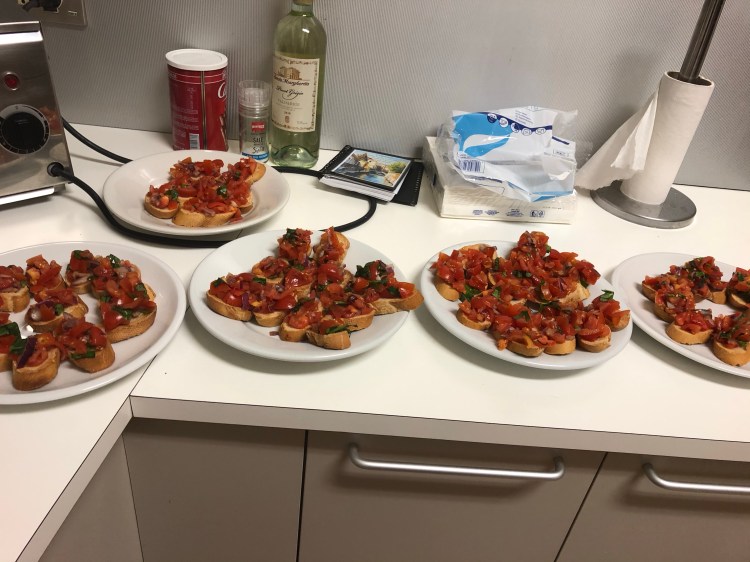
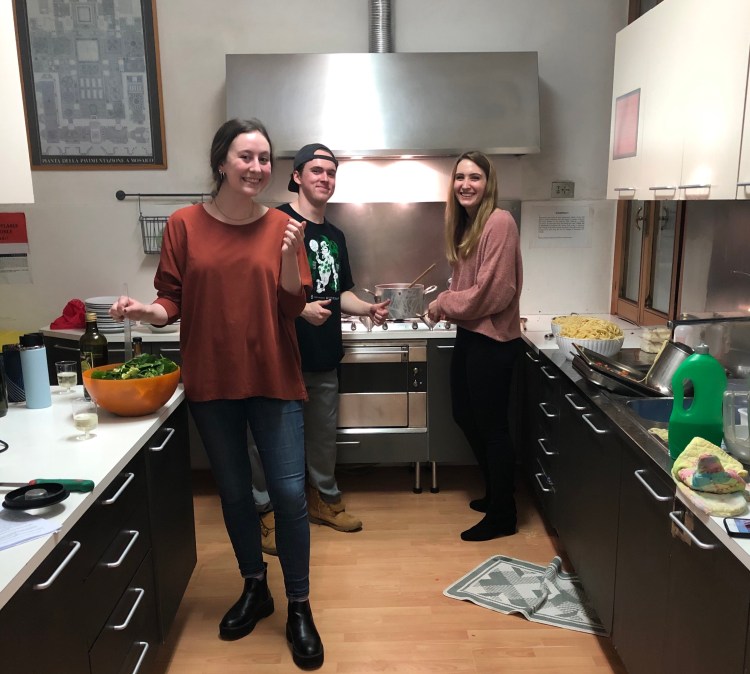
Family Dinners – every Wednesday night!  Groups of three prepare dinner for the entire house and we dine together.  Two weeks ago Joy helped me make lasagna and a salad while Page supplied the wine.  Last Wednesday night three students served bruschette, spaghetti, and salad after a little reception for our invited weekend guest and speaker, Mike Calder.  This Wednesday is the night before Spring Break #1 begins so Cheti, our housekeeper, was scheduled to do a cooking class, but that got postponed due to a midnight Super Bowl party and classes getting cancelled Monday morning!  Wednesdays are also our Weekly Meetings at 4:00.  Joy, Roberta, and Page bring up any issues that need addressing like lights left on overnight, front door left open, change of schedule, etc.  The routine around here is starting to run smoothly.

Cappuccino

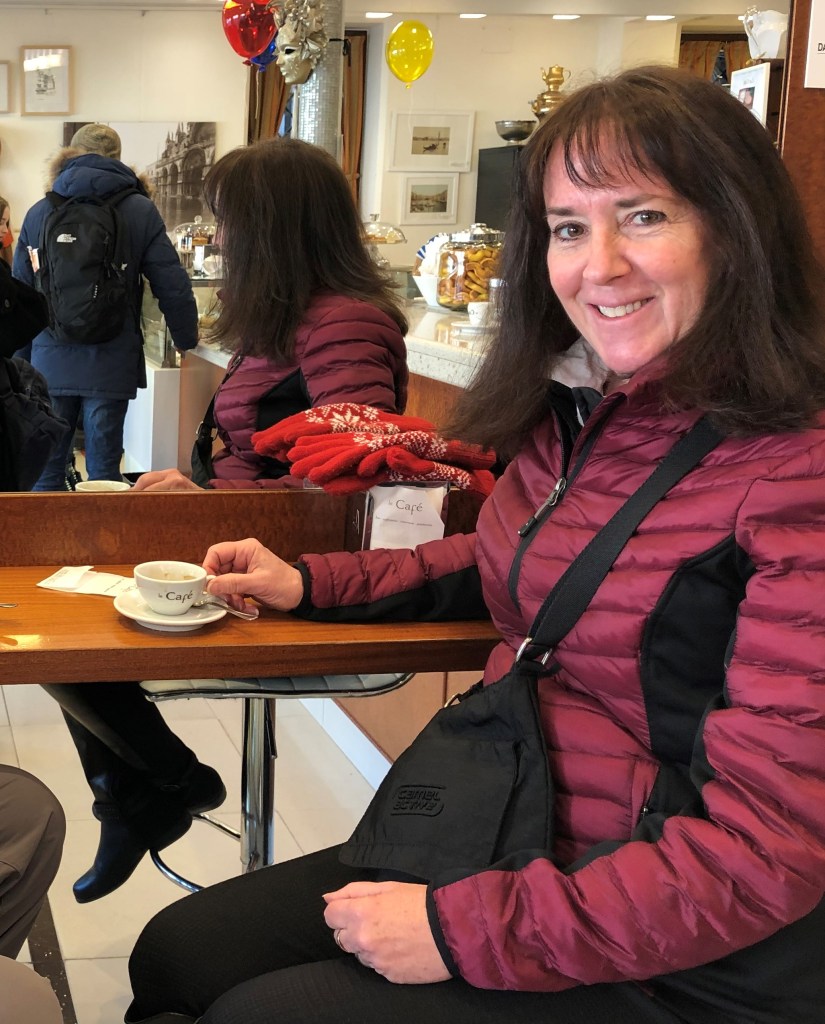
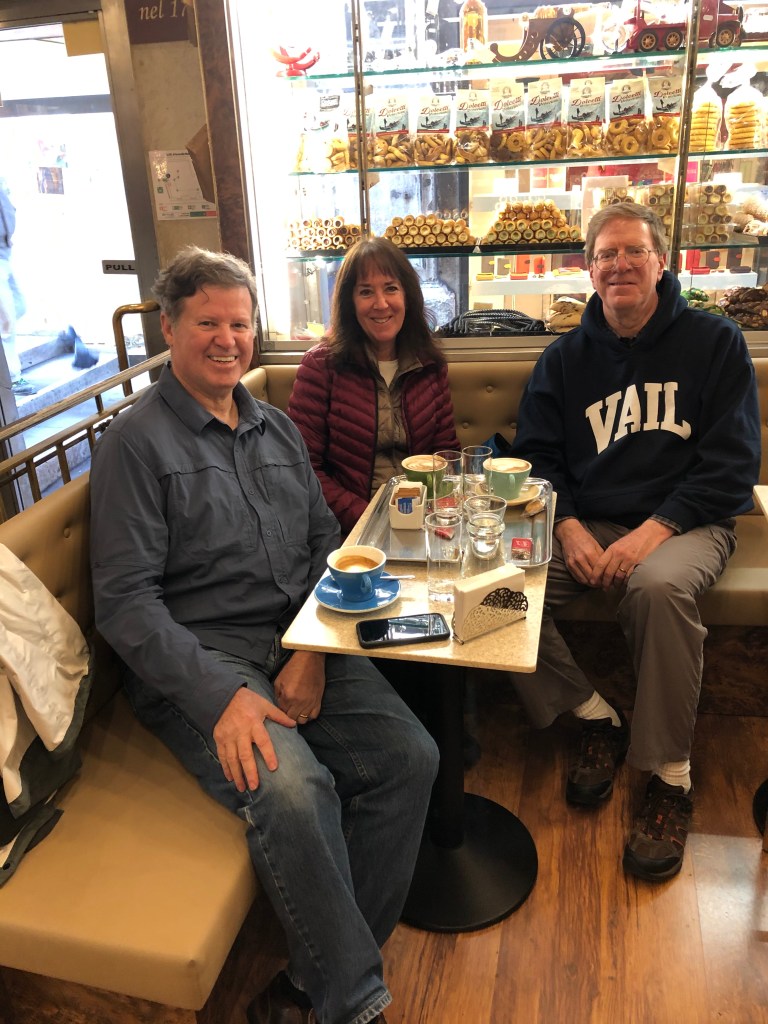
Cafés around Venice are a bit different than I have seen before.  The idea is to go in, order a cappuccino (comes in a tiny china tea cup and saucer), stand near a coffee bar (or sit depending on the crowd), then pay as you leave.  The cup is so tiny that you are done is just 2-3 gulps.  Then you do it all over again in another café about an hour later.  We learned this by hanging with some Italians while out and about.

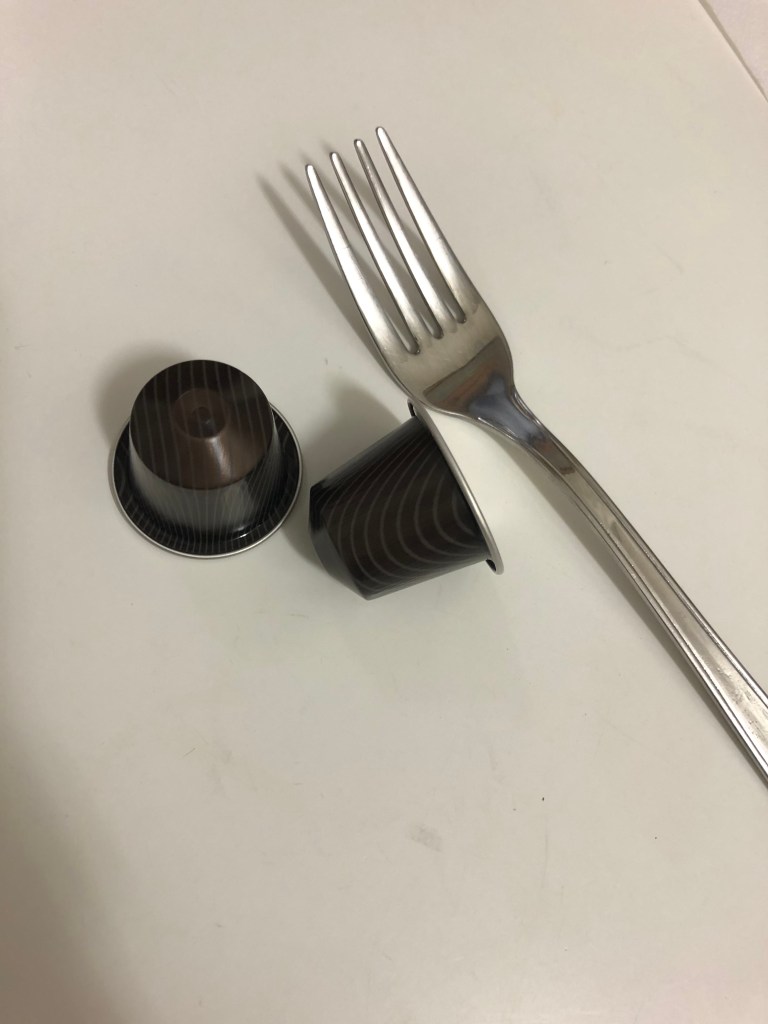
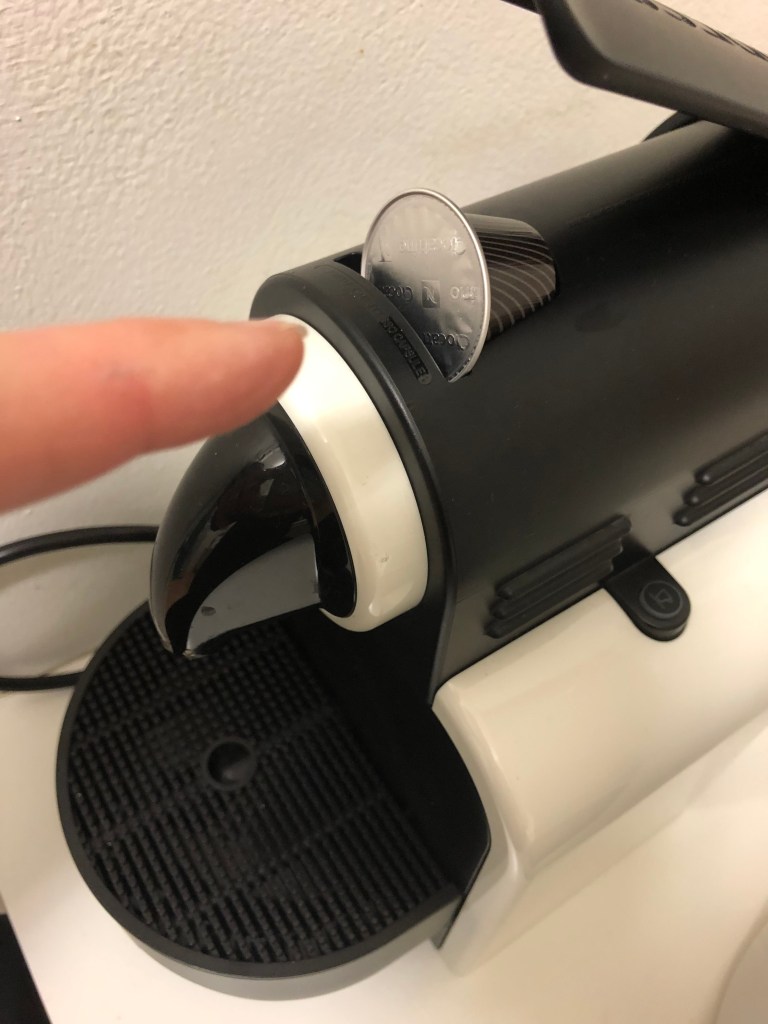
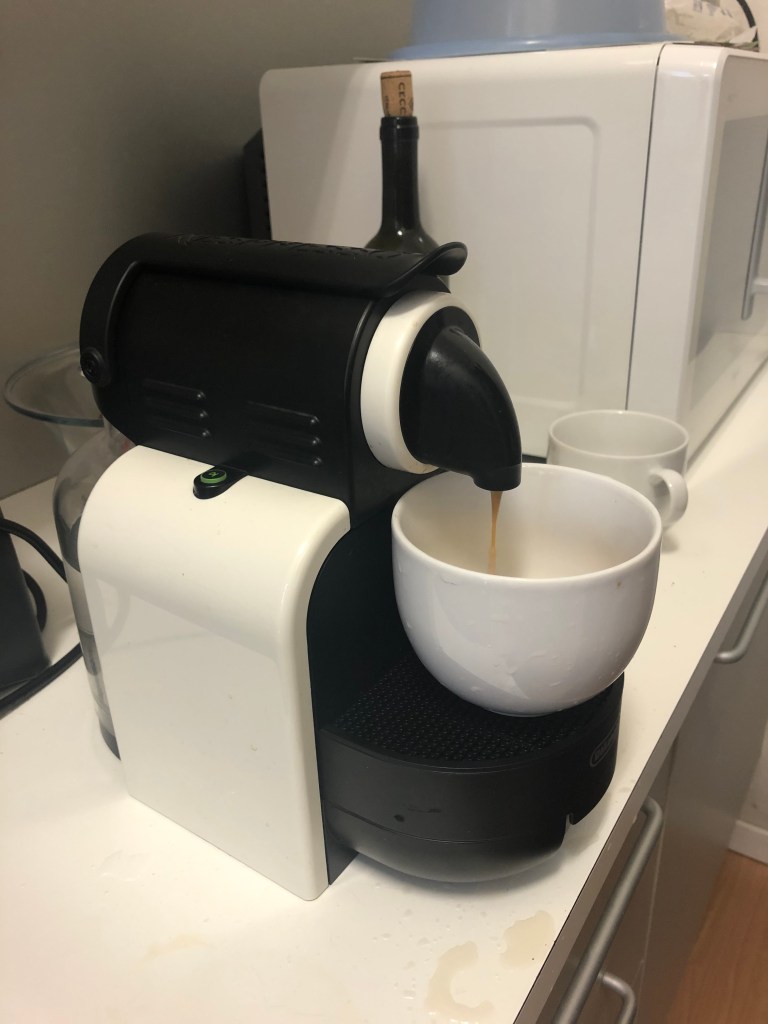
Besides the typical coffee maker, we have a “Nespresso My Machine” in our faculty apartment.  It has capsules the size of thimbles to insert (much like the Keurig single serve coffee makers we have at our homes in the US).  Only one problem!  We can only find one place in Venice by the Rialto Bridge that sells the little capsules (a pouch of 25 for 9 euros).  Glad we loaded up last weekend!

I am sipping on an ice coffee as I write this post.  Horrors!

If you want to freak someone out over here, tell them you would like some ice!  Ice dilutes a drink and why would you want to do that?  Drinks should be room temperature, they say.  It is better for digestion.  Of course, we have always known that ice is not served in European drinks.  That’s why it was a big shock when we went to London’s Worrell House for the second time a saw that the students had been able to get an ice machine, as in the kind American restaurants have in their kitchens!  Well, whatever!  Page and I found a couple rubber ice cube trays that are so hard to use that we usually go without ice.

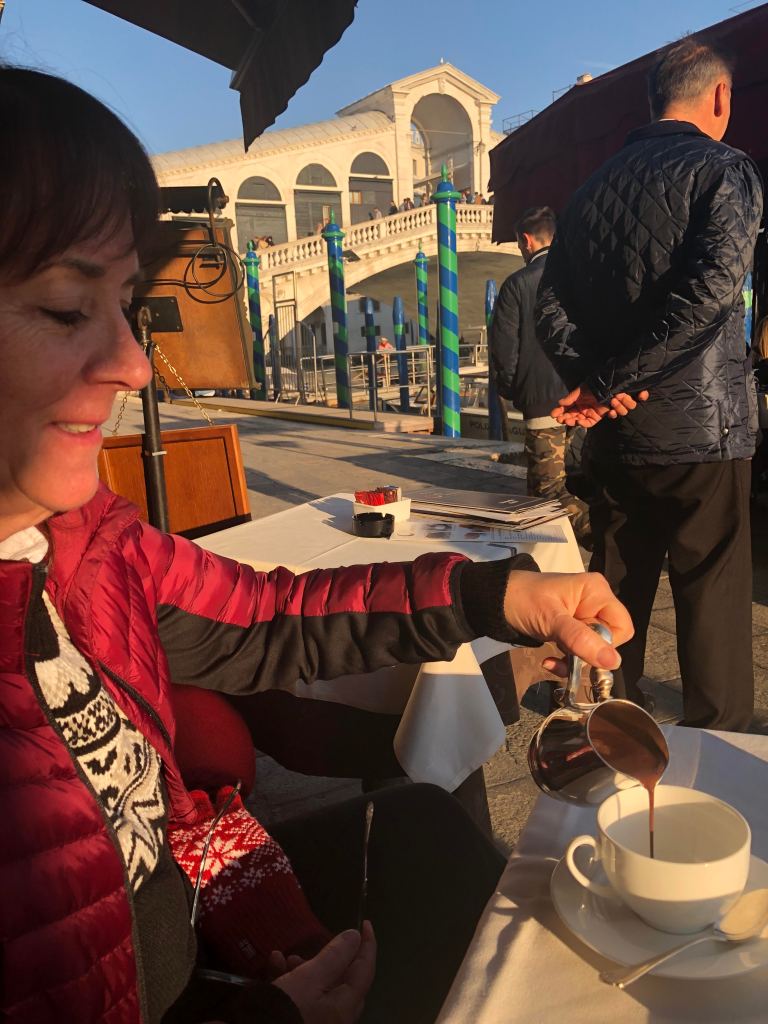
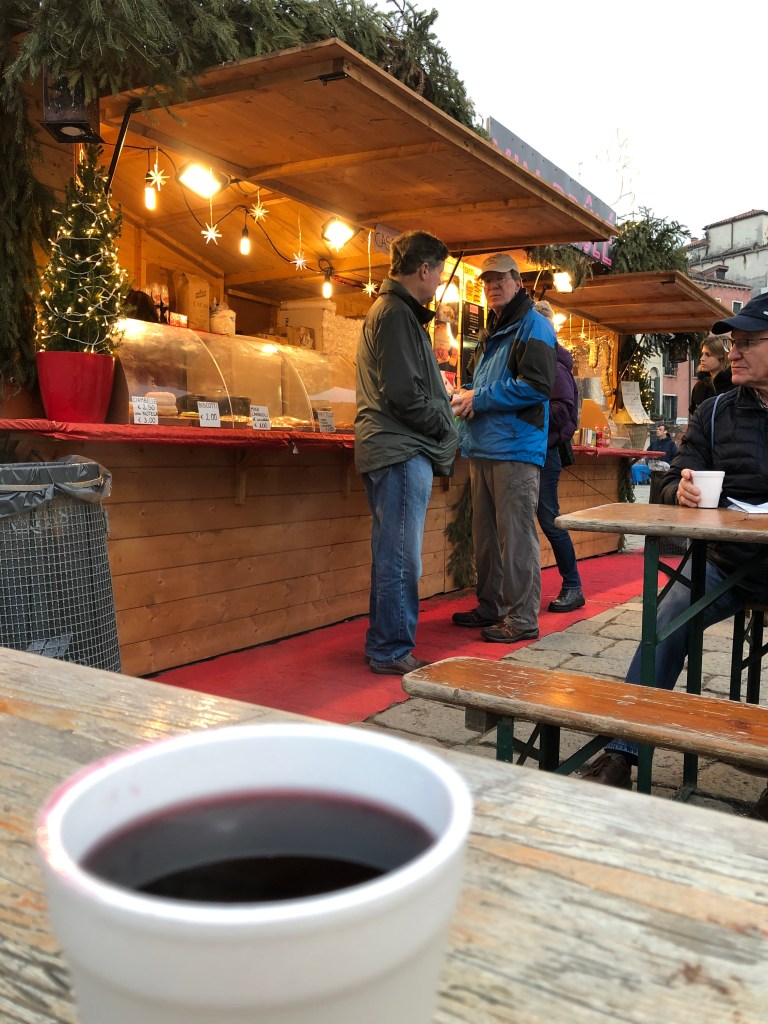
And if you are cold and want a hot chocolate, don’t.  This is a picture of me pouring chocolate “syrup” into a cup.  Too rich!  And because I was next to the Rialto Bridge, it cost 6 euros!

Calderiffic!

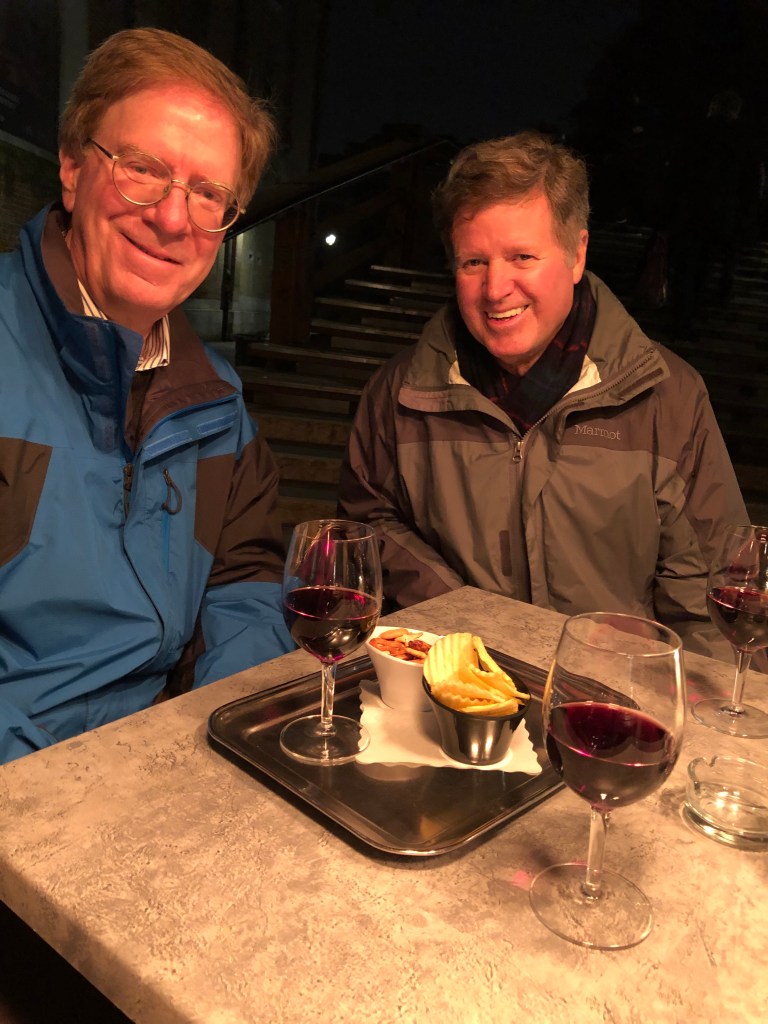
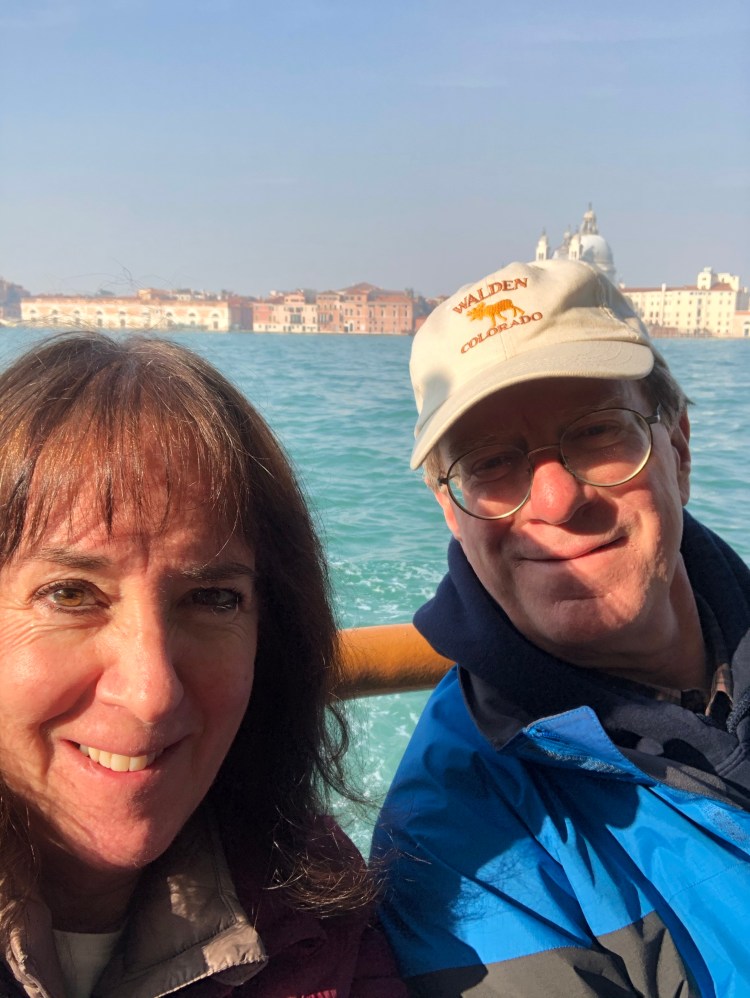
Michael Calder was on his way to London for business, from California where he lives, and decided to visit us this past week.  He and Page go way back to their days at Hamilton College. They met on the college soccer field in 1971 and joined the same fraternity, Chi Psi. Since Mike grew up in Colorado, they had a lot in common. In fact, he has visited Westy’s cabin many times over the years, and has spent quality time with Mabel while there.

Mike had visited us in London on several occasions when we spent a semester over there and he showed us his office building in the financial district, his favorite Indian restaurant, and several pubs.  This time we showed him Venice (what we know so far!) 

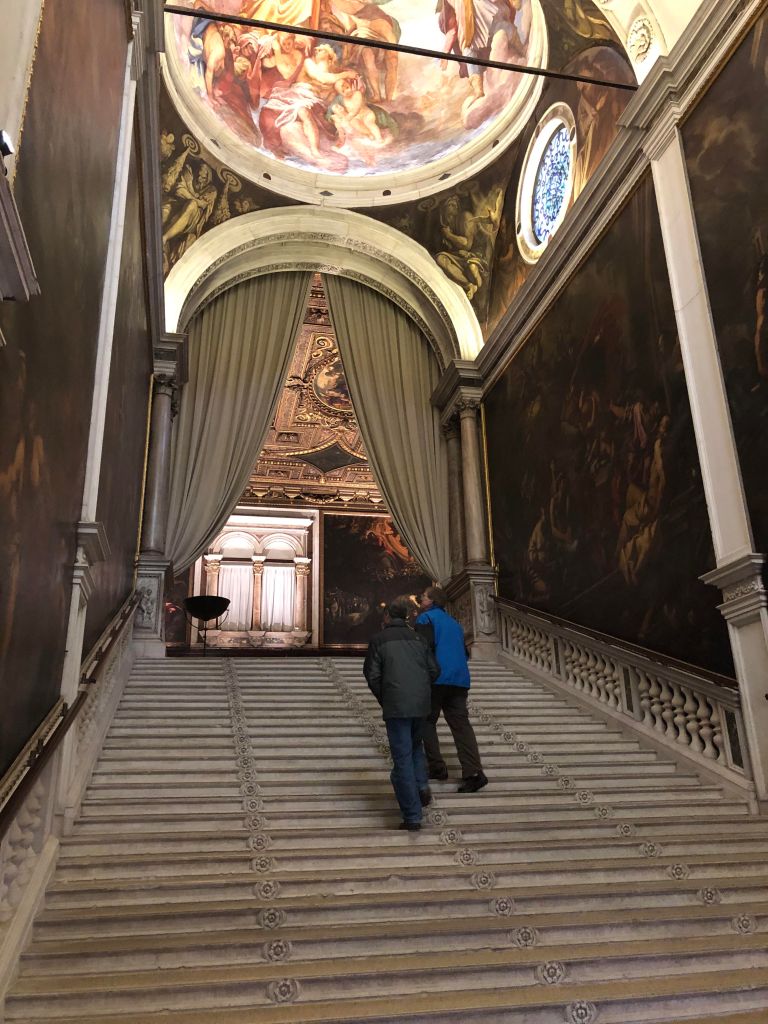
My last two posts show two outings we did together – San Giorgio and Scuola di San Rocca.  Besides discovering more restaurants, wine bars, and coffee cafes, he tagged along with us to find the one and only Nespresso café that actually sells the little capsules for the machine we have in our kitchen! And we walked and explored new Venetian neighborhoods.

After Mike’s lecture on global real estate finance with his company (First American Title Insurance) on Thursday, all the students took off with most going to Berlin.  It made for a quiet weekend and the entire house to ourselves! 

Always nice to connect with old friends!

School of Rock

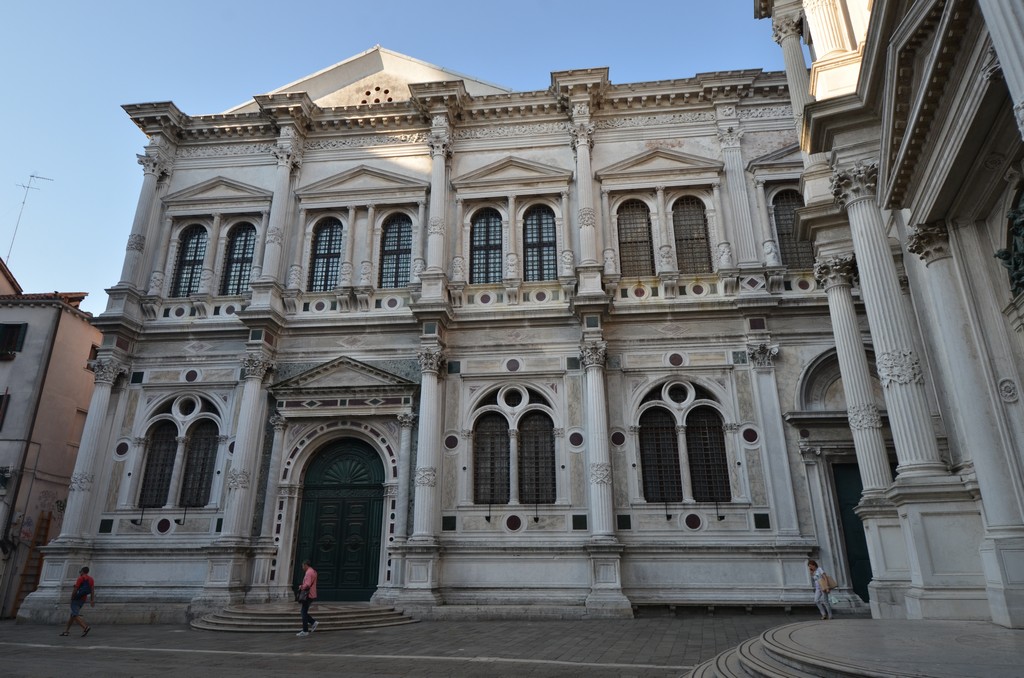
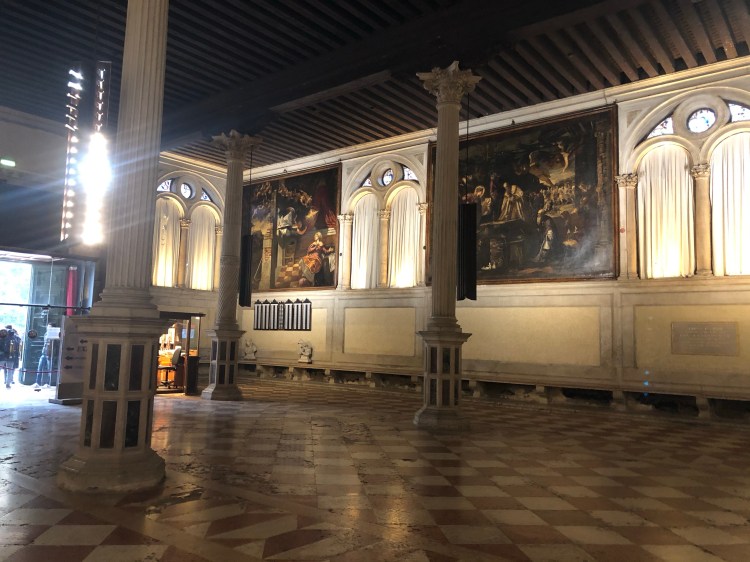
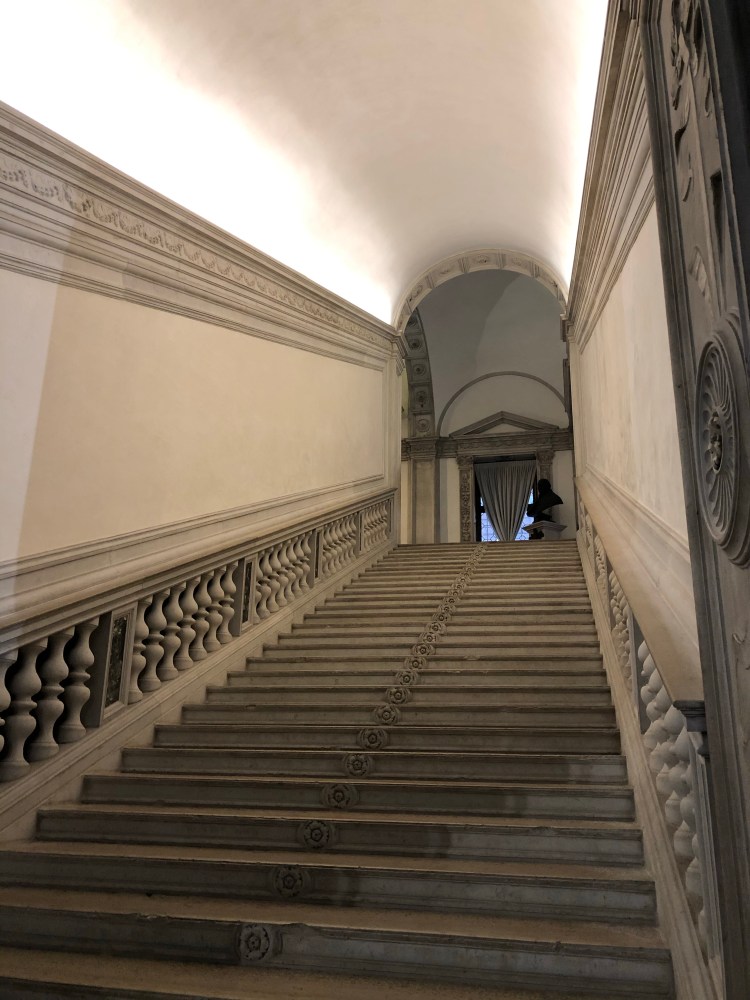
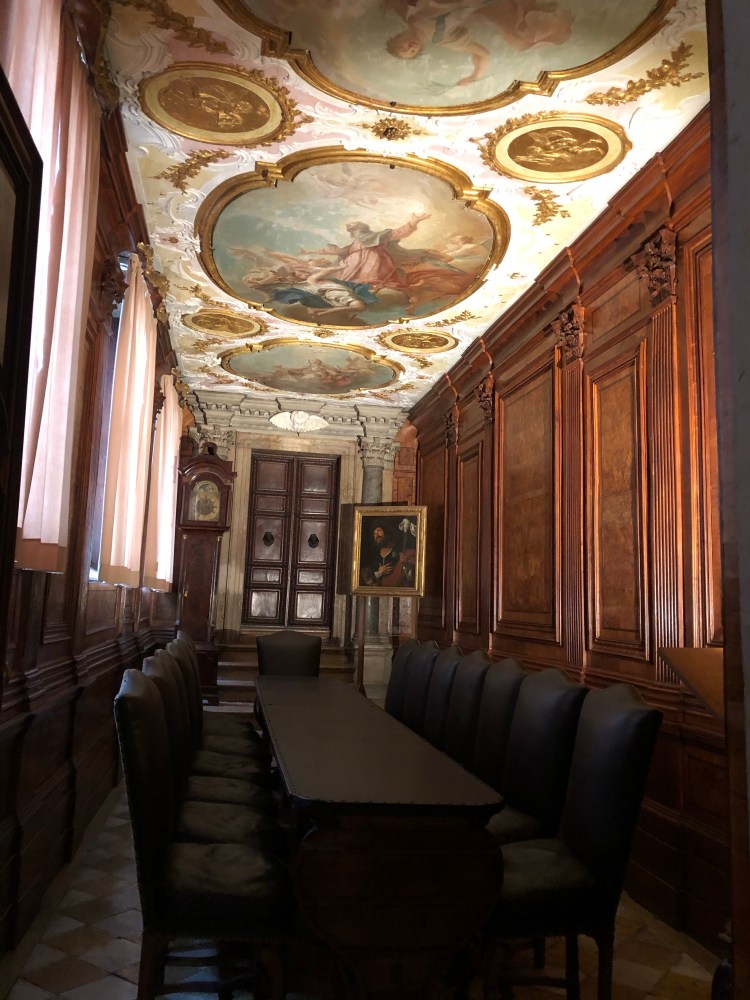
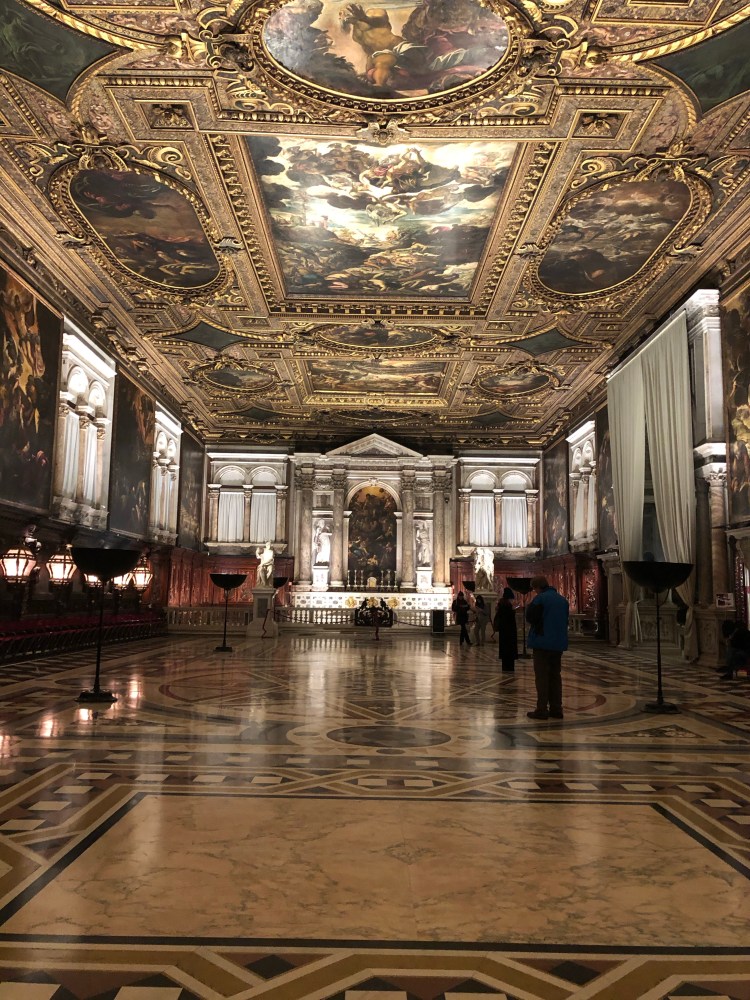
The Scuola Grande di San Rocco is an ornate building in Venice.  It’s a 16th-century art museum featuring works by the dramatic Renaissance artist Jacopo Tintoretto.  “Scuola” means school.  “Schools” in Venice were actually social institutions between the 1400s and 1700s.  The “Schools” were similar to modern trade unions: corporations, associations of people doing the same job.  There were six “Scuole Grandi”, or Great Schools, that were devoted to providing charity or welfare.

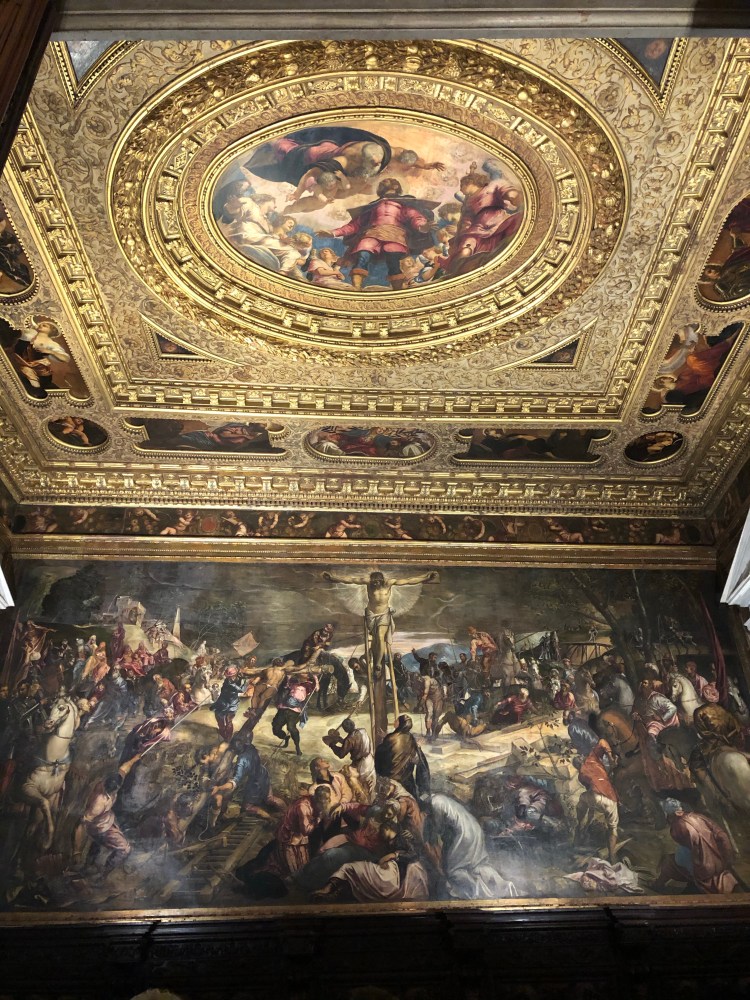
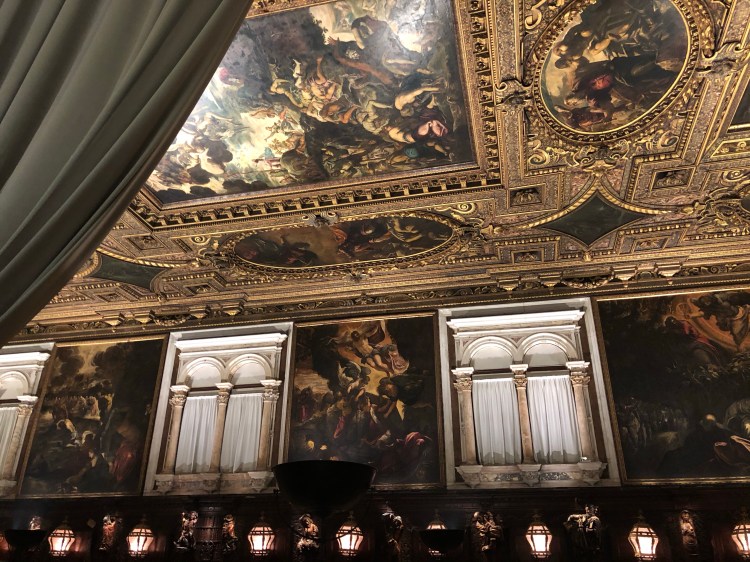
Tintoretto, the painter, worked here in three different periods, distributed over a period of twenty years.  It all began in 1564, when the Grande Scuola di San Rocco launched a contest for the decoration of the reception halls with large canvases dedicated to the Passion of Christ. 

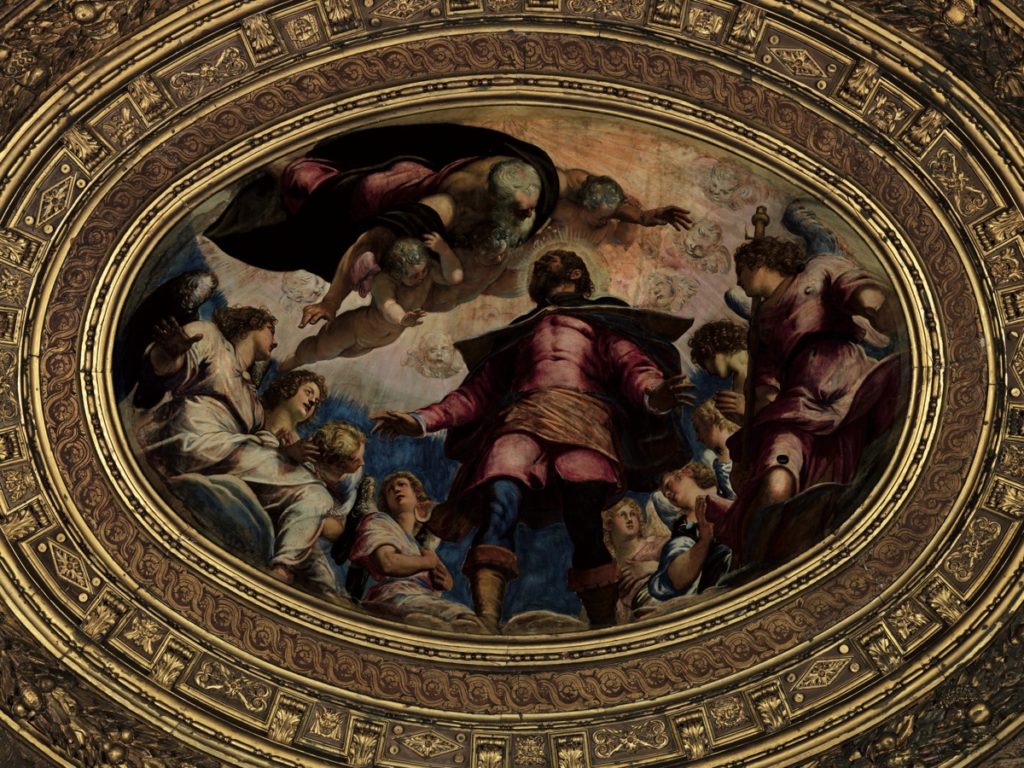
Everyone wanted the commission to paint this building dedicated to St Roch, patron saint of the plague-stricken, so Tintoretto cheated: instead of producing sketches like his rivals, he gifted a splendid ceiling panel of the saint, knowing it couldn’t be refused or matched by other artists. This painting still crowns the Sala dell’Albergo, upstairs, and Tintoretto’s work completely covers the walls and ceilings of all the main halls.

The only reason we thought to go see this art was because the guest speaker in Art History gave a talk on American writer Henry James (1843 – 1916).  His first visit to Venice in 1869 transfixed him and he ended up visiting the Scuola di San Rocco enchanted by Tintoretto’s paintings. 

So here is the catch:

Henry James

Henry James was captivated by Venice for forty years. The city is the setting for some of his more notable shorter fiction, namely The Aspern Papers, and for a substantial section of his novel, The Wings of the Dove. As well as providing inspiration for his fiction, James opens his collection Italian Hours with several essays on Venice. Even though Italian Hours explores almost twenty cities, the section on Venice constitutes about a quarter of the book’s length.  The Aspern Papers (1888) was mentioned so many times in this lecture that I looked for the book in the library here.  Since I am taking a break from my book club back home, I may have to jump into Henry James!

San Giorgio Maggiore

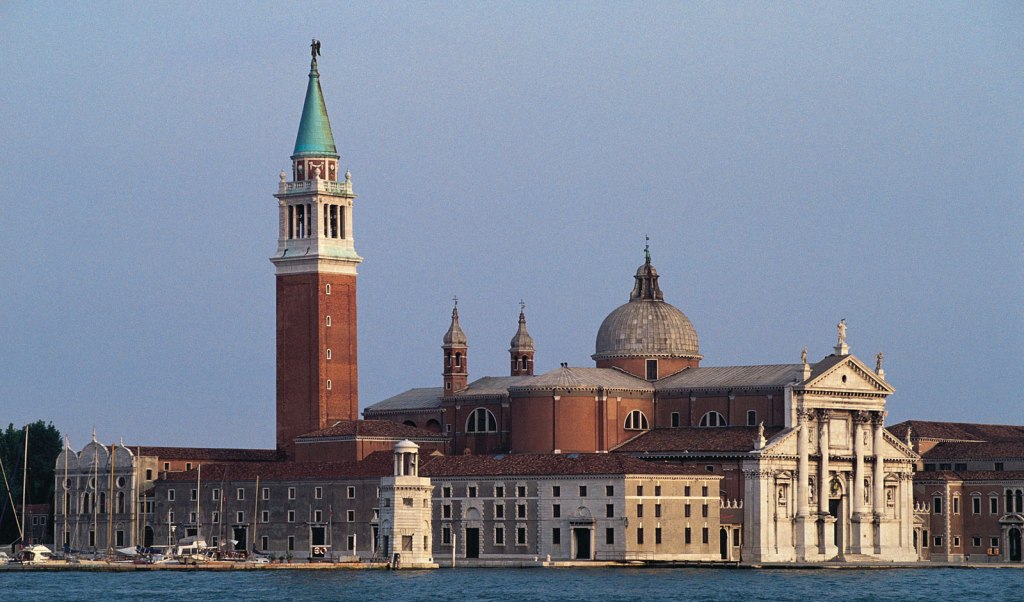
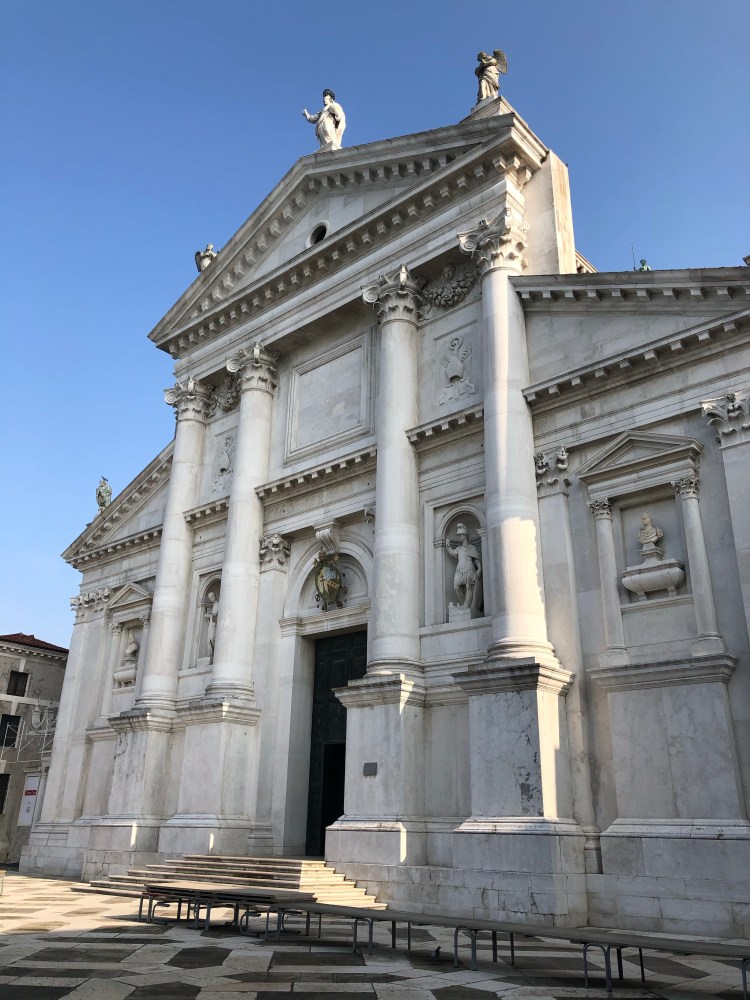
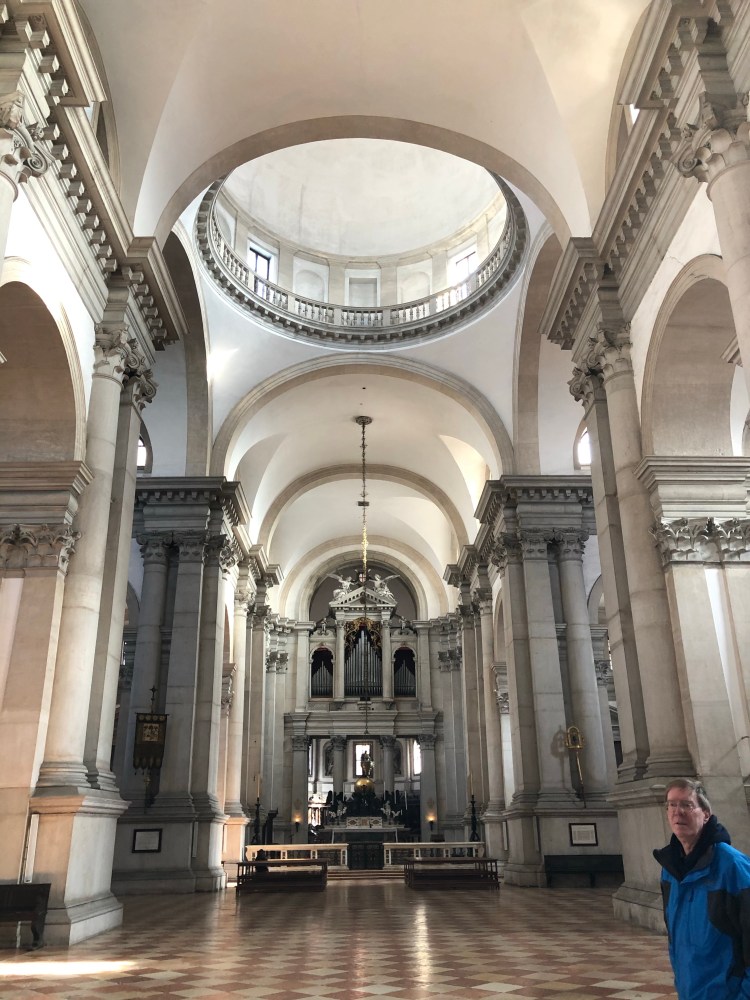
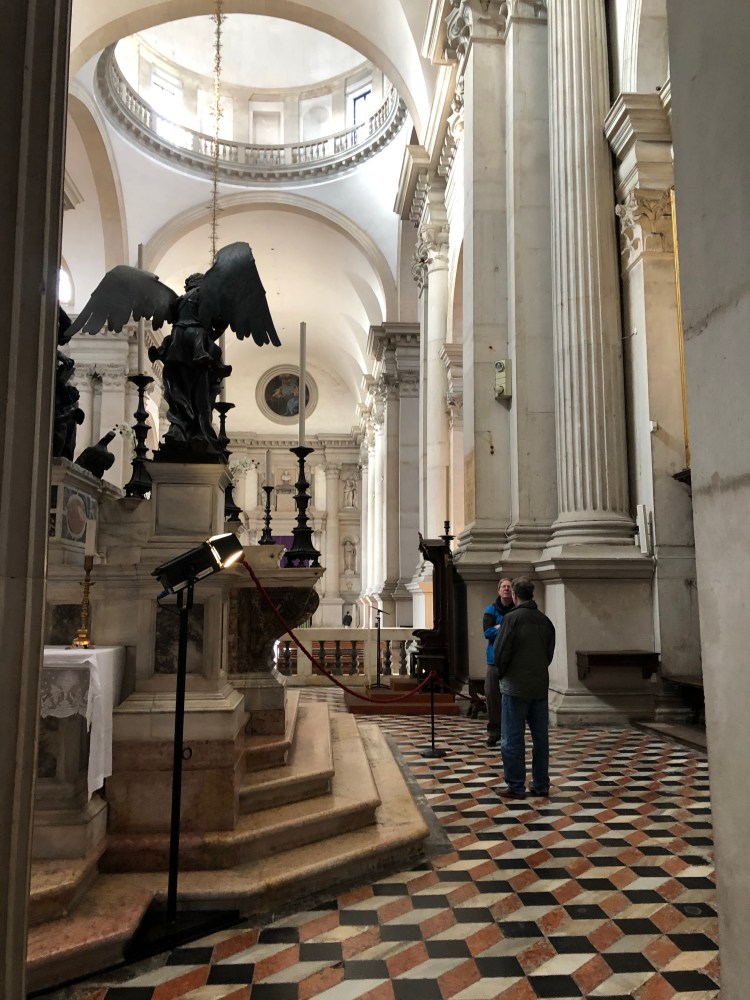
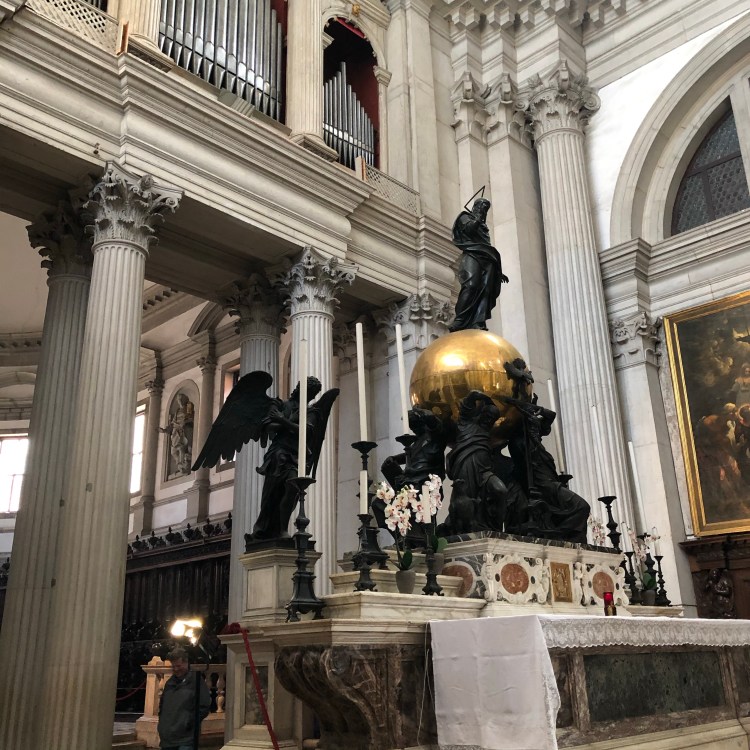
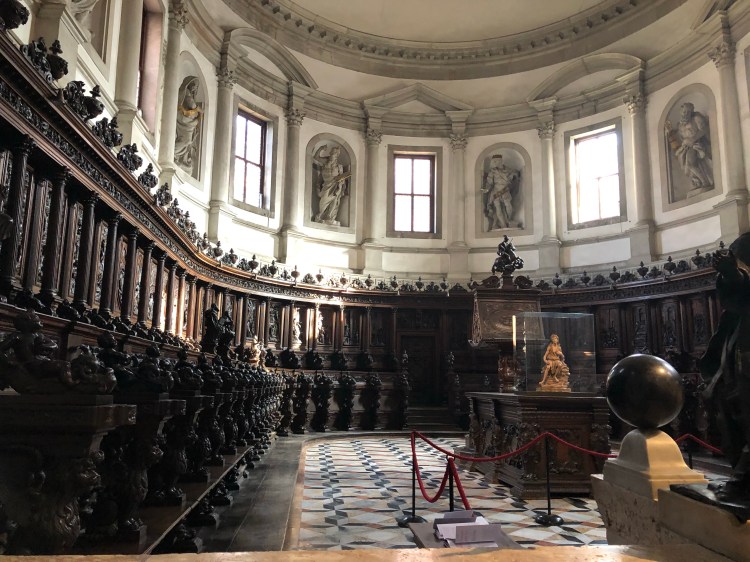
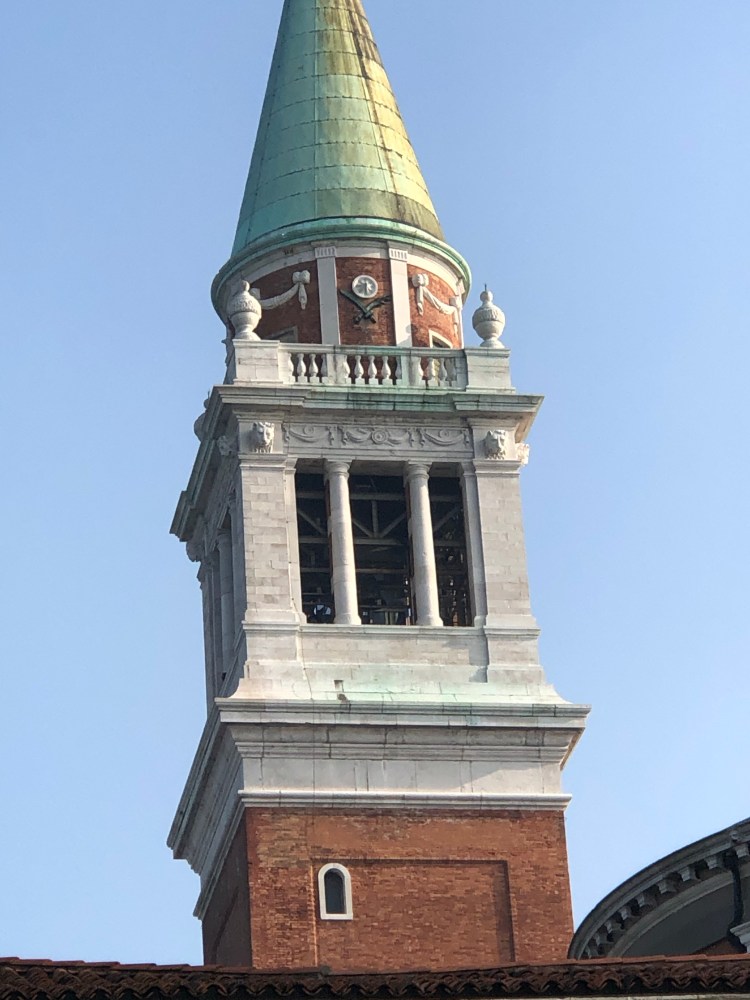
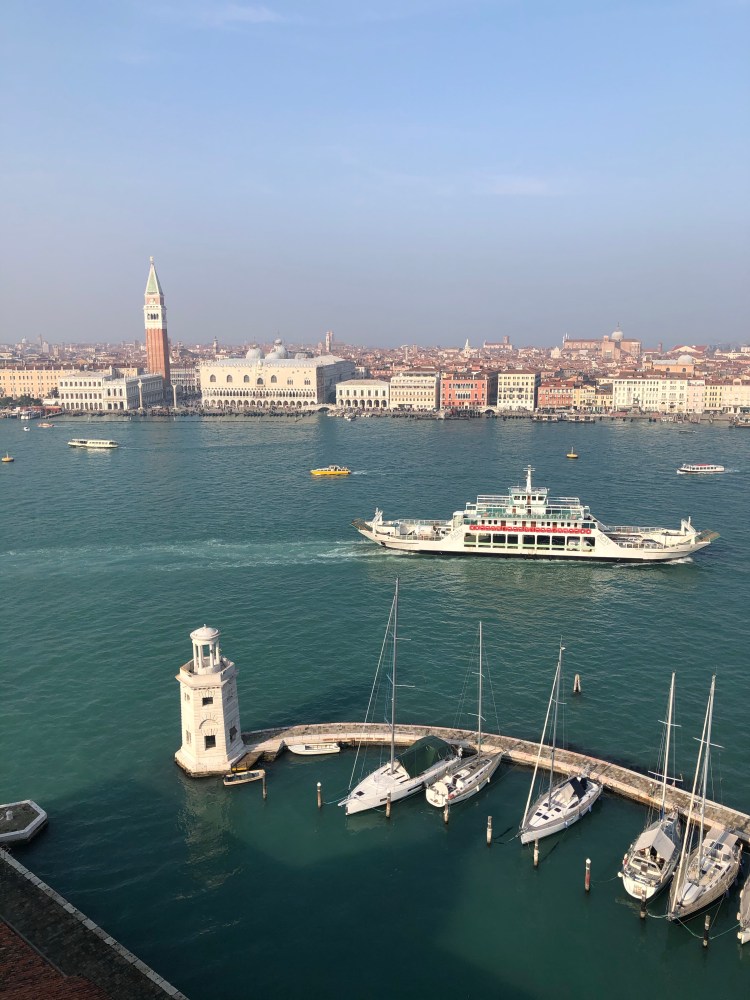
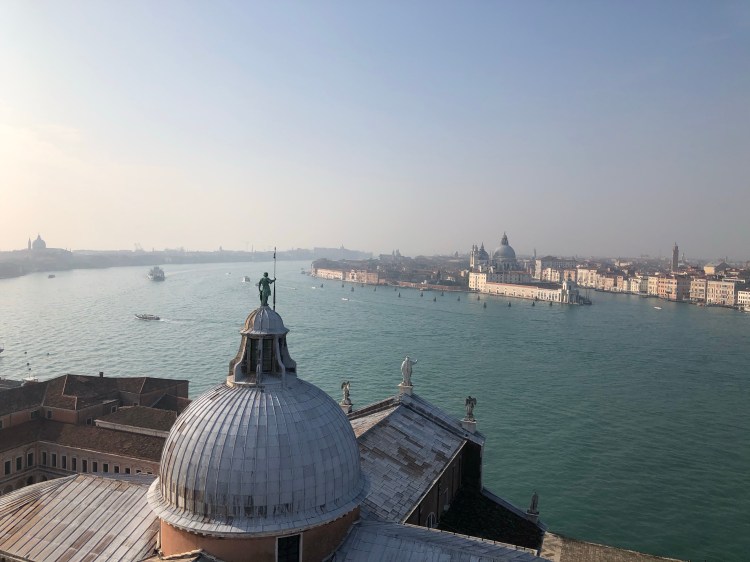
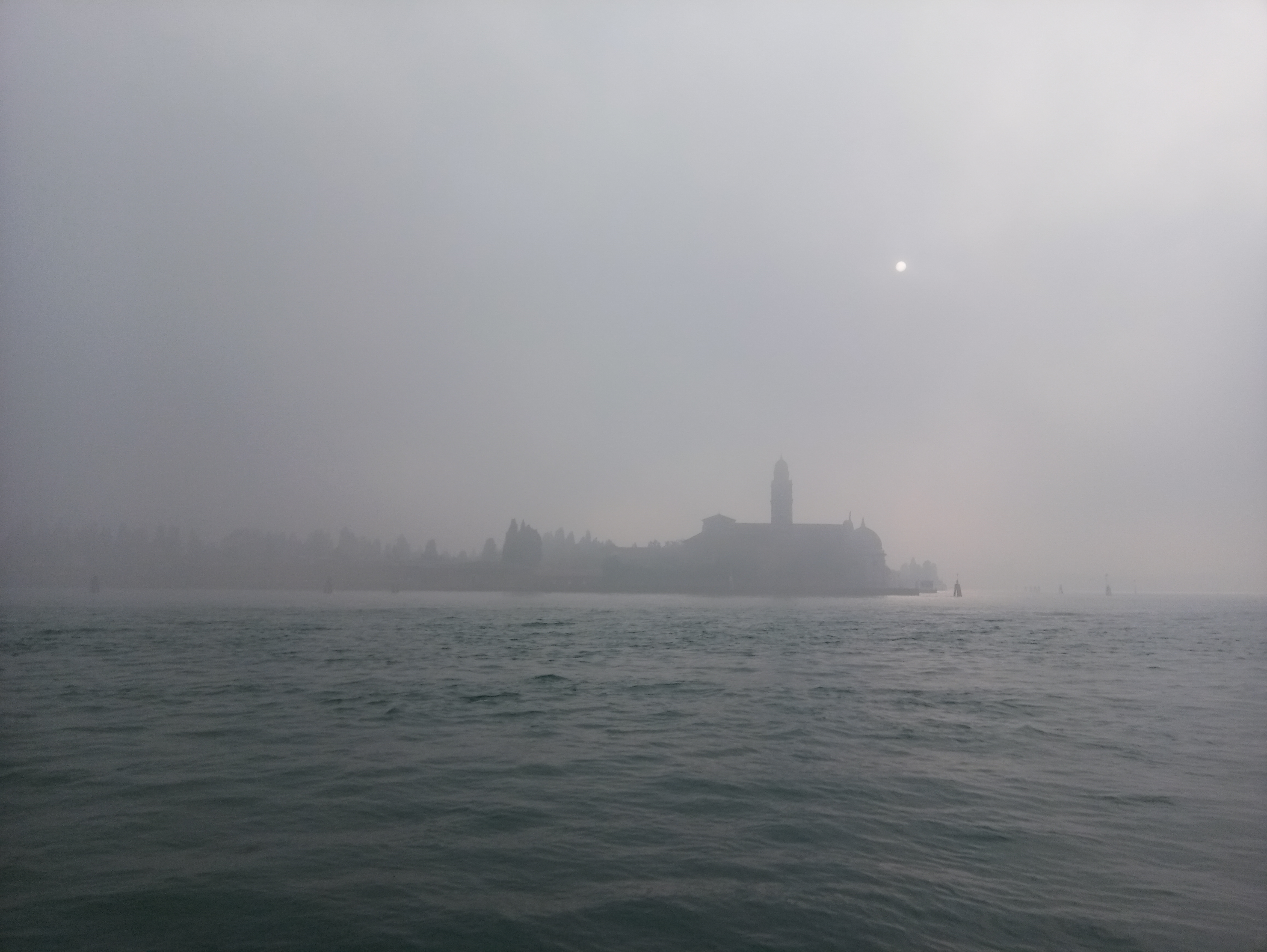
San Giorgio Maggiore is a 16th-century Benedictine church on the island of the same name.

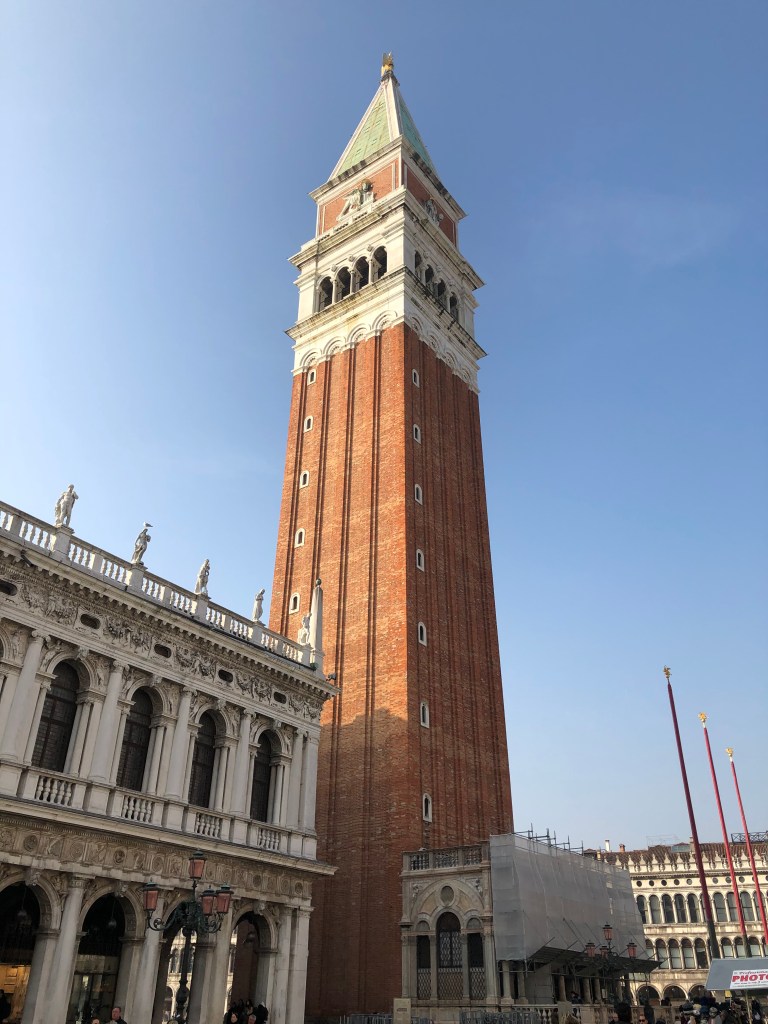
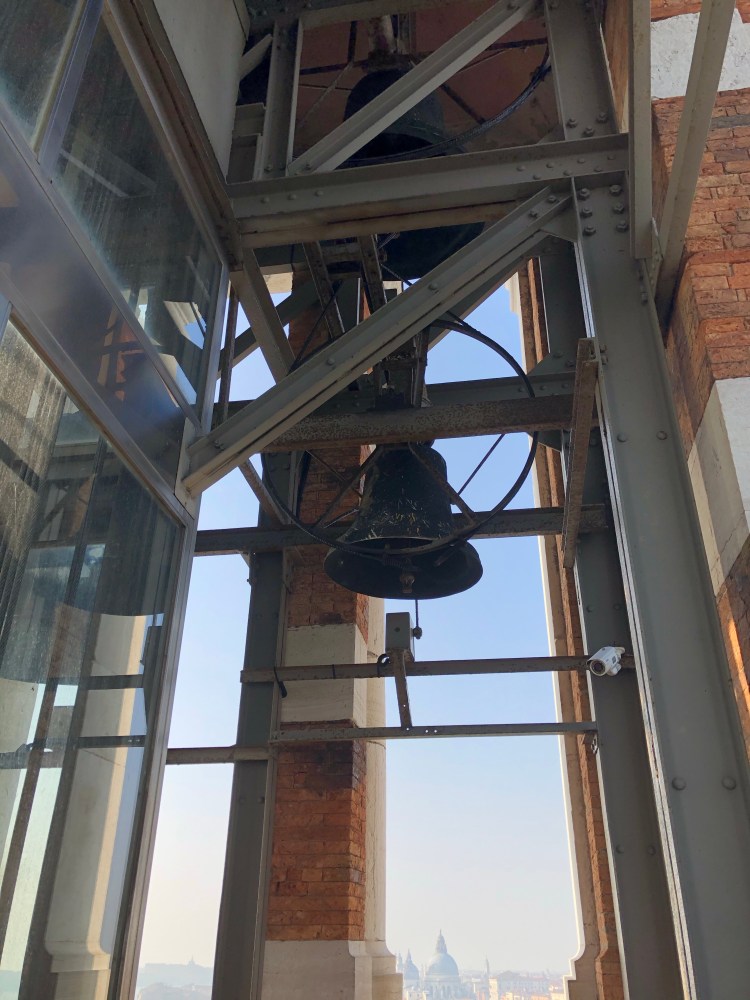
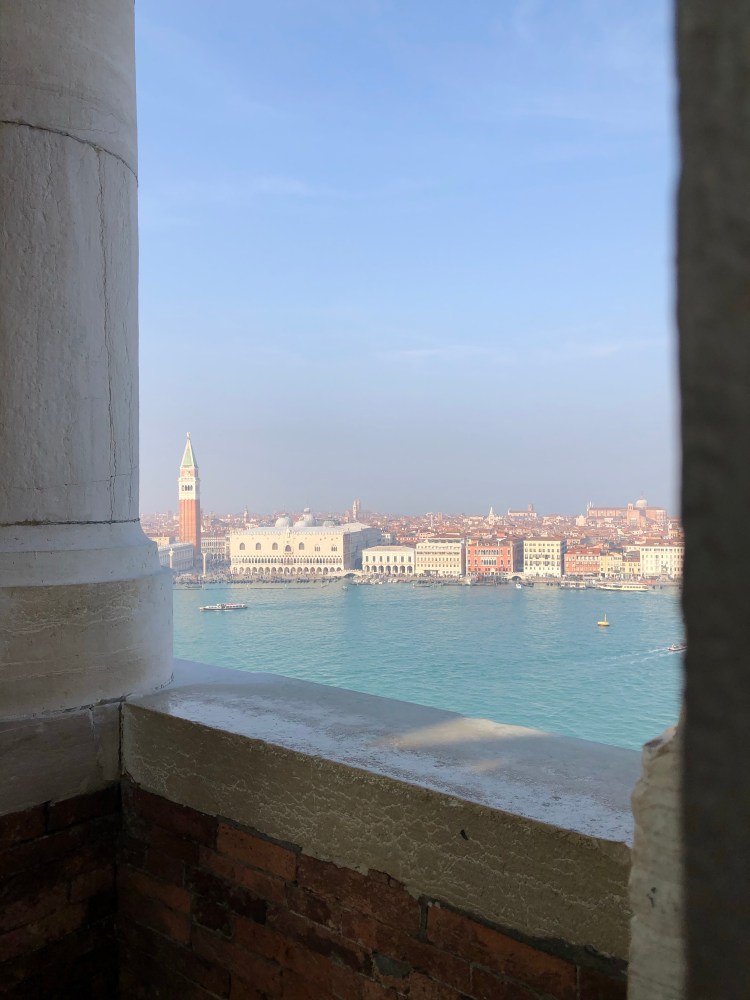
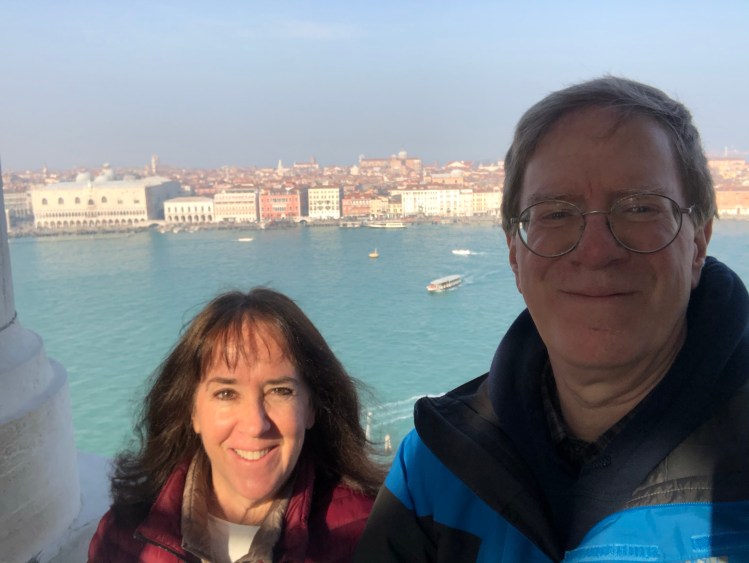
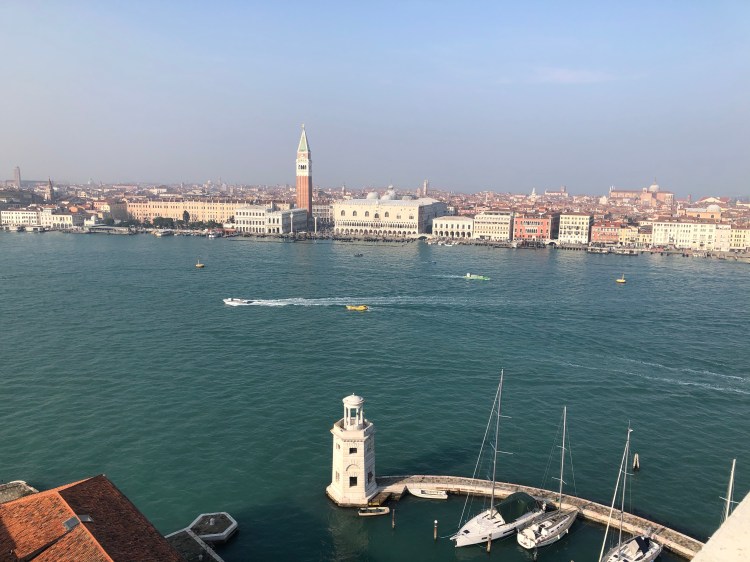
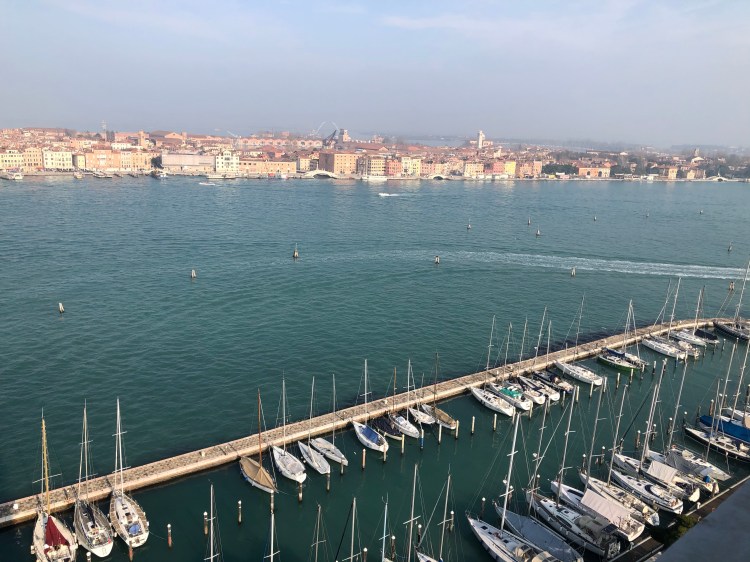
The bell tower here allows you to see the San Marco basilica and the Palazzo Ducale across the water. Besides the nicer view, the lines are also limited or non-existing. The bell tower was built in 1791, after the previous one collapsed in 1774. This weekend day was sunny and mild, yet very few people were on the island.

The white church of San Giorgio Maggiore is not the original church of the island, but actually the third one. The first one was built around 790 and was destroyed by the earthquake in 1223.

Laundry

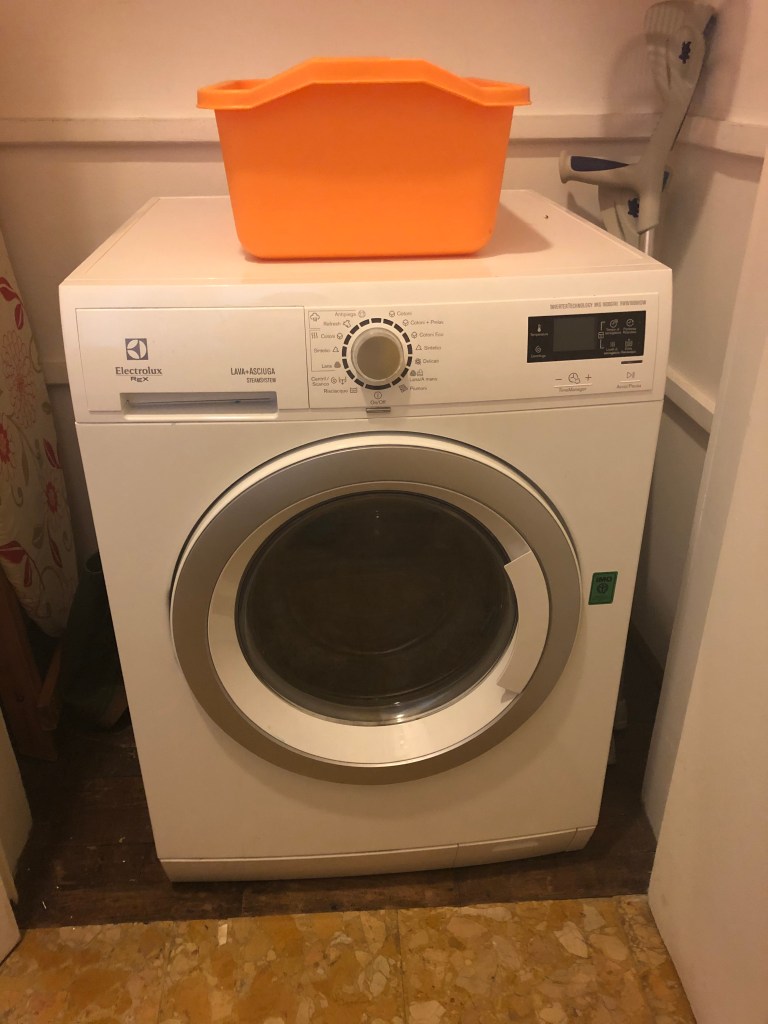
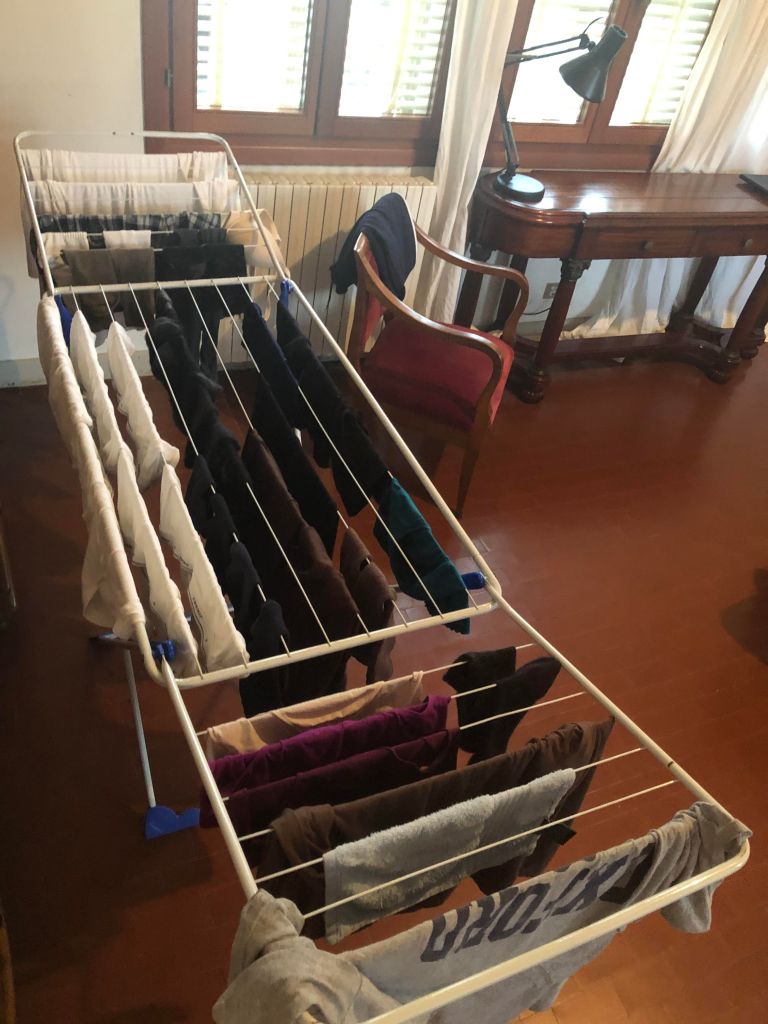
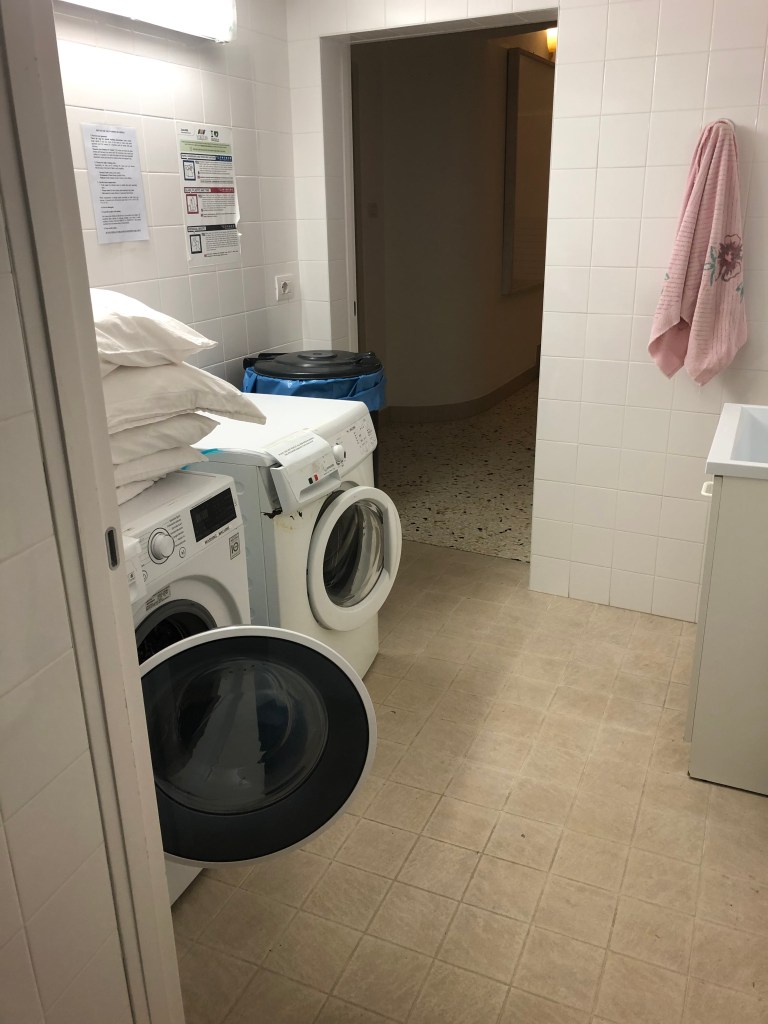
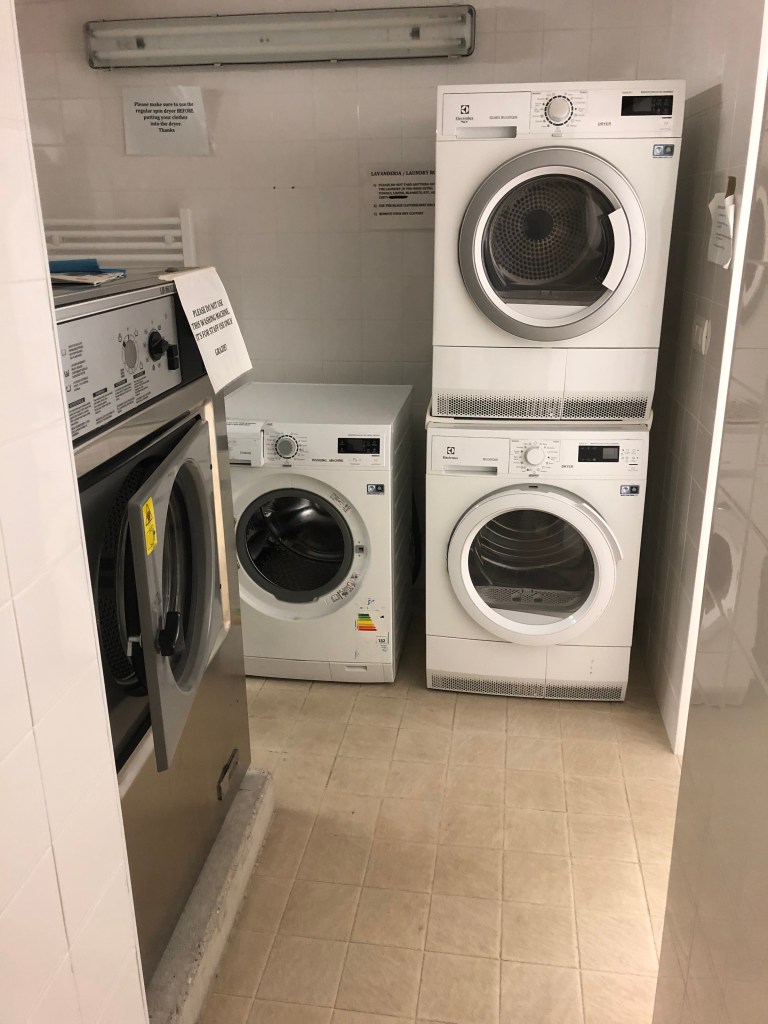
Laundry (bed sheets, bath towels, hand towels, tea towels, dish towels, bath mats, etc.) get done every Tuesday (lower floor) and Thursday (upper floor) by Cheti.  She knows everything about housekeeping, but…she doesn’t speak English.  We do a lot of sign language with each other!  The faculty apartment has a combo washer/dryer.  And I mean combo!  It is one machine that does it all!  However, the dryer (the same drum as the washer) is so hard to understand.  Everything comes out cold and damp so I end up using a drying rack.  Today, she showed me how to crank up the heat and the time.  Four hours later the clothes were so hard, wrinkled, and so extremely dry, they could have walked across the room!  Back to the drying rack for me!  Even my wonderful wool socks looked like they shrunk.  I don’t get how a dryer doesn’t have a lint trap either!

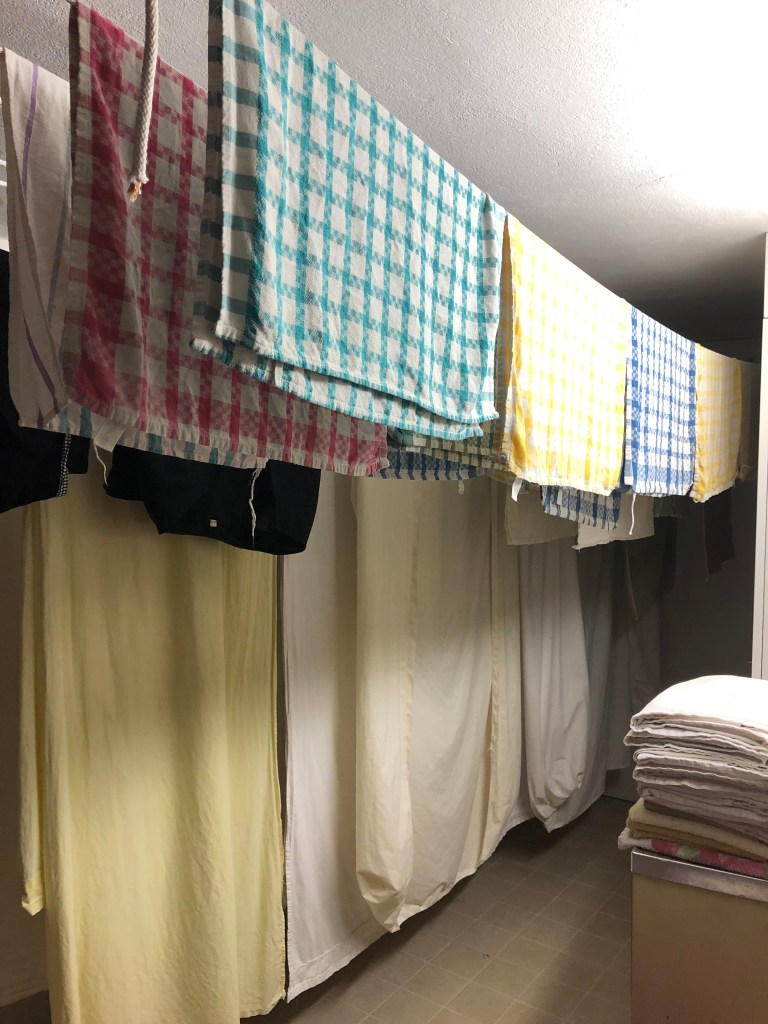
The students have a laundry room that is shared with Cheti where she does the sheets and towels. Her washer is industrial size and she has a special room just to hang dry her laundry before she goes around and makes up everyone’s beds.  Such a lovely service that I so appreciate!  I believe electricity here is expensive and limited.  Hence, we have no dishwashers.

Cheti and Malana clean the kitchens and bathrooms every day, too.  I don’t do that at home!  Our first overnight guest is flying in today from California and normally I would be cleaning to get ready, but there is nothing to do!  This is the life! 

Glassmaking is in the Family

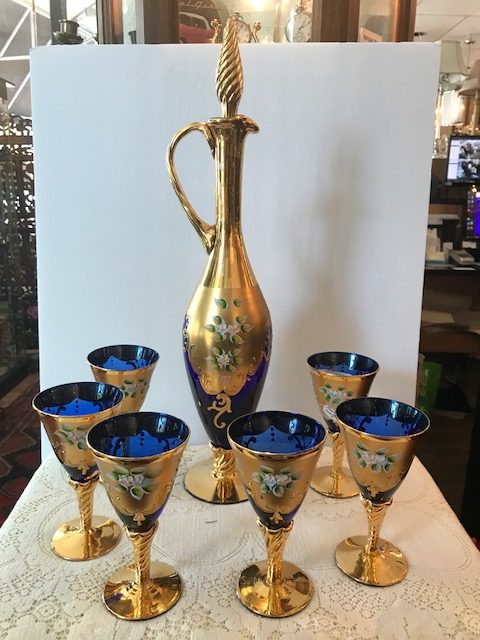
This is a replica of the Murano wine decanter (but in red and a fuller decanter) Page bought his parents in 1968 on a trip through Europe when he was 15.  At home I have the 6 goblets displayed around the decanter just like this photo I found on the internet.  I have never used it, but looking at the current price, I guess I never will!

Murano Glass Decanter Set with Six Wine Glasses and 24K Gold Leaf
$1,200.00

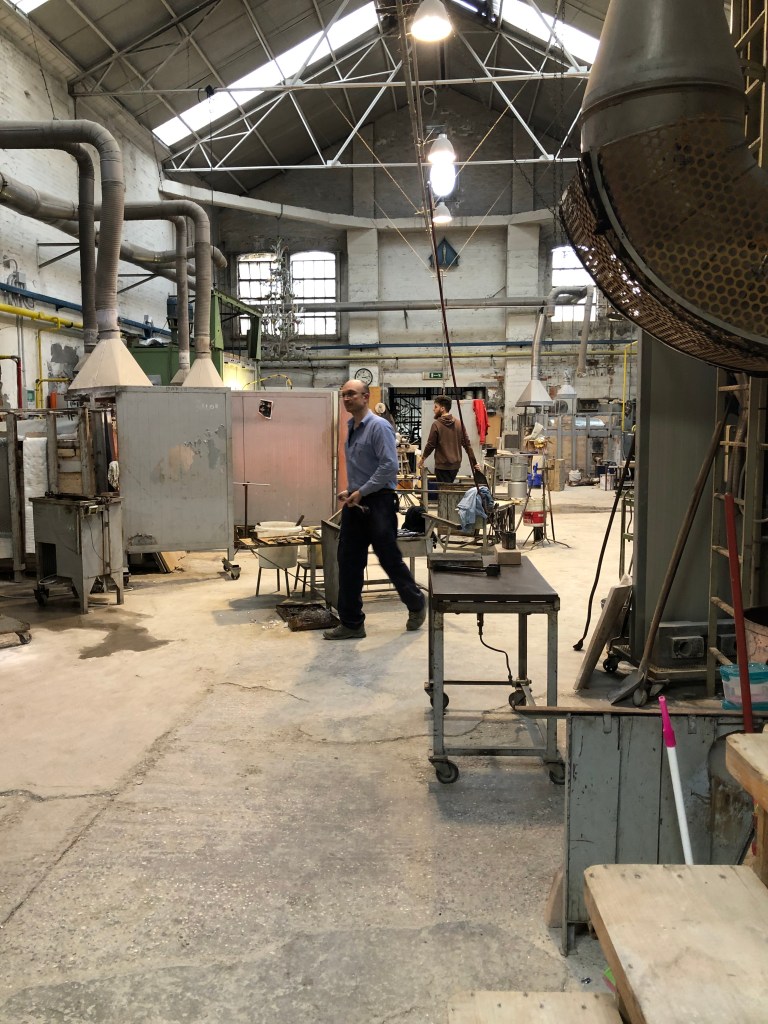
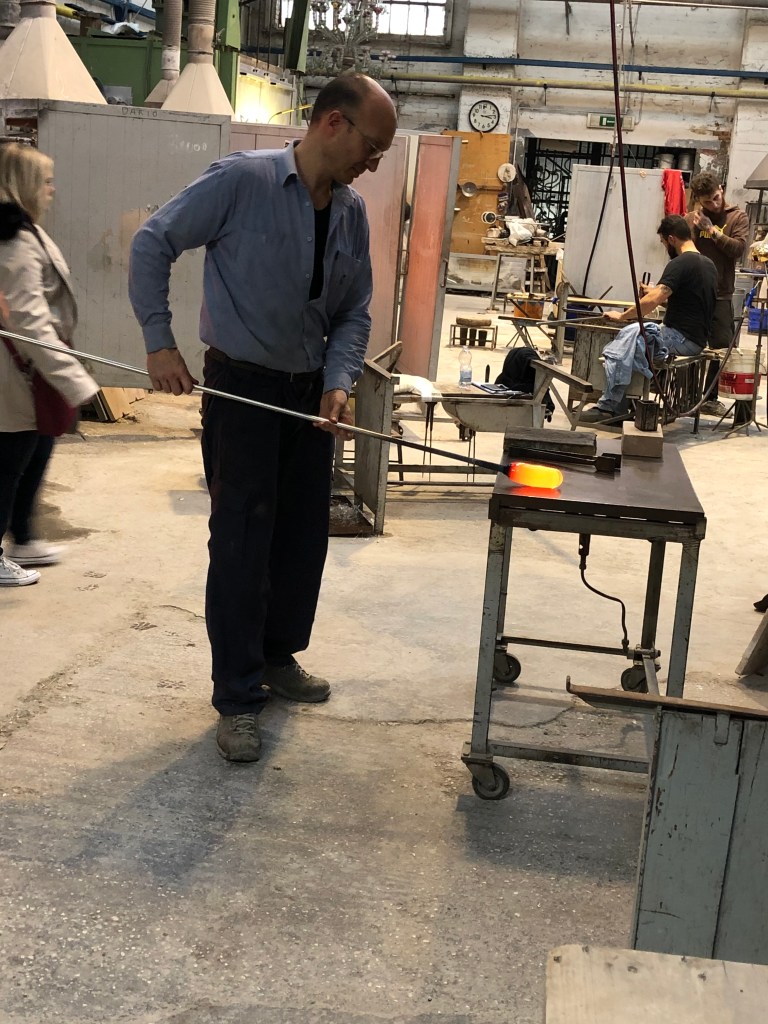
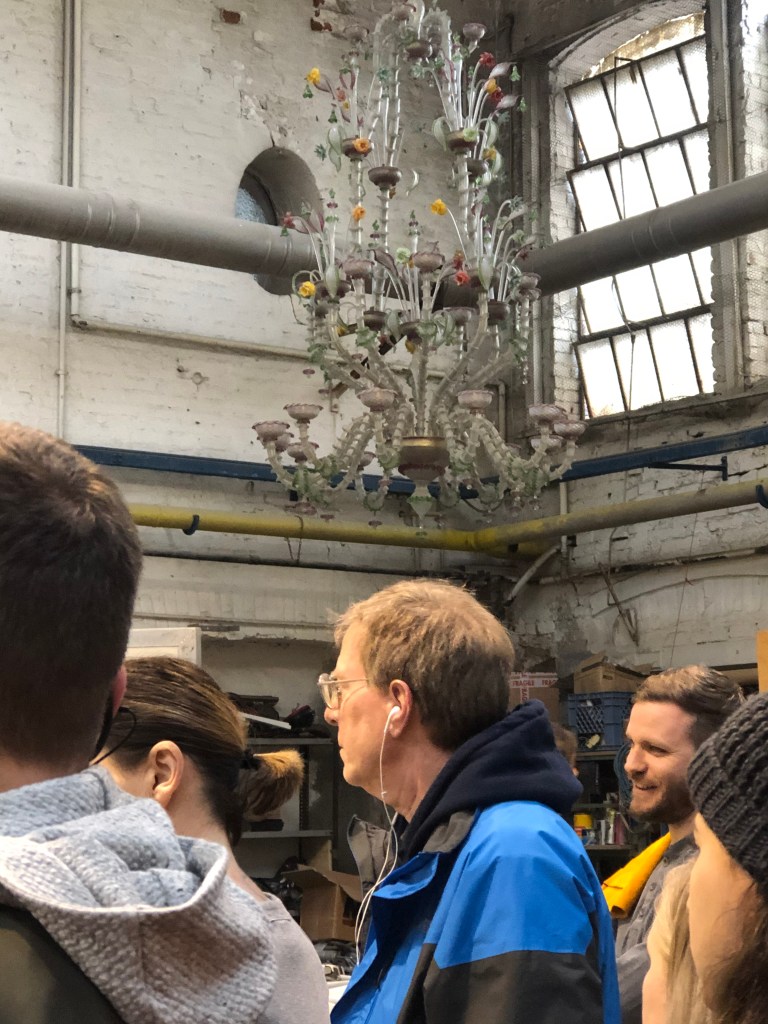
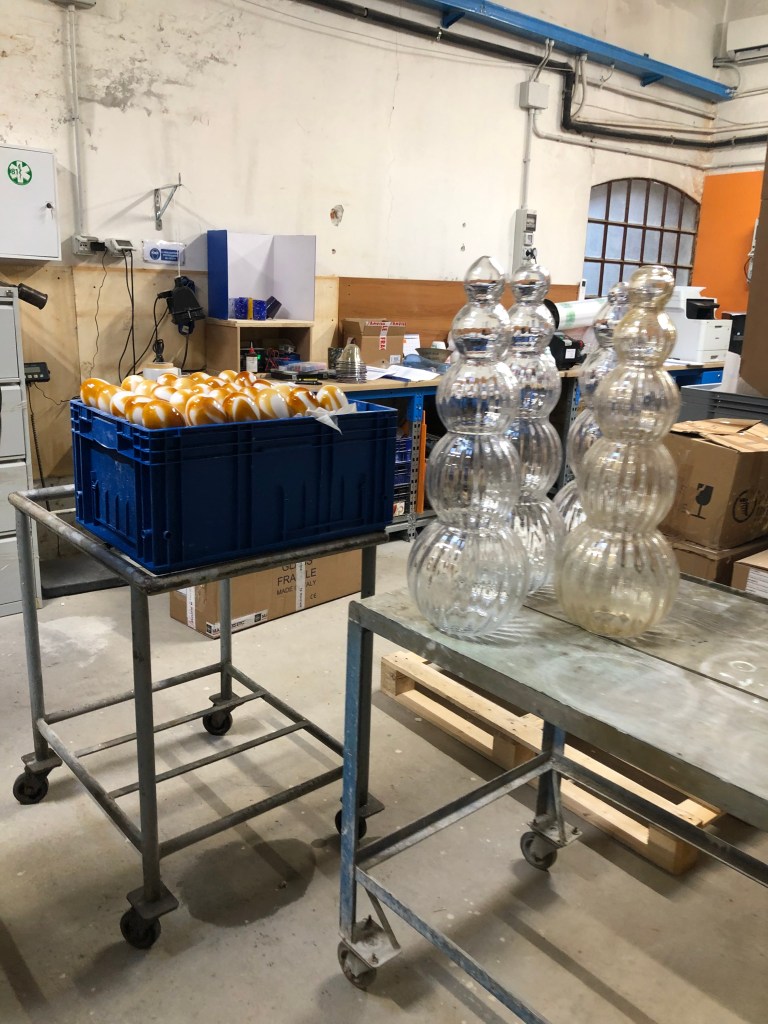
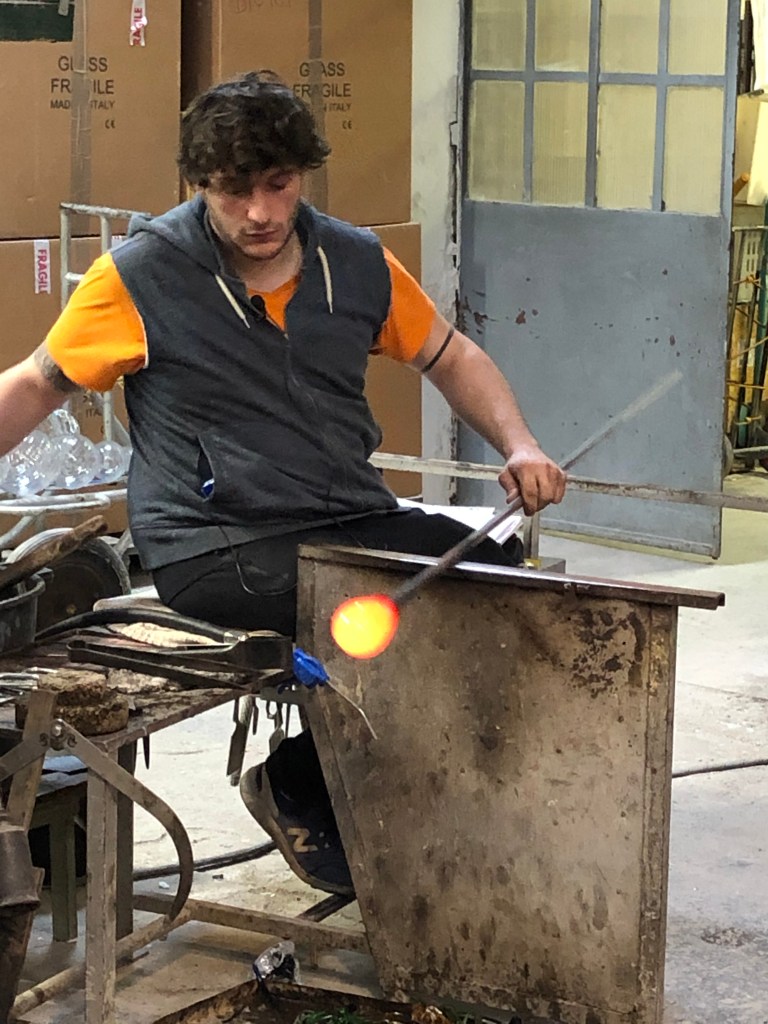
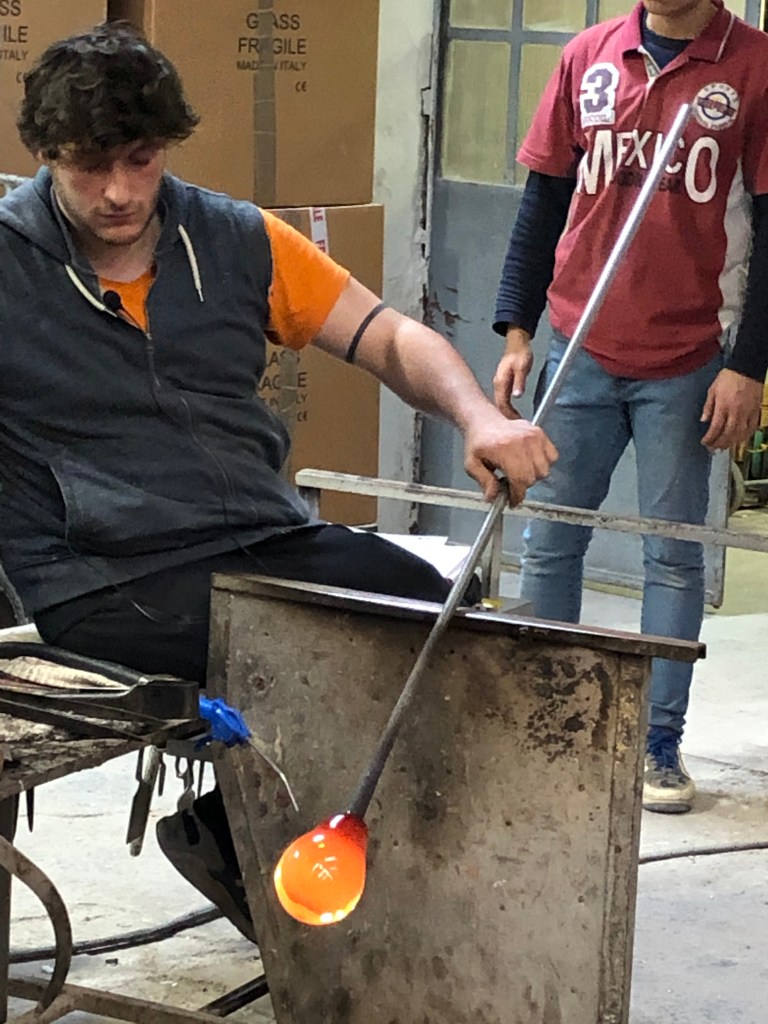
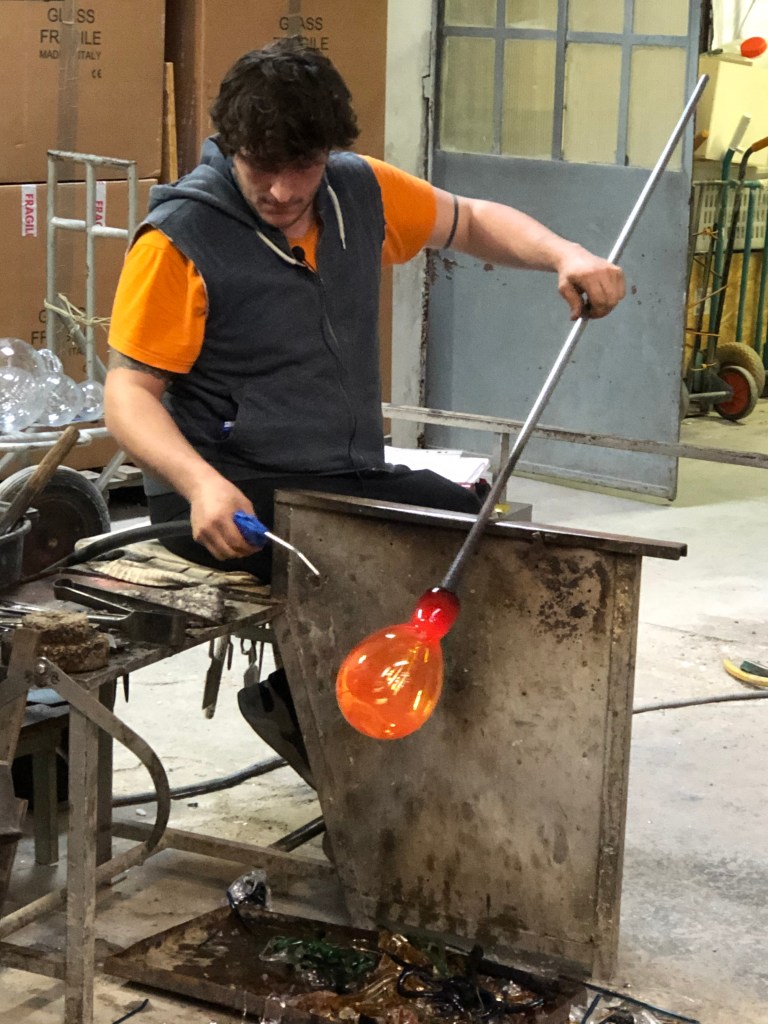
Yesterday we boated over to the island of Murano to see the art and business of glassmaking.  Murano has been the center of the glassmaking industry since 1291 when it was moved here from Venice due to the risk of fires and smoke. 

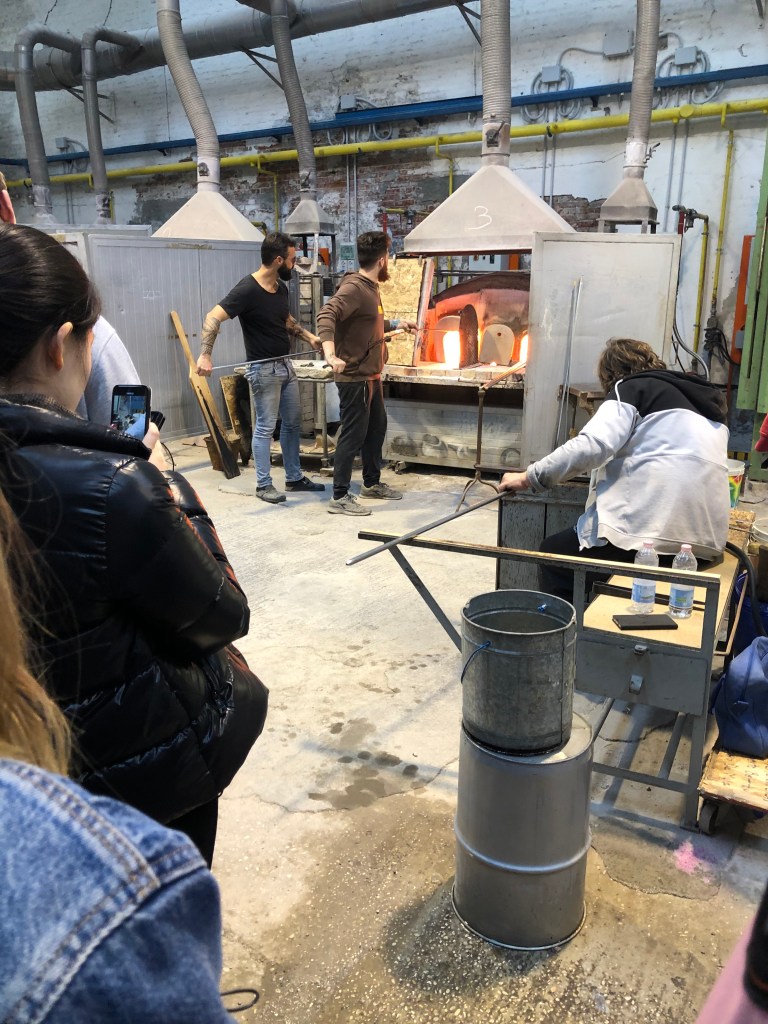
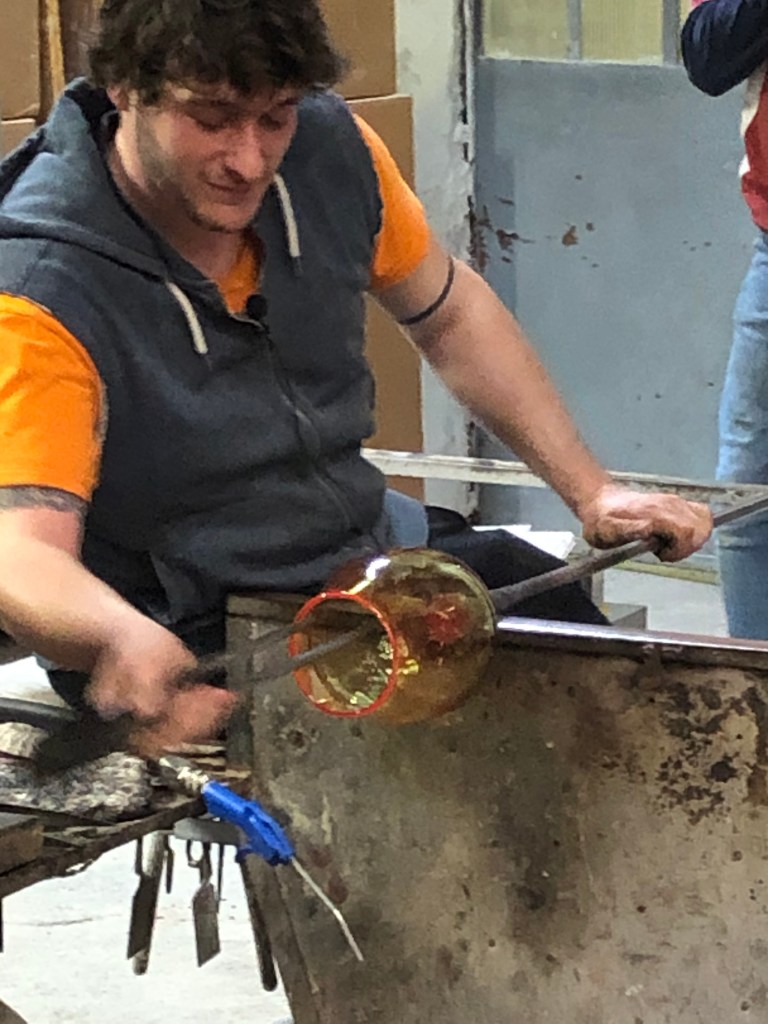
We watched glass blowing!  The man takes a blob of molten paste on the end of an iron rod and, by twisting, turning, and blowing, transforms it into a vase.

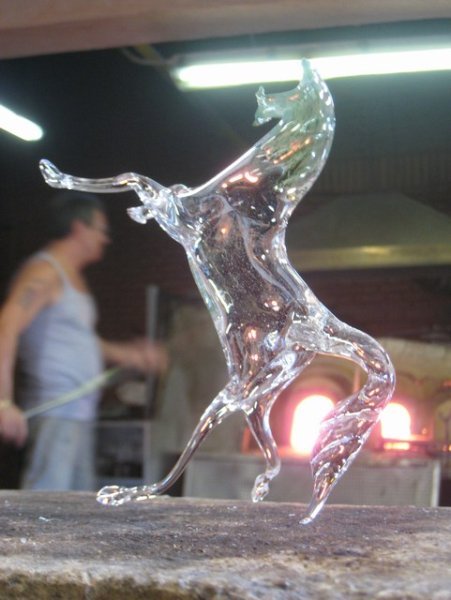
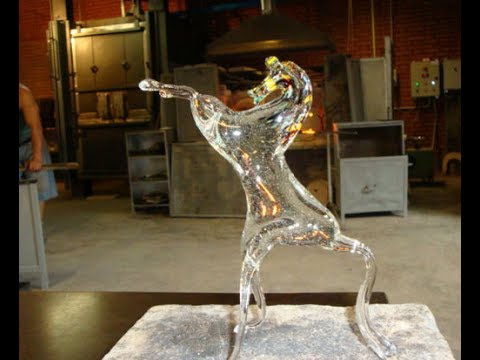
I tried to download my video here, but I couldn’t figure it out. But, how fascinating to see this same young man turn a blob into a horse in just 5 minutes!

Glass blowing is not new for us.  Our first experience was in Cabo San Lucas, Mexico, where the blue rimmed goblets with glass cactus stems were enticing. I bought a set along with a pitcher.  I also bought a set of lowball glasses for our cabin of which only a few have survived.  Crude and full of bubbles, but fun to use, our authentic glassware has been unique.  Unlike Waterford Crystal that we toured in Ireland just a couple years ago, we were allowed on the floor with the craftsmen.  Yikes! I was sure someone was going to catch on fire by bumping into a hot molten blob! I remember seeing glass making demonstrated in Colonial Jamestown, Virginia, too.

In Bristol, England, with our youngest children and Page’s parents in 2003, we admired the beautiful cobalt blue glass.  Page’s Swindell side of the family came to America from Ireland (originally from the Bristol area) and started a glass company in Baltimore.

Click to access SwindellBrothers.pdf

This link is an interesting read for people like me who are into genealogy. However, this piece reads like a dissertation! Beware!

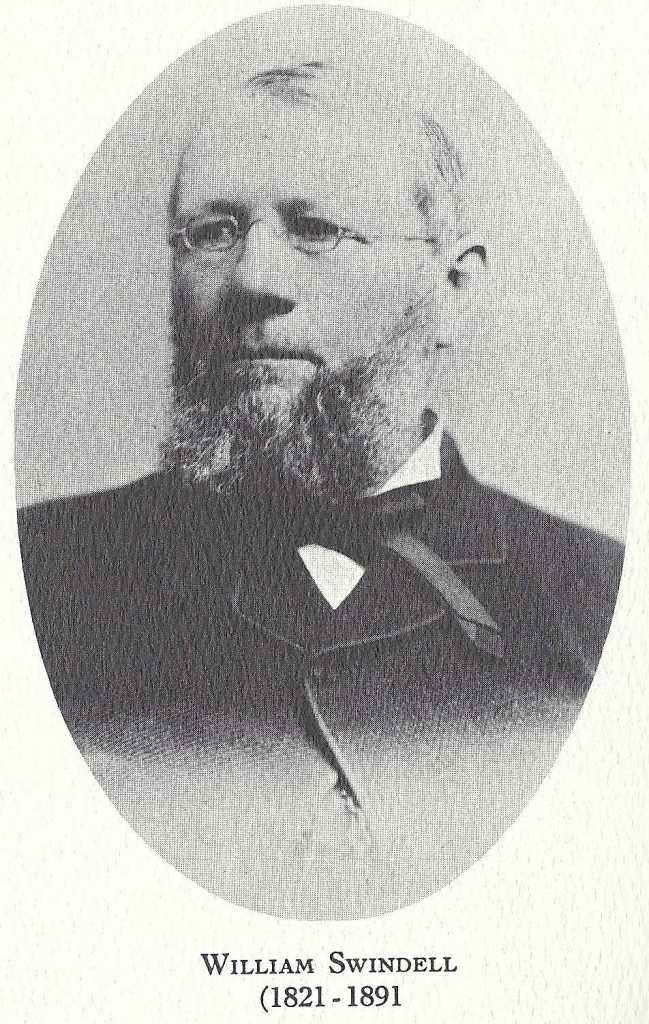
This good-looking guy is Page’s GG Grandfather who took off with his father’s Irish glass business (from Tralee, Kerry, Ireland) and ended up in Baltimore. Two of his sons (Walter and Charles) continued in the business (not Page’s Great Grandfather) until it turned into bottle/jar (and flasks!) manufacturing. The company sold in 1948.

Gondolas

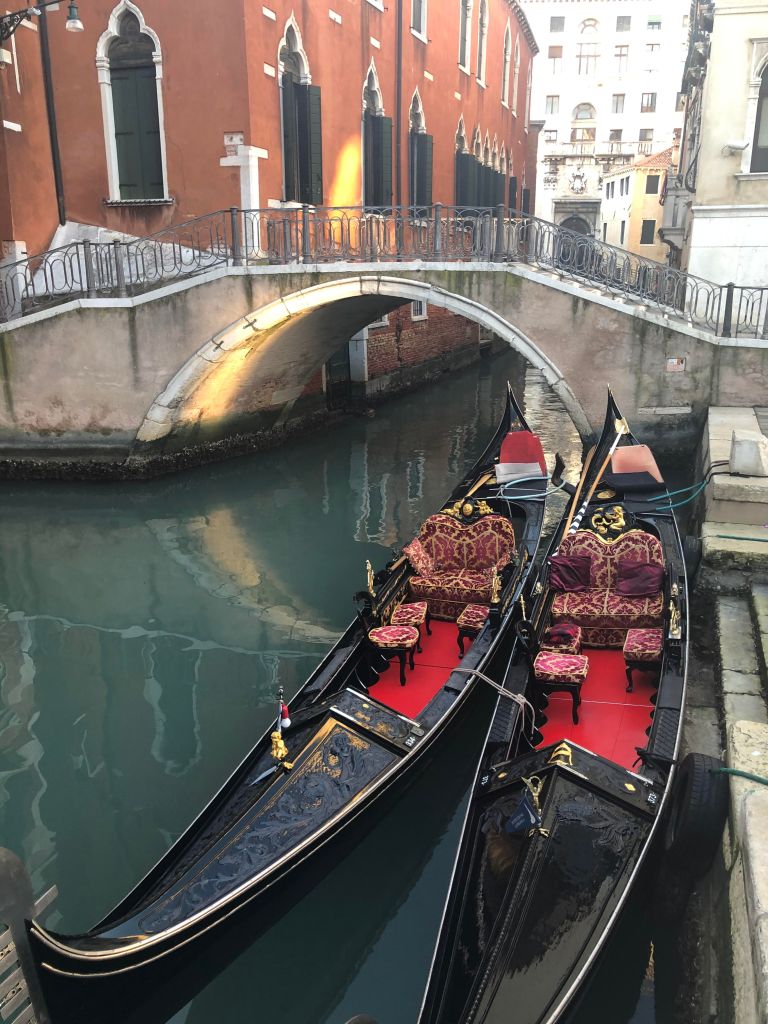
The following is what I learned about gondolas:

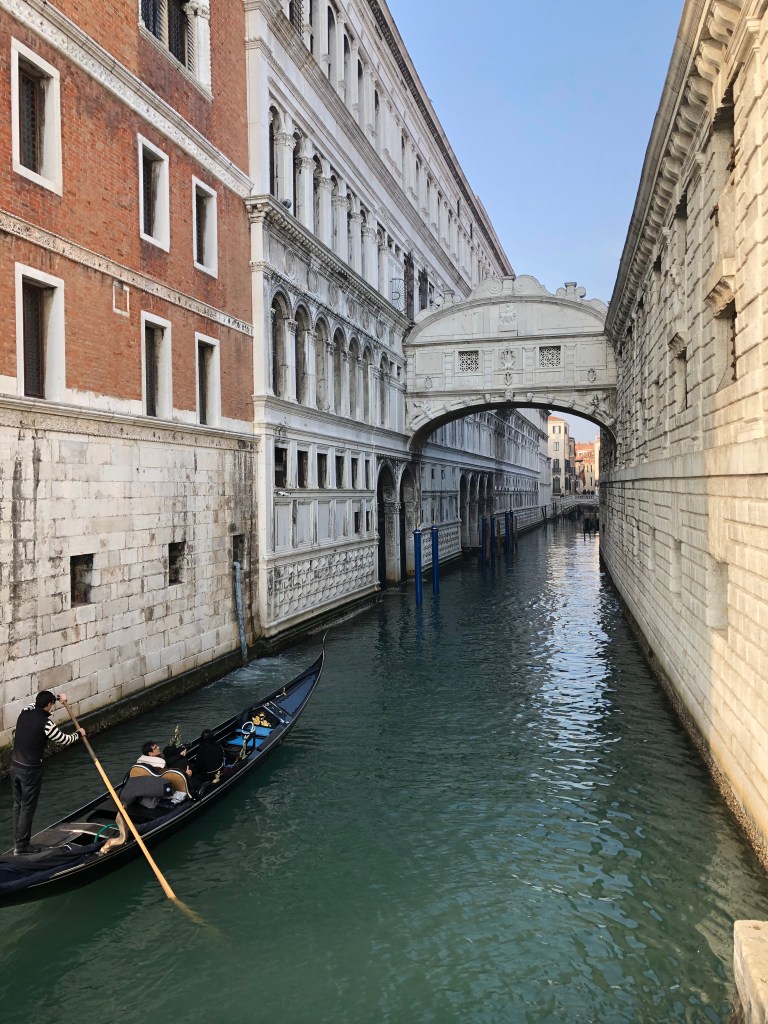
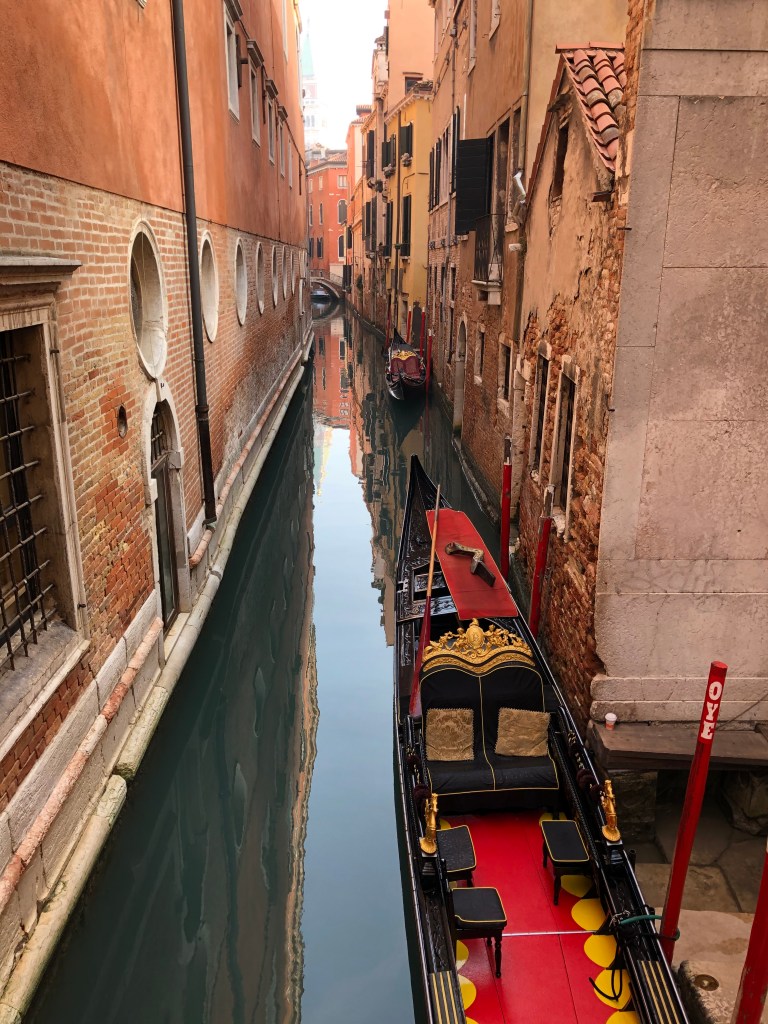
  1. Two hundred years ago, there were 10,000 gondolas in Venice. Although the aristocracy preferred horses to boats through the early Middle Ages, beginning in the 14th century, when horses were outlawed from the streets of Venice, the noble class embraced gondolas as a respectable form of transportation. In the 1500s an estimated 10,000 gondolas of all types were in Venice; in 1878 an estimated 4000 and now approximately 400.  All are flat bottomed. Traditional Venetian rowing boats don’t have a keel!
  2. They don’t have a rudder. The rower at the back of the boat stirs the boat by pivoting an oar in an (open) oarlock, a forcola.
  3. Rowing is performed standing up, looking forward, and pushing.

The flat bottom and the absence of the rudder allowed Venetian boats to navigate over very shallow waters. Similarly, the standing position gave rowers the opportunity to see in advance which route to take. In fact, rowers can understand the depth of the water ahead by how the waves move on the surface.

Today, Venetian gondolas are most known as a black boat used in Venice for tours through the narrow canals of the city. Gondoliers, in fact, offer visitors the possibility to ride on a gondola through Venice for a fixed price of 80 euros for a 25-30 minutes tour. We will be walking!

Padua

Fridays are free days.  No classes means a long weekend, every week!  The students typically will be taking off for a flight somewhere on Thursday afternoons, but this, their second weekend, is being spent getting their residency permits.  No “out of the country traveling” until that is accomplished. 

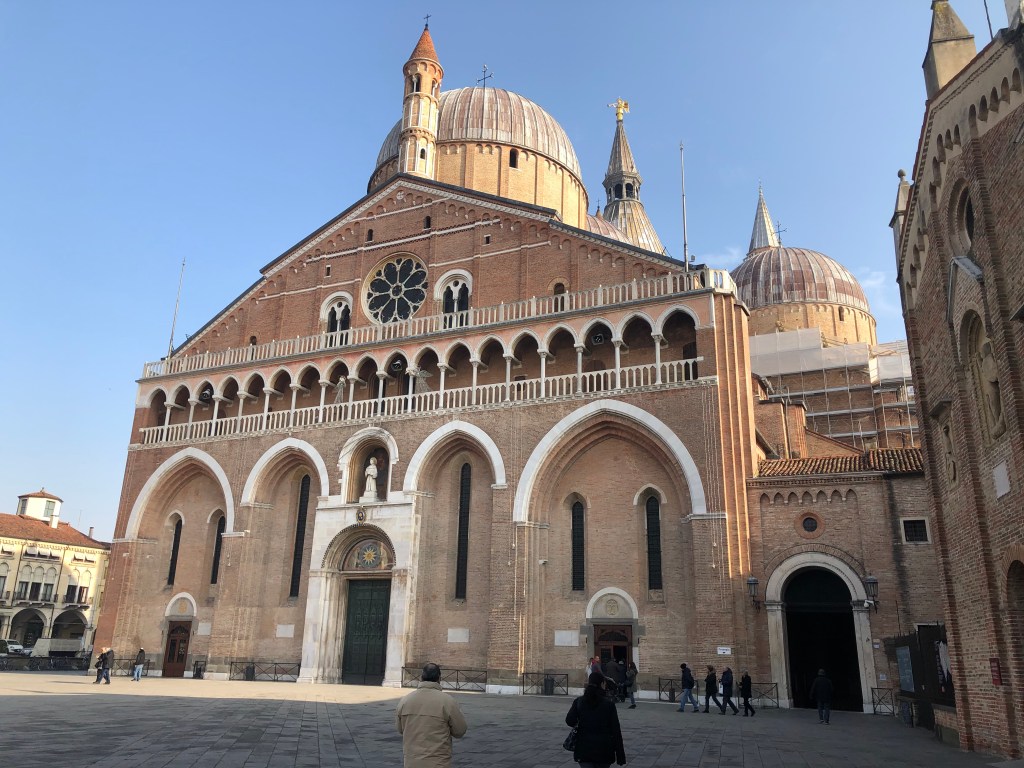
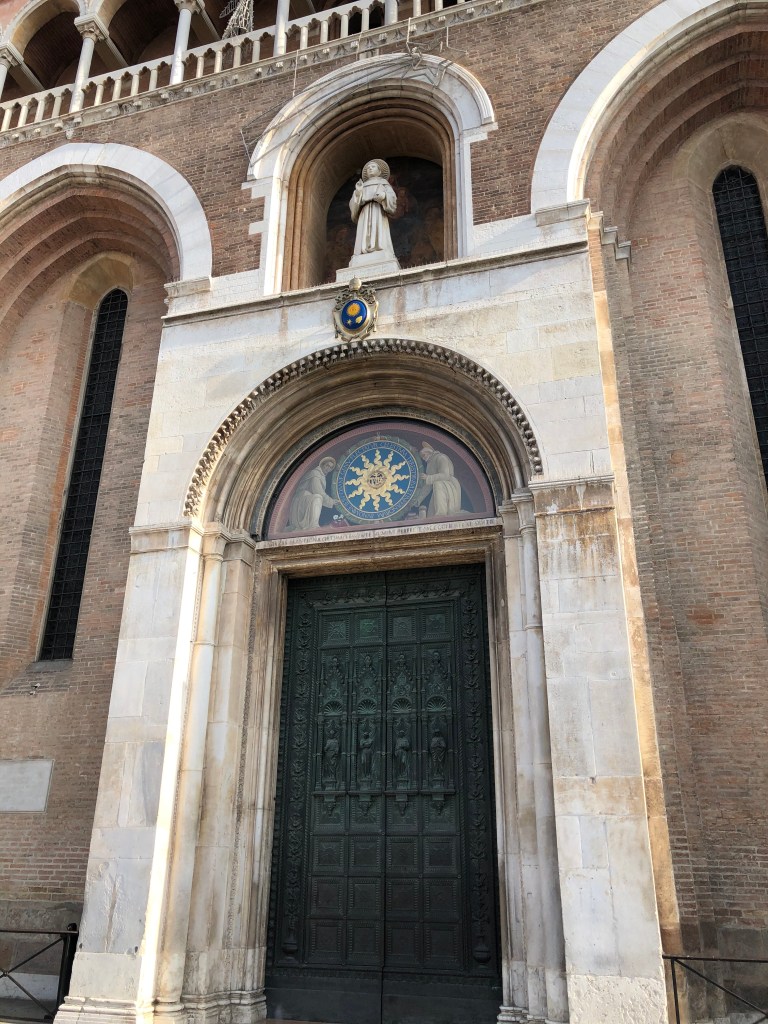
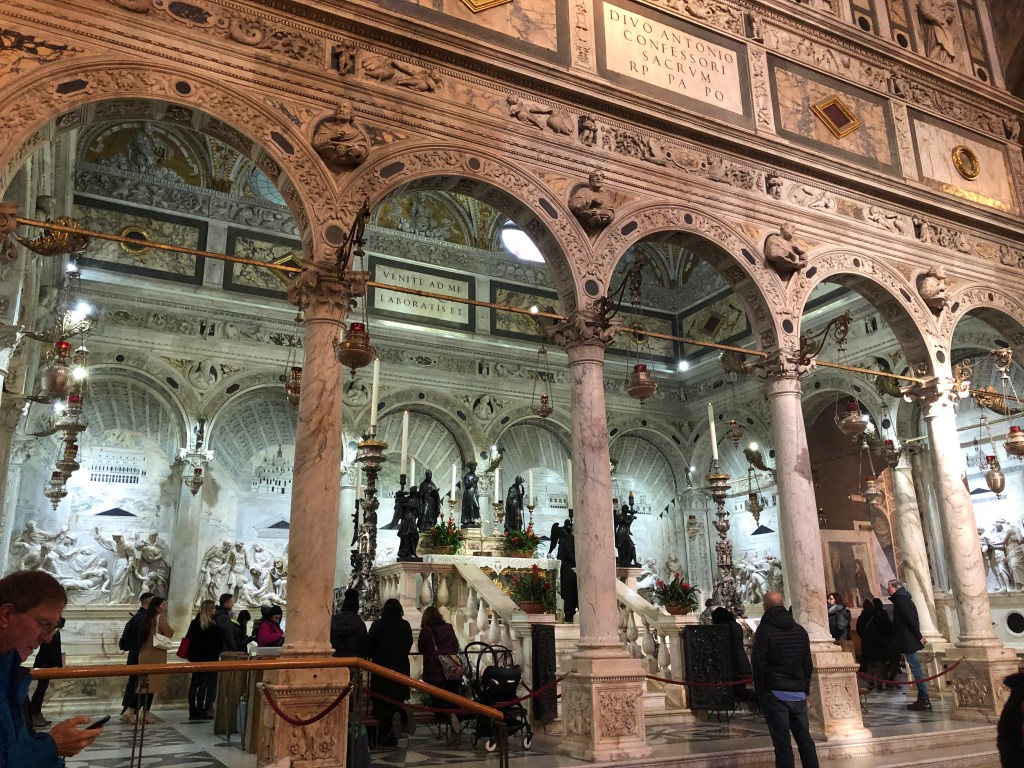
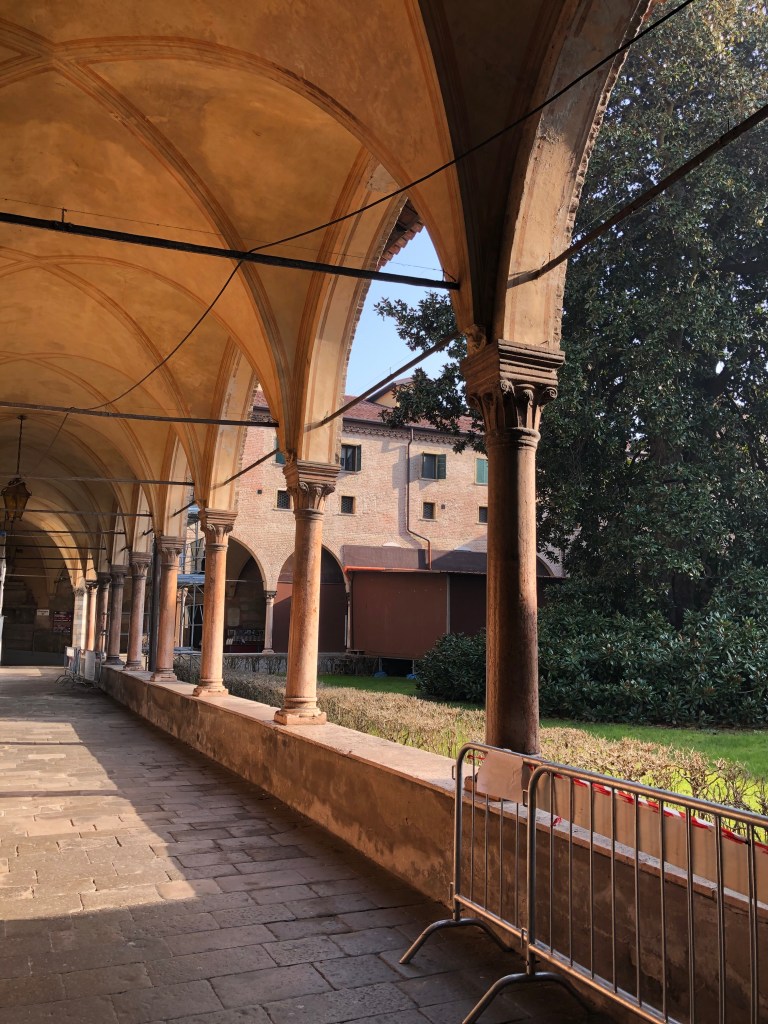
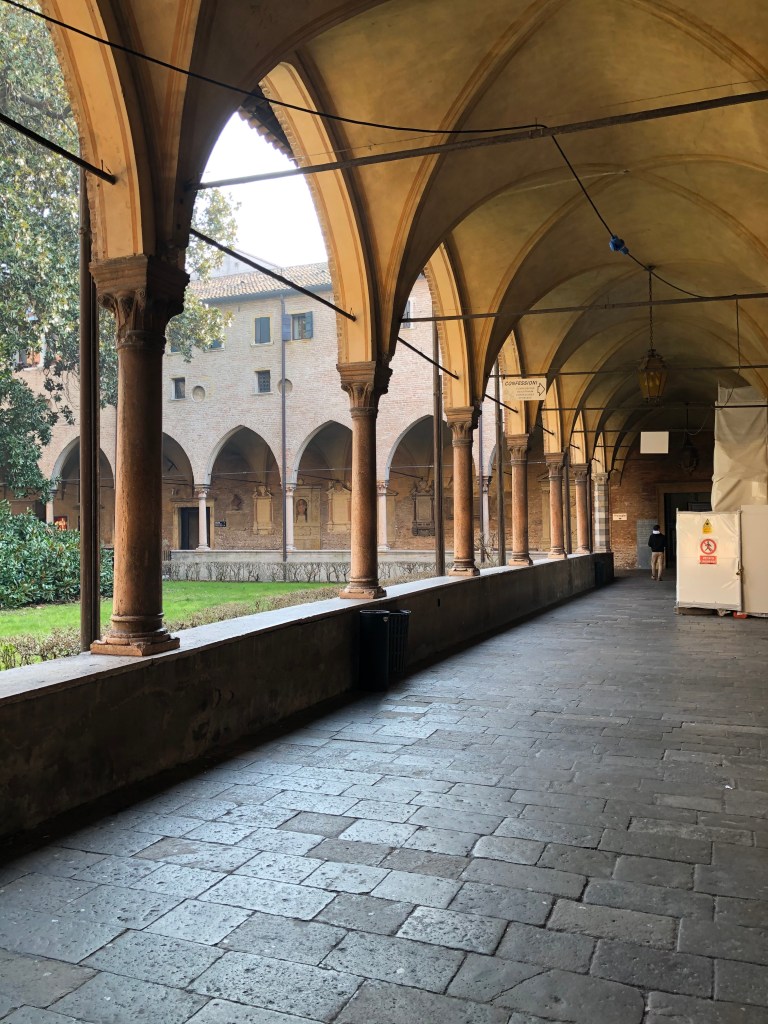
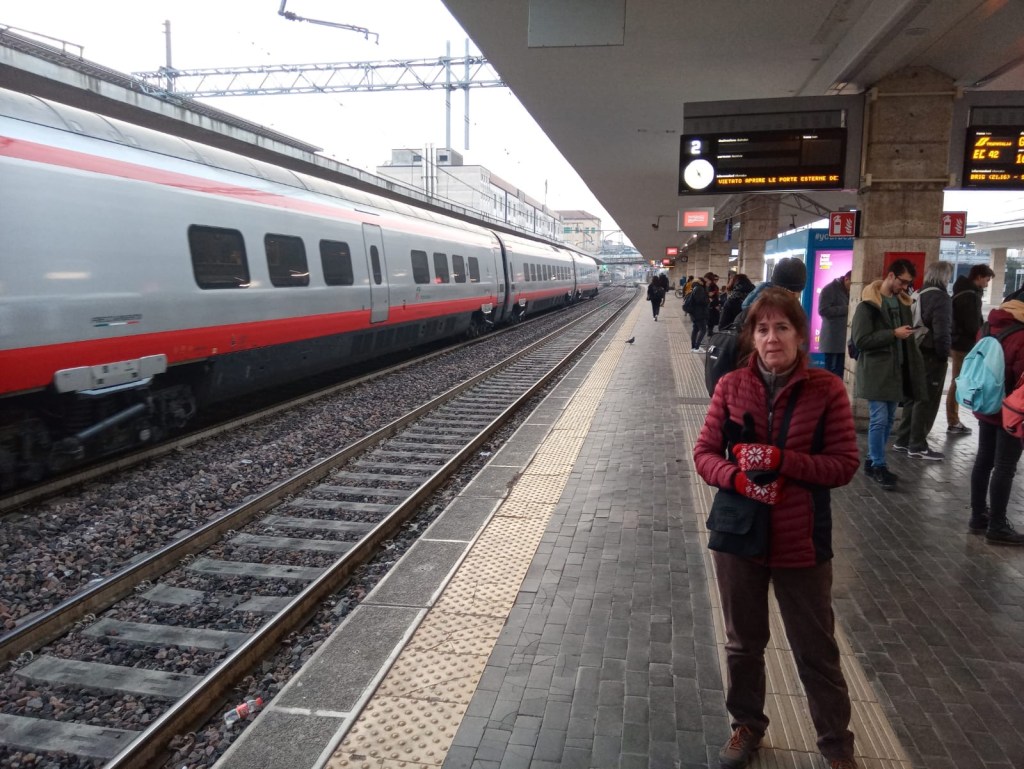
Page and I decided on a local train trip to nearby Padua.  Weather was predicted to be sunny and pleasant on Friday, but rather overcast and rainy on Saturday (as it is today), so off we went early in the morning.  Once there we bought a day pass for the tram and headed south to the Basilica of St. Anthony.  Friar Anthony of Padua (1195 – 1231) is buried here and construction of the church began shortly after his death.  With so much to see inside and with both an audio guide and Rick Steve’s book guide, we spent more time than expected admiring the marble reliefs around the tomb, the original chapel, the relic chapel with Anthony’s tongue, lower teeth, and vocal chords (omg!), and the outside cloisters.

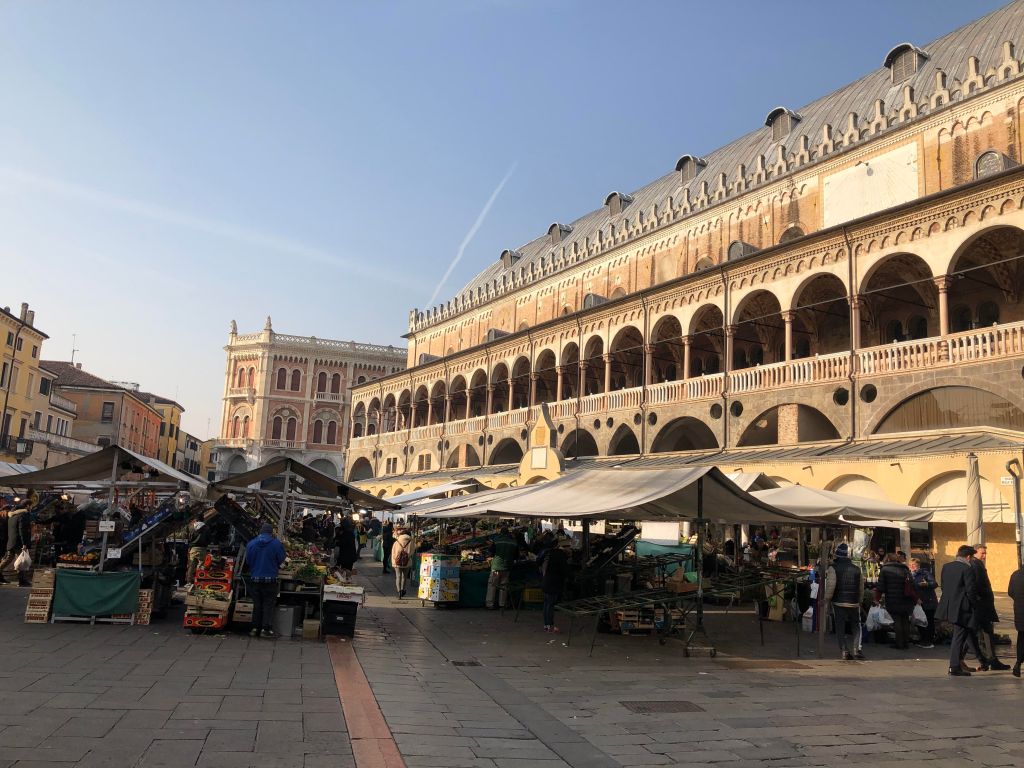
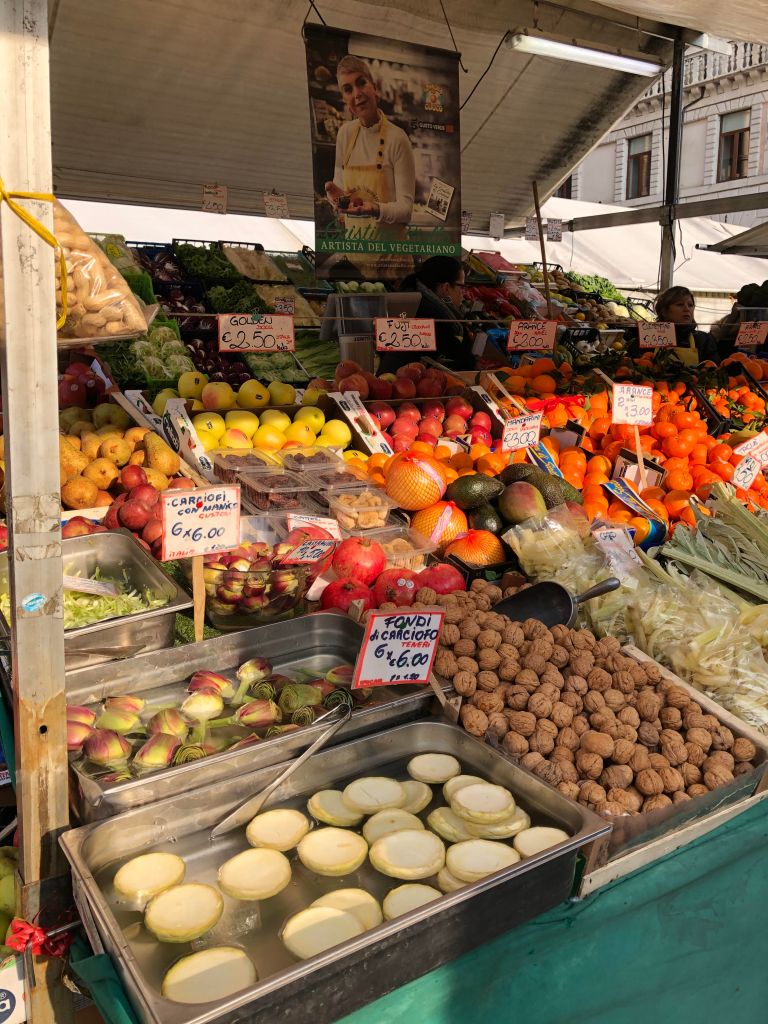
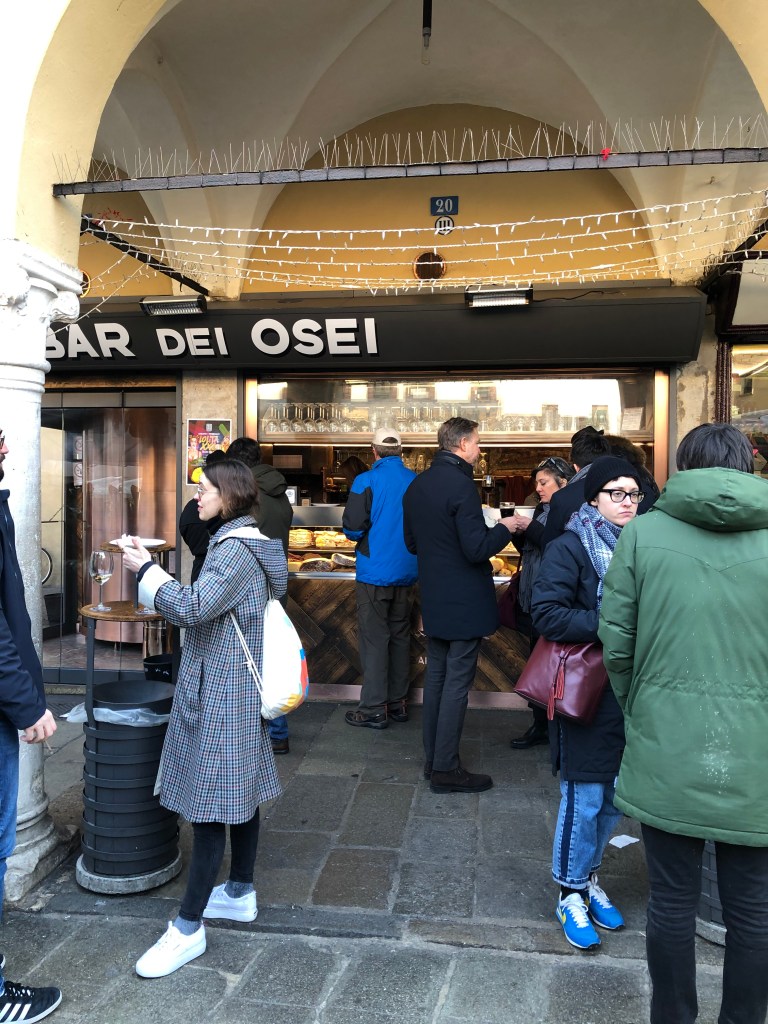
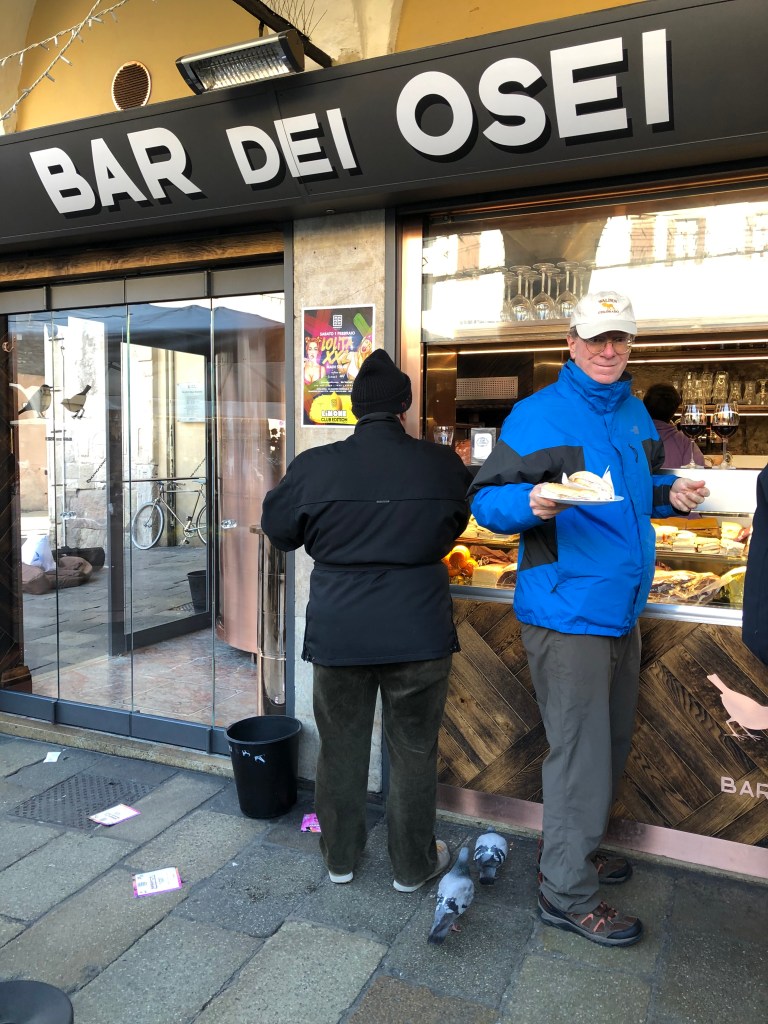
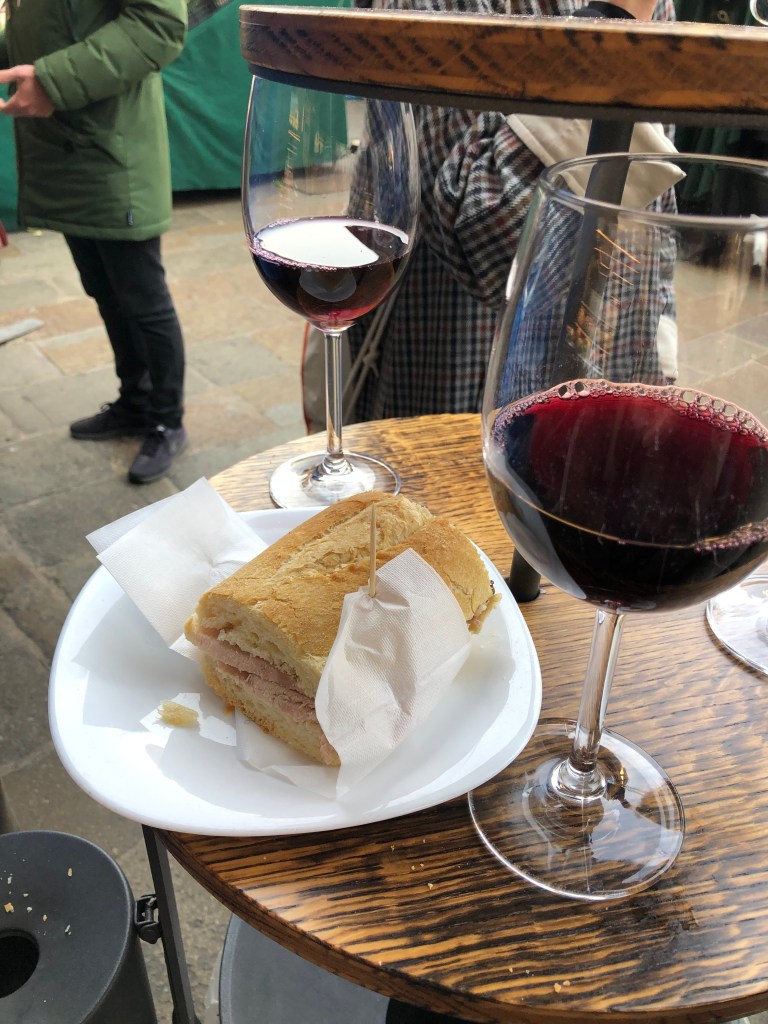
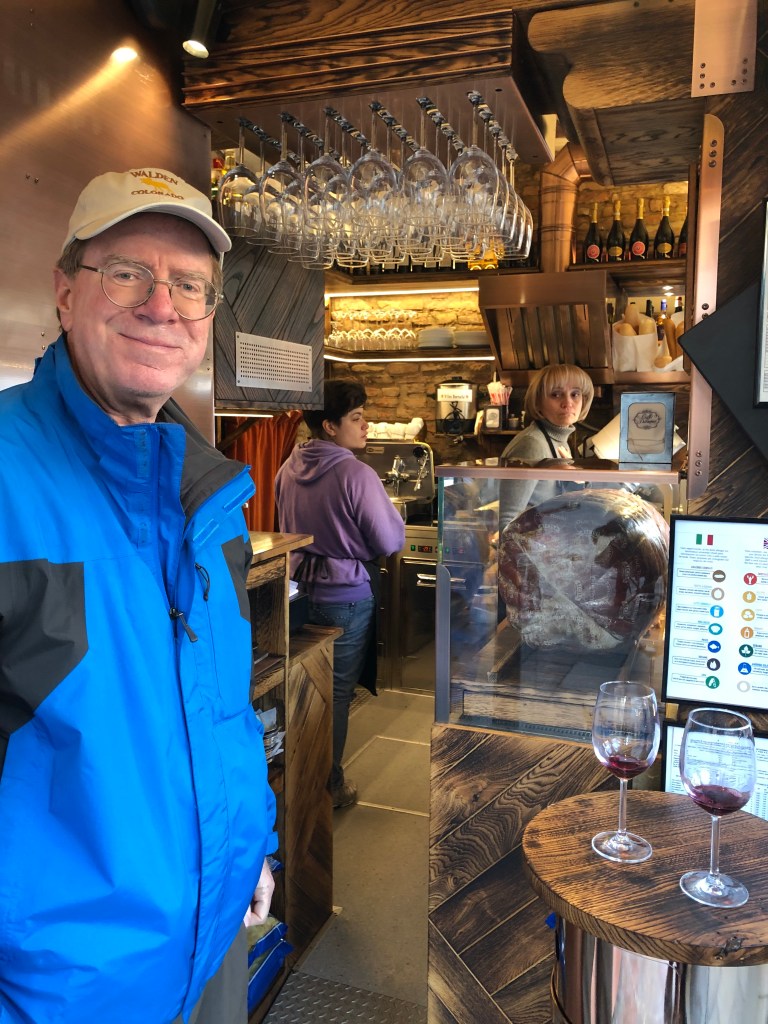
Padua is a huge university town so off we went to Bar dei Osei for a porchetta (roasted pork sandwich) and glass of wine at this outdoor sandwich bar that had live music and great view of the historic center of outdoor markets.  Yum!

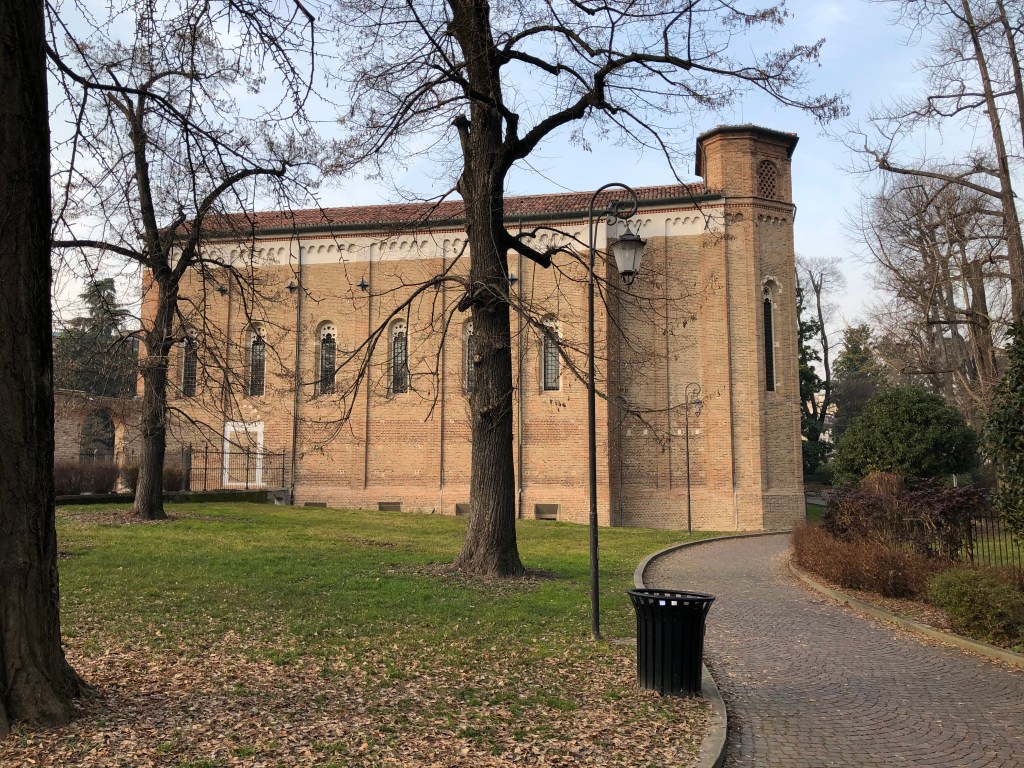
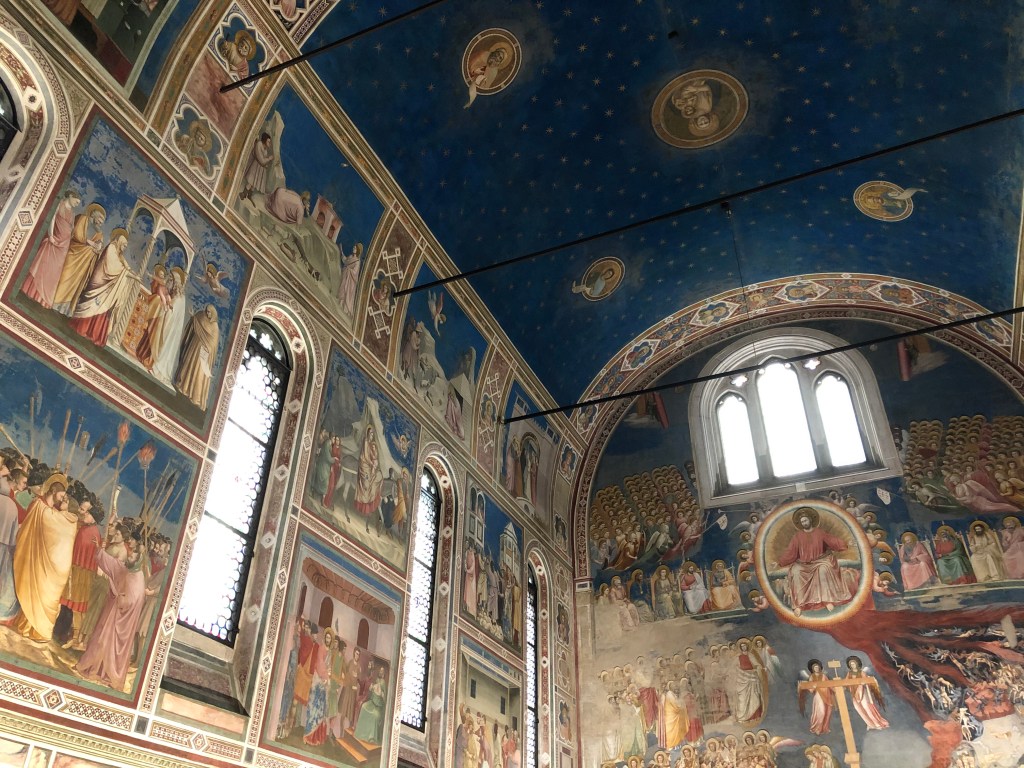
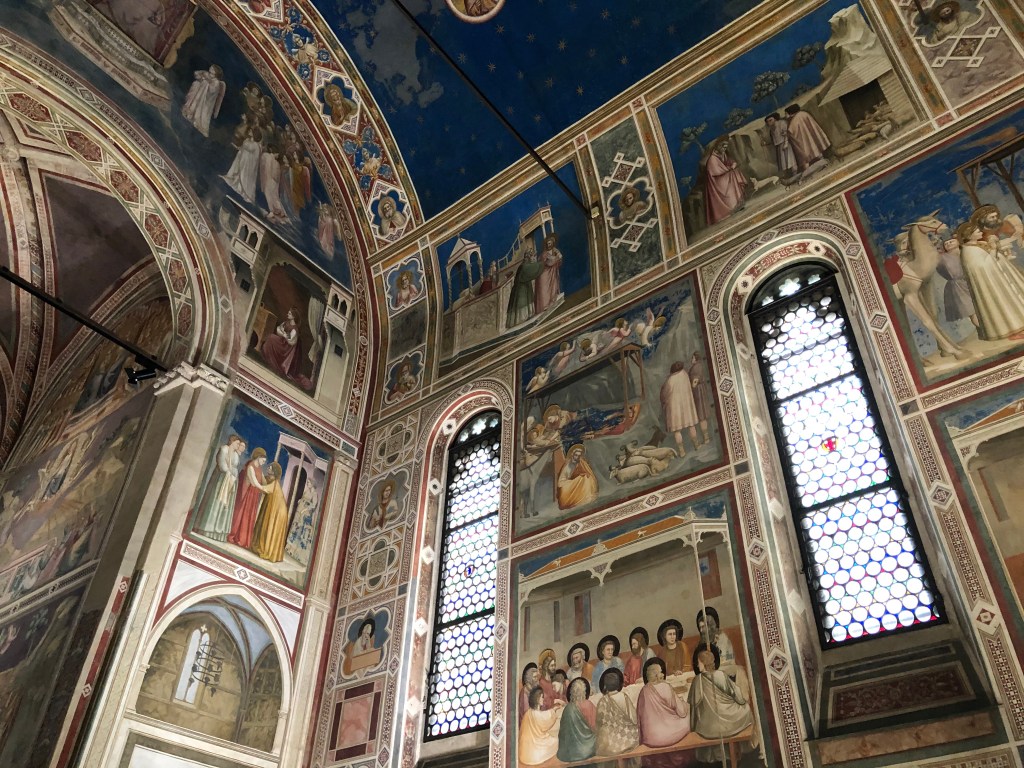
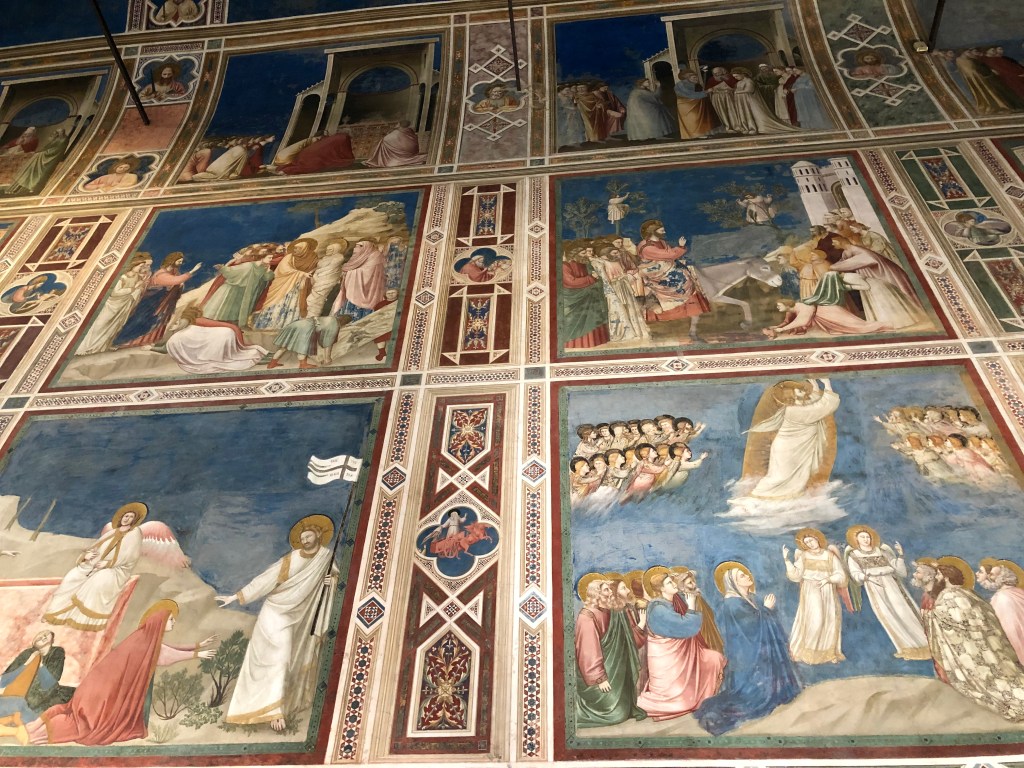
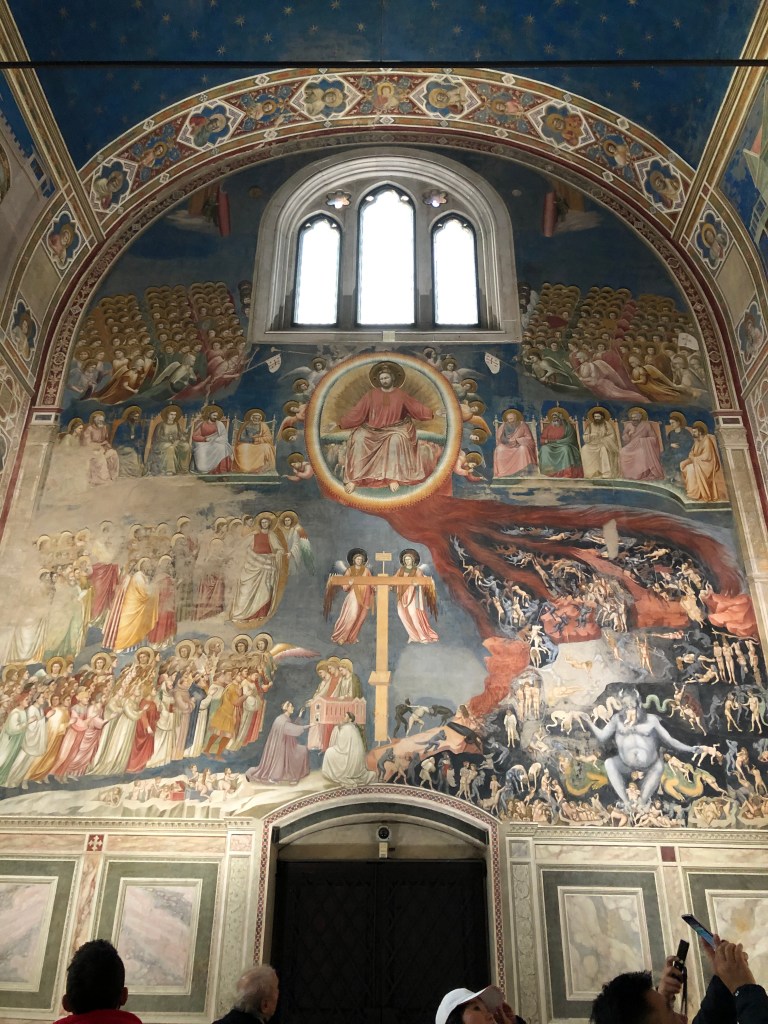
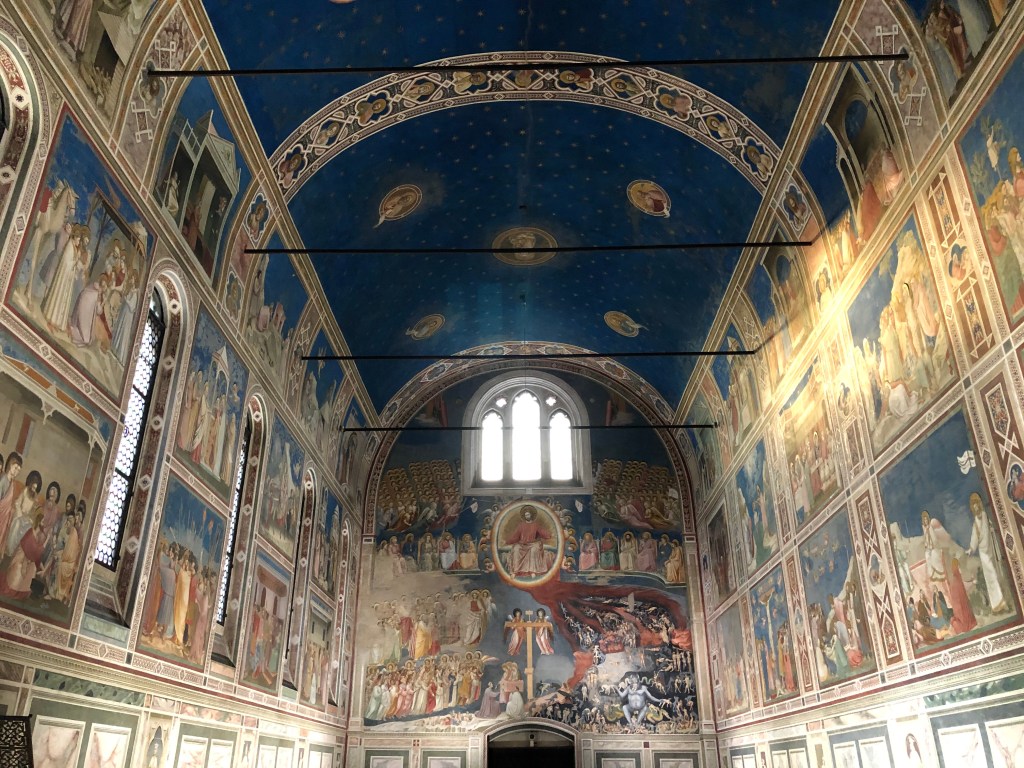
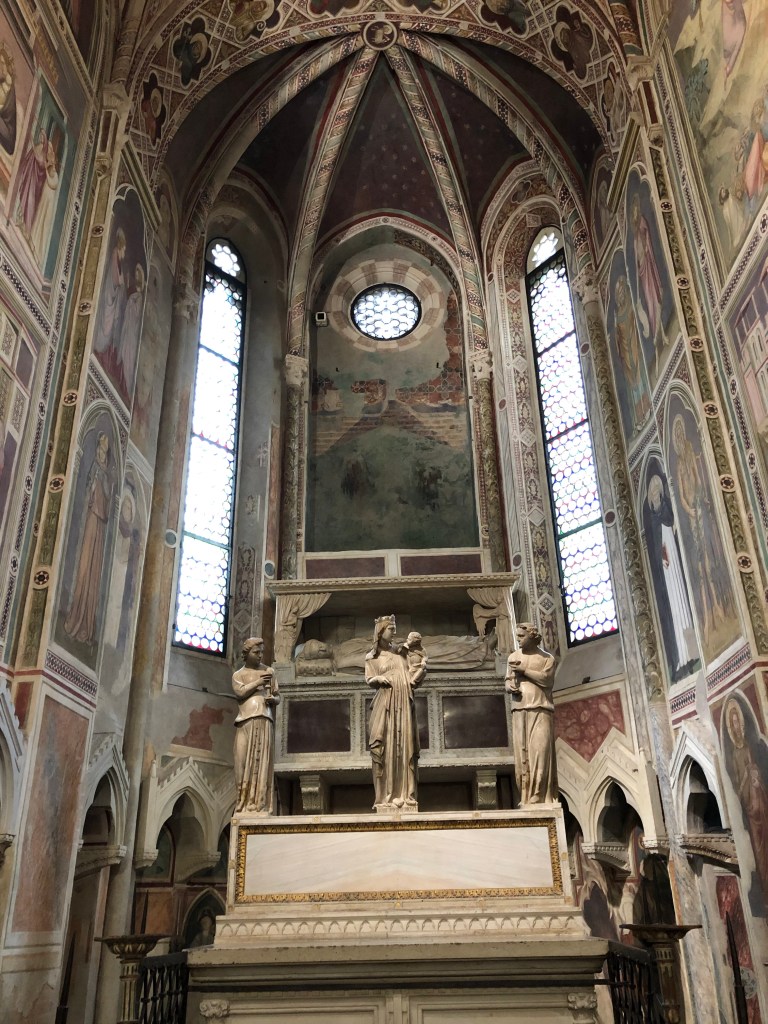
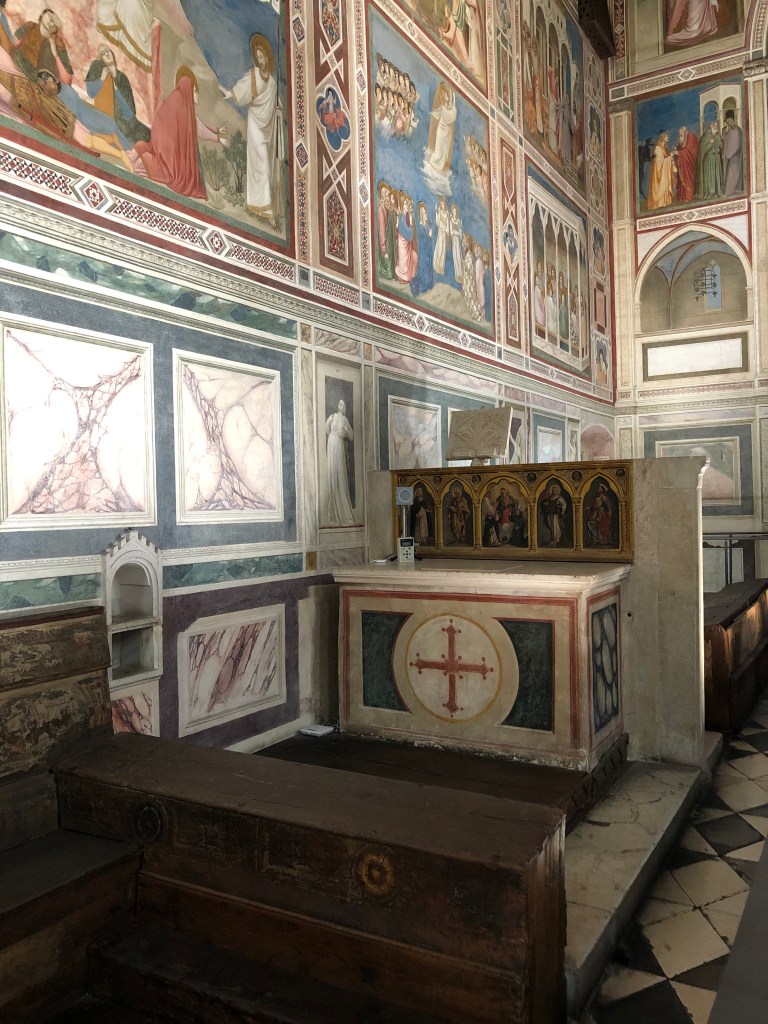
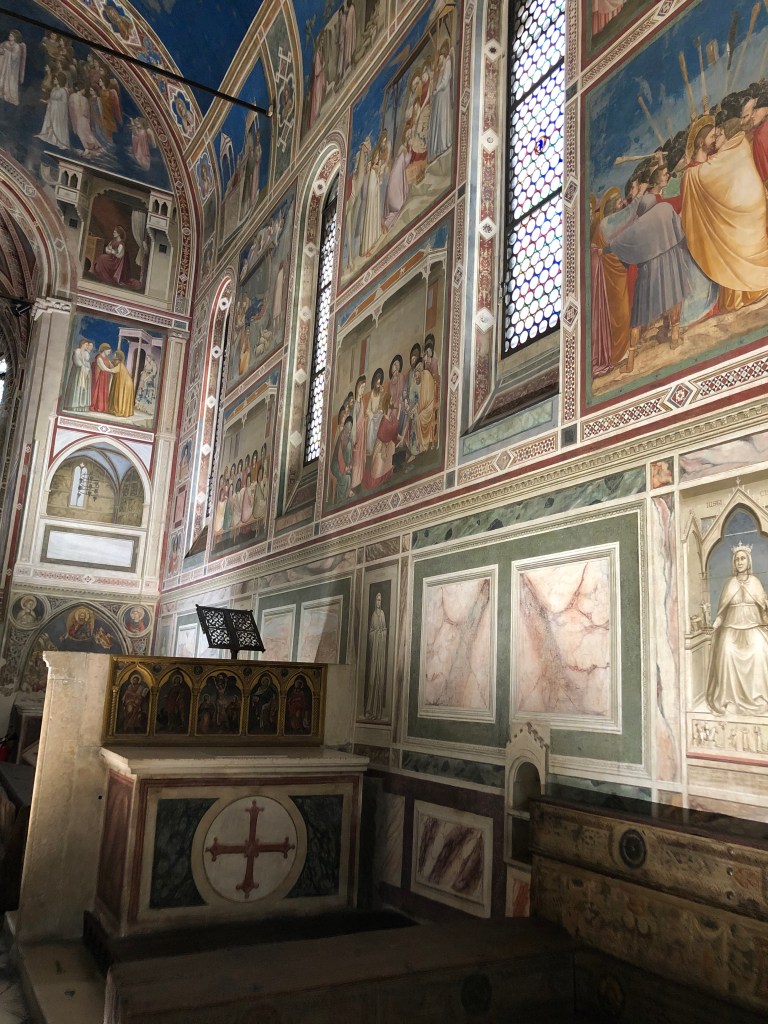
Our walks lead us north and the tram dropped us off in front of the Cappella degli Scrovegni.  This 13th Century chapel with frescoes by Giotto was stunning!  Appointment only with small groups let in every 15 minutes, this was worth the trip!  The museums, media center, and grounds added to this experience.

Beginning to get dark, our intent was to get back to Venice, have dinner, watch some American news by streaming. (Maybe not do that again – depressing) and watch a movie. Great day!

Save Venice

Melissa Conn, a Wake Forest graduate, runs the Save Venice, Inc. program here in Venice.  Her headquarters is just a few palaces down the canal!  She attended Casa Artom when she was in school and met her future husband at the Corner Café just outside our house.  The rest is history and ironically, she has a son who now attends WFU in Winston-Salem!

https://www.savevenice.org/

Save Venice Inc. is the leading American nonprofit organization dedicated to preserving the artistic heritage of Venice, Italy. Since 1971, Save Venice has funded the restoration of more than 500 artistic, architectural, and culturally significant works. In 2015, Save Venice established the Rosand Library & Study Center in Venice, creating a nexus for the research of Venetian art, history, and conservation.

https://www.savevenice.org/about

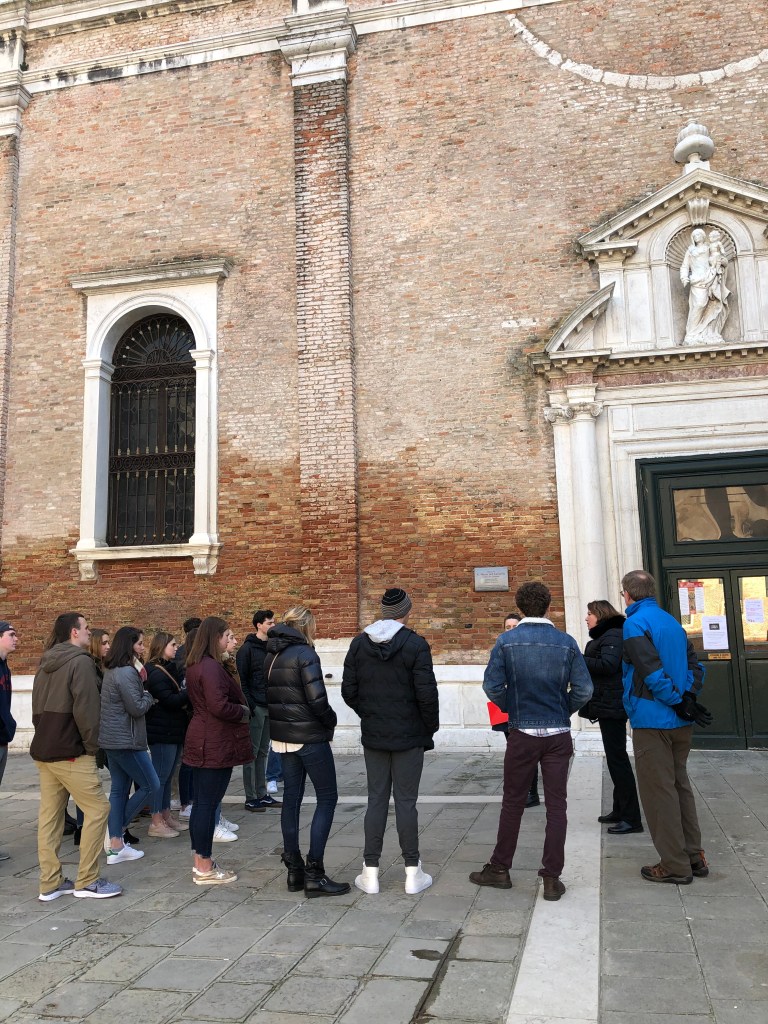
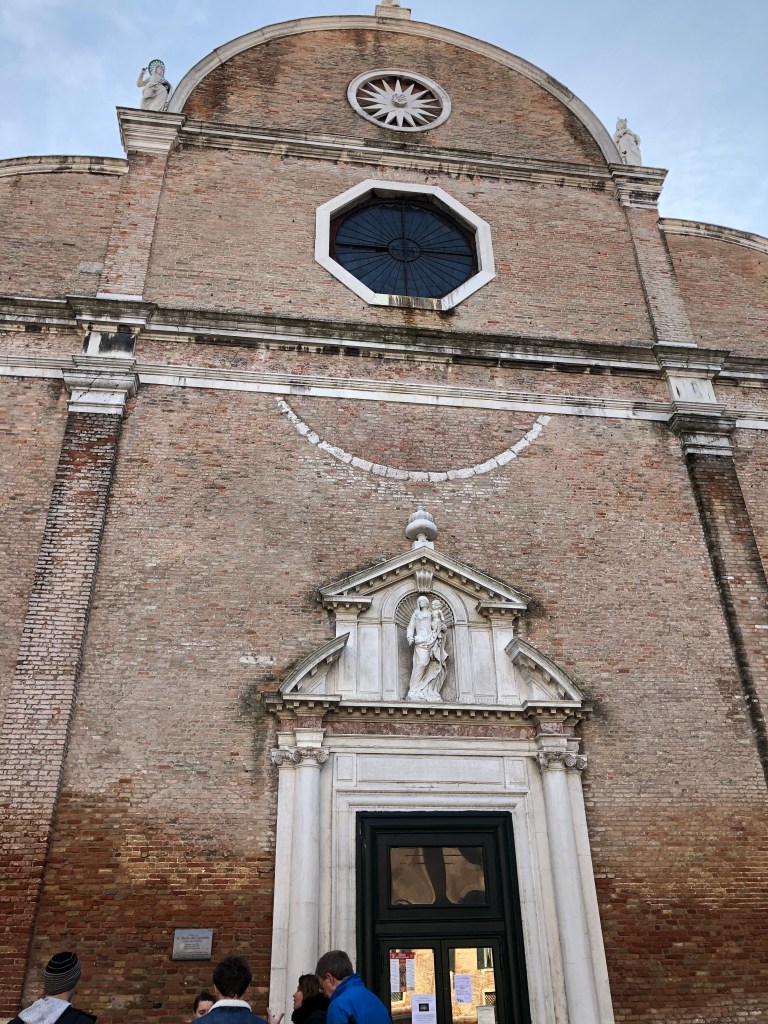
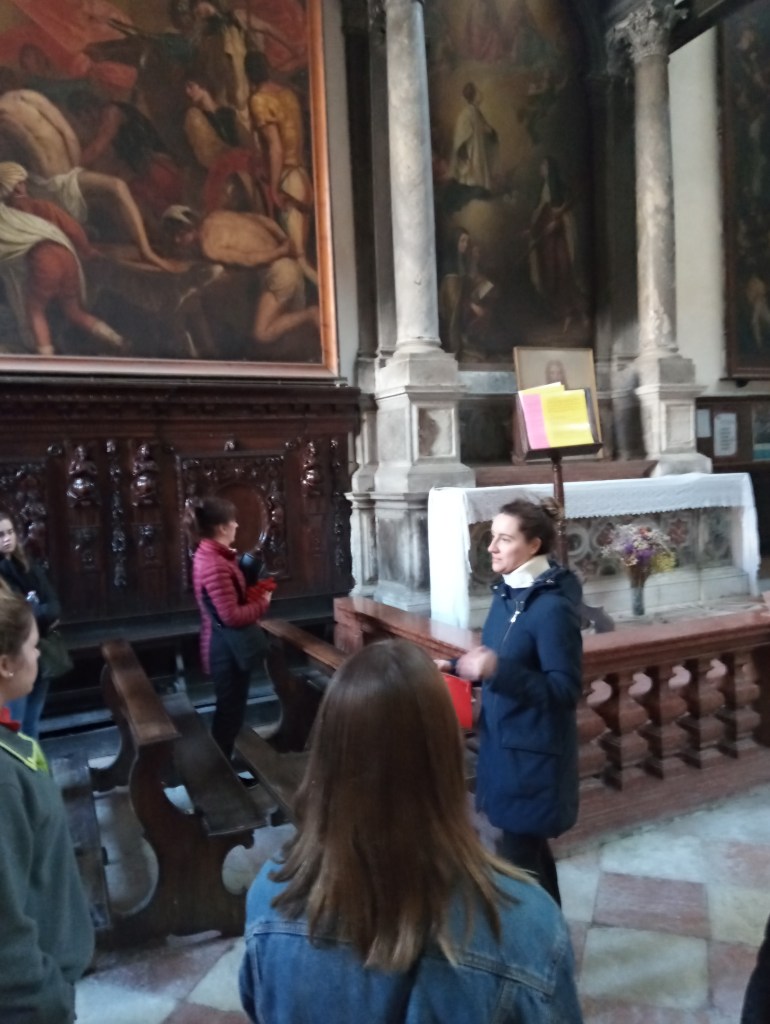
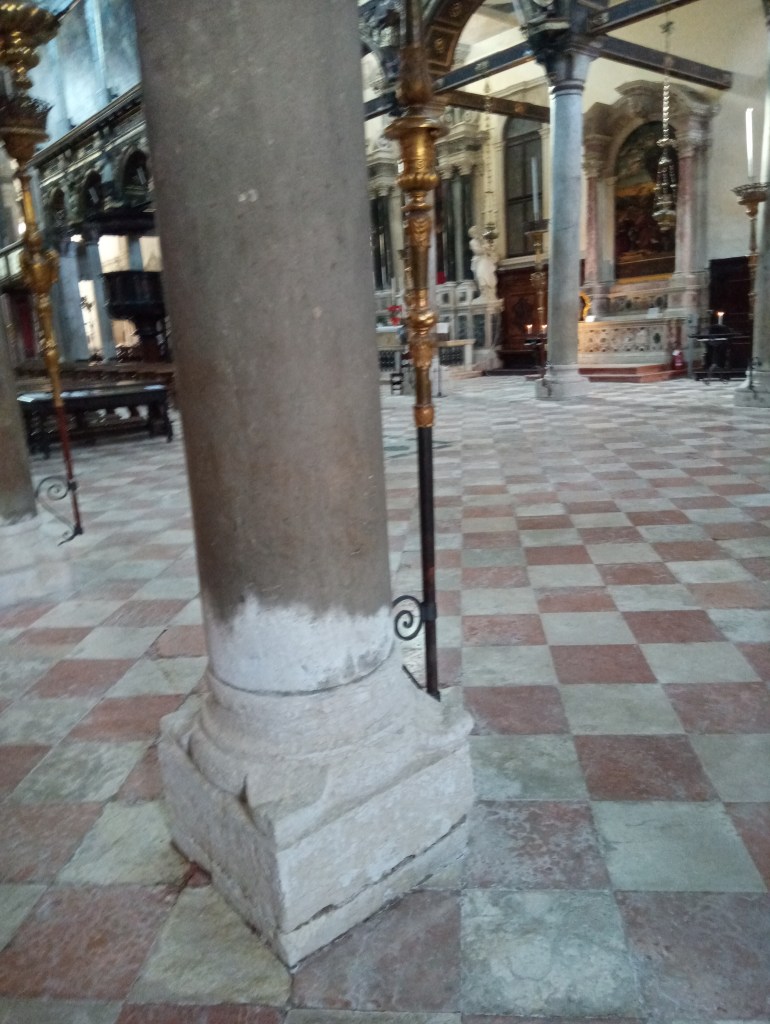
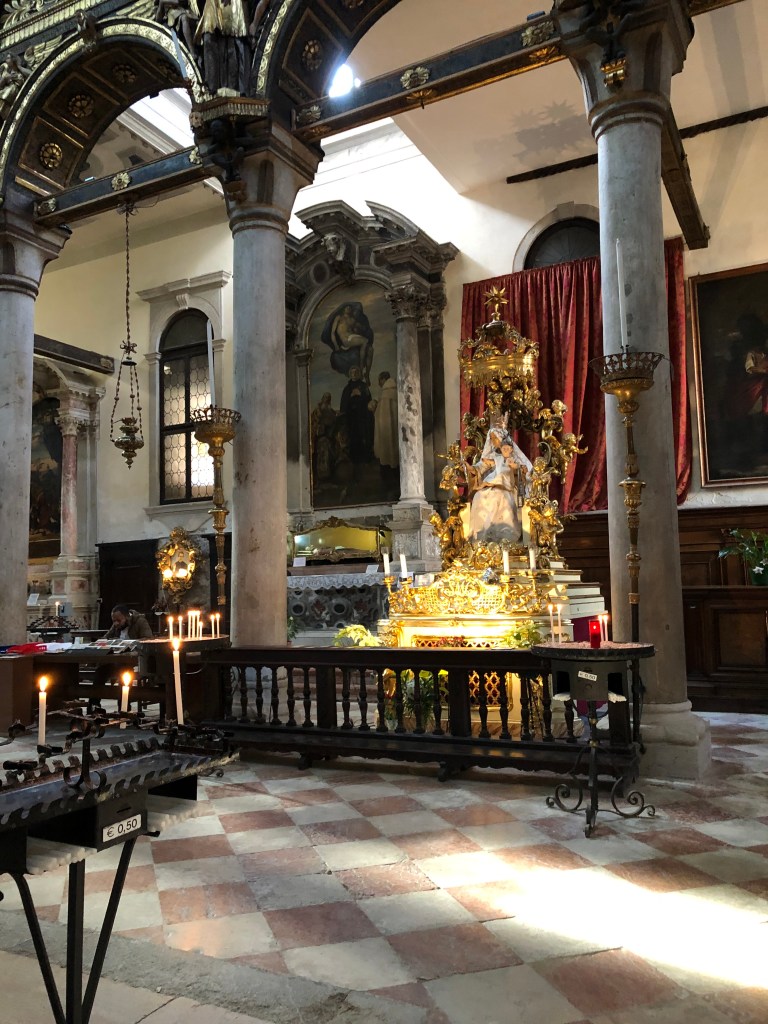
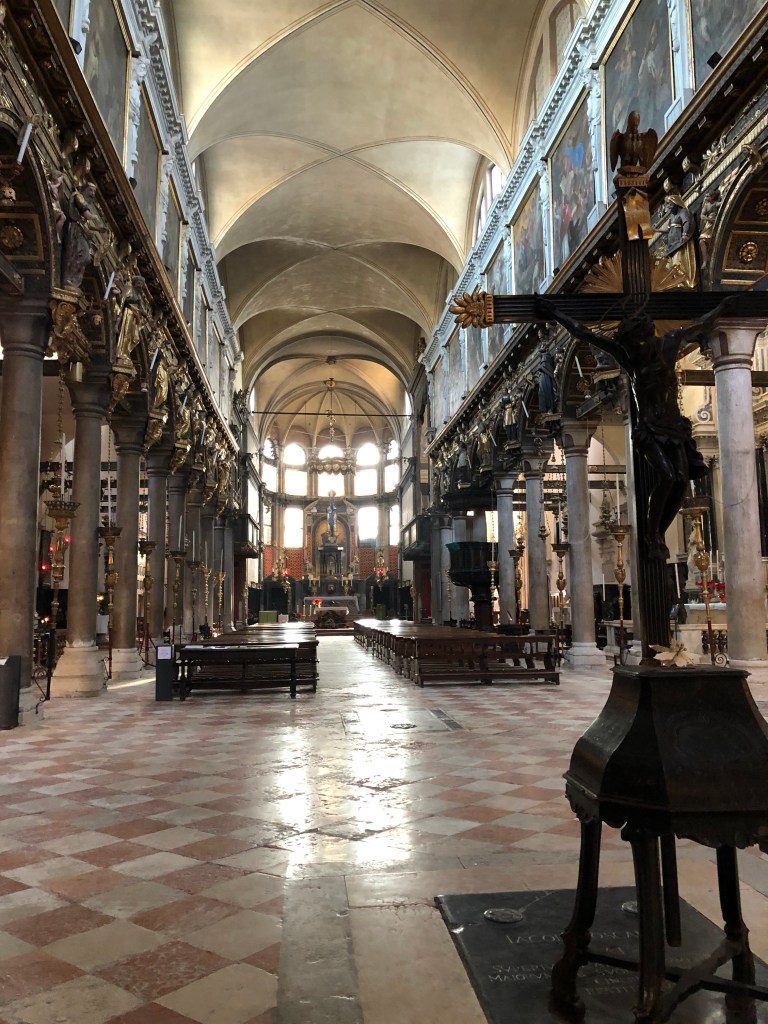
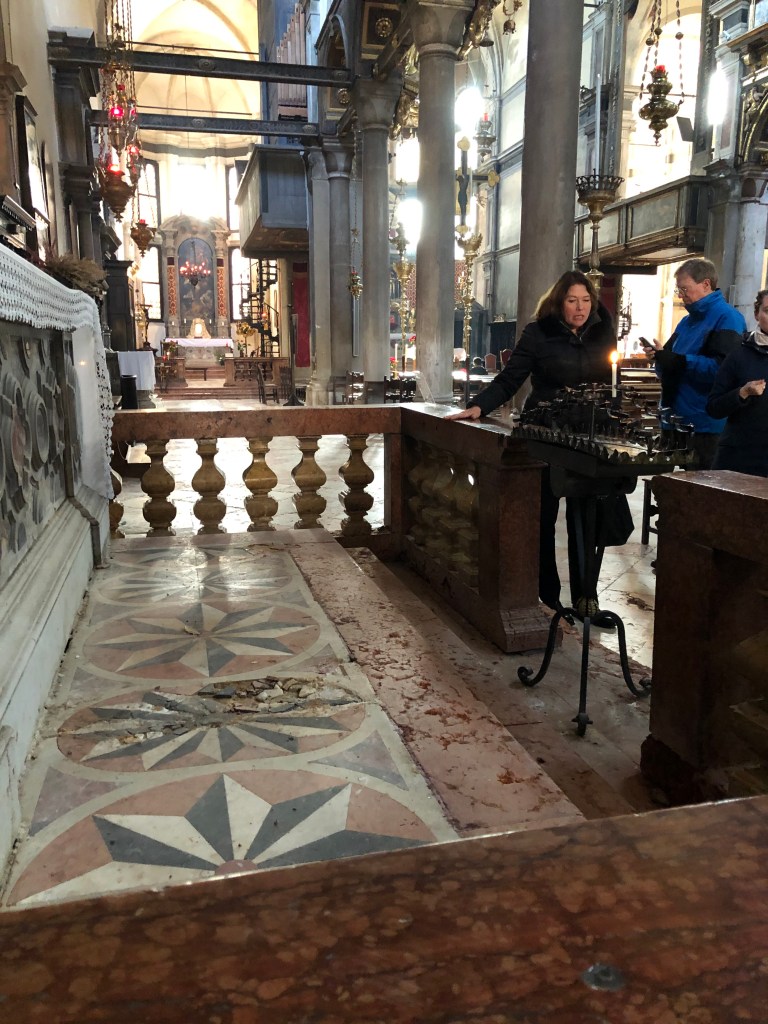
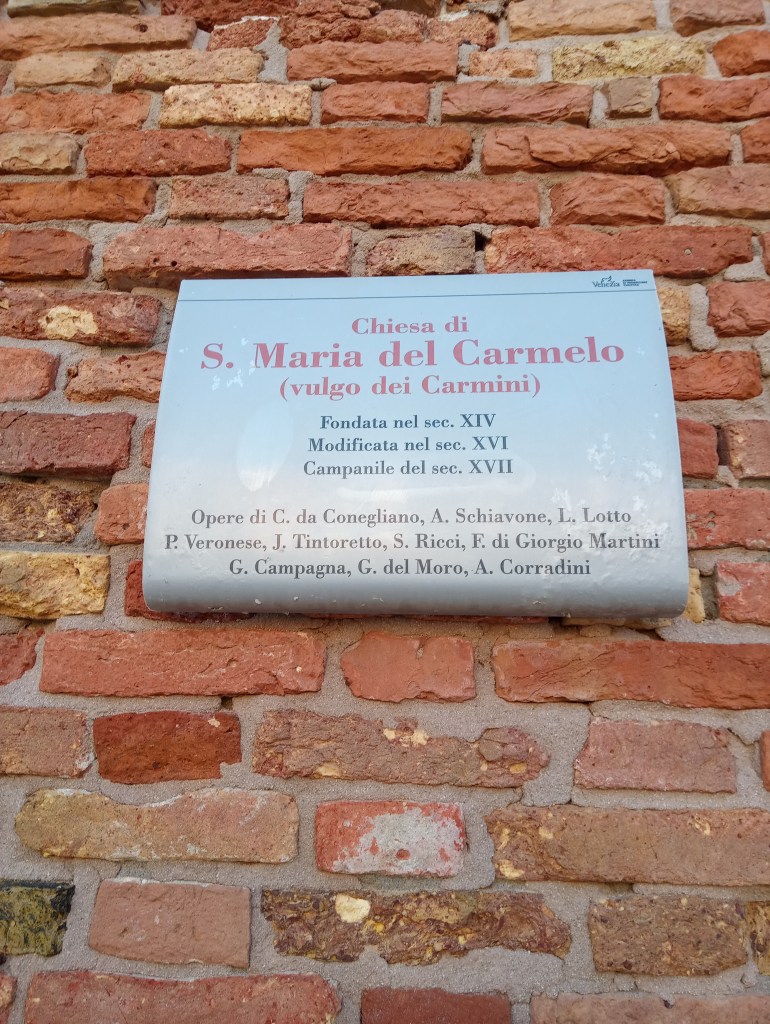
Save Venice was established in response to the serious damage caused by the 1966 floods.  Since the flooding of November 12 -17, 2019, the Acqua Alta, it has been seen great attention.  Yesterday Melissa took us around and we toured a large Roman Catholic church, Santa Maria del Carmelo, that Save Venice helped restore a couple months ago.  The salt water from the sea covered the marble tiles in the floor which needed fresh water rinsing.  Wooden furniture needed restoration.  Preventative measures, metal doorway barriers, have been made. 

Today she invited us to the Rosand Library.  The library has over five thousand volumes and also includes a substantial rare book collection dating to the 16th century, periodicals and journals, as well as dissertations.  When David Rosand bequeathed his library to Save Venice, it also included a part of his vast personal research archive.  Highlights of the archive include material on great masters like Titian, Paolo Veronese, Giorgione, Leonardo da Vinci, Michelangelo, Domenico Campagnola, Palma il Giovane, and Peter Paul Rubens. 

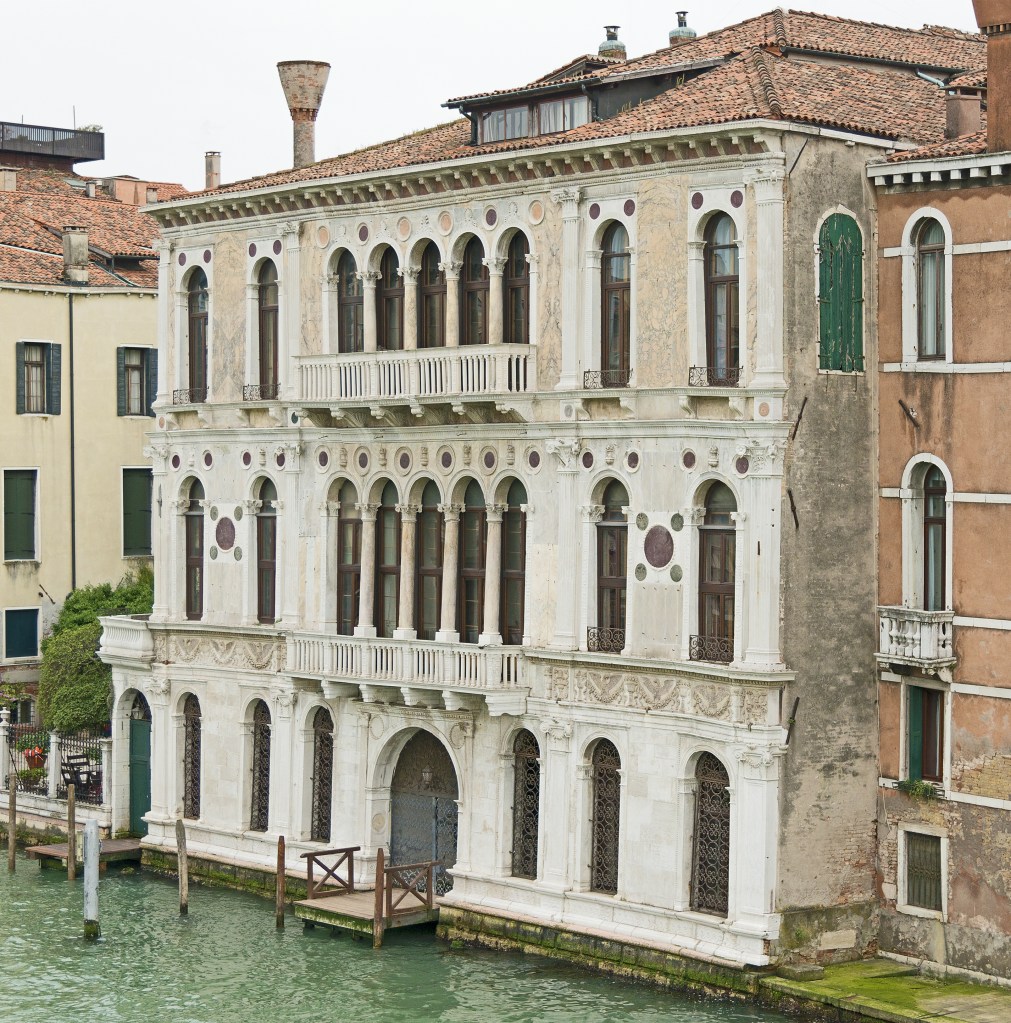
The Rosand Library is on the top floor of the Palazzo Contarini Polignac, an early renaissance building, and is a palace probably built in the late fifteenth century. The views of the Grand Canal from her office windows were stunning!

Frittelle

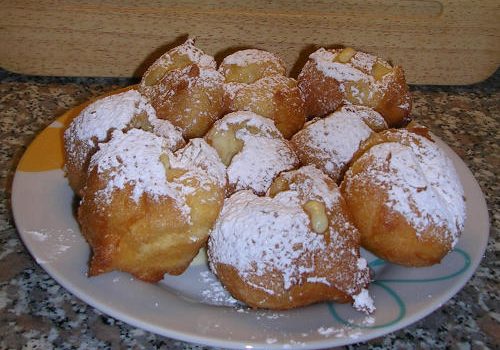
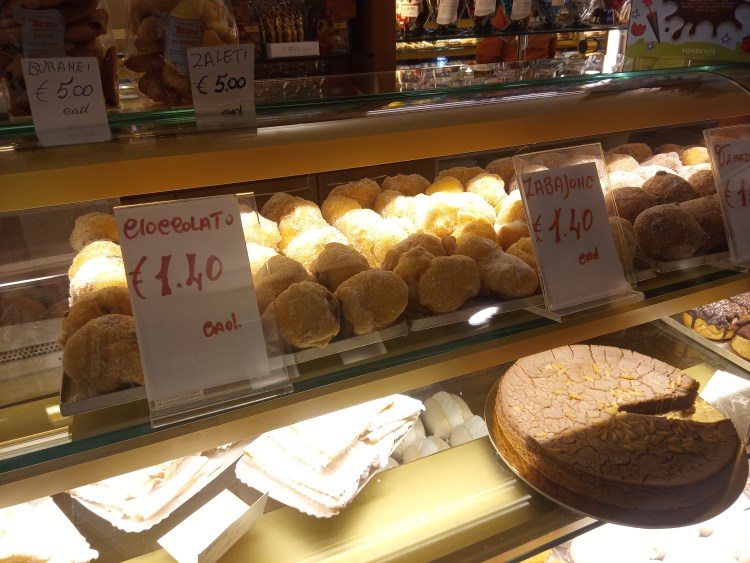
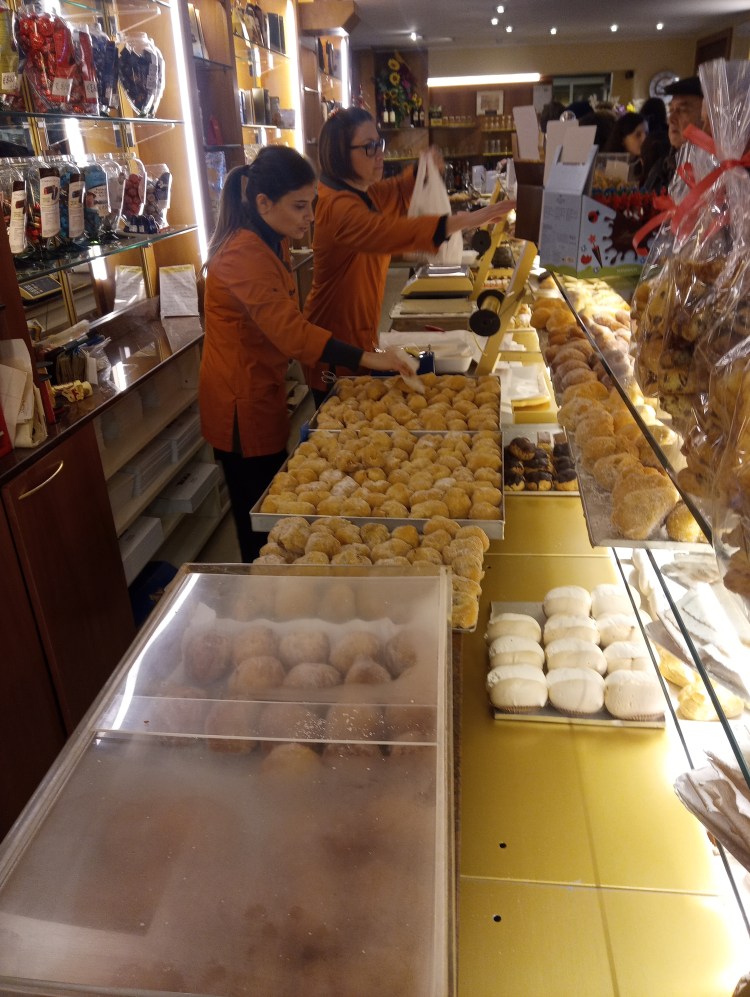
Frittelle, in Venice sometimes also called frittolle, have been known since Roman times. This sweet donut-like pastry is traditionally linked with the Carnival season. The oldest document related to this Venetian cuisine is a recipe for frittelle dating back to the year 1300! Nowadays they are known and eaten all over Italy and in many countries around the world under different names, like ‘fritters’ in England and ‘buñuelos’ in Spain. They achieved their utmost glory in Venice, though, where they were declared to be the sweets of the Serenissima Republic.

Staff

Quite a few people work here at Casa Artom. All I remember in years past was a house director/manager and housekeeper. In London it was originally, Rose (then Fiona) and Fran. In Vienna it was Gunther and a young girl from Croatia. Here in Venice we have a large staff:

Laura – Resident Director  Laura directs the daily house activities and manages the program’s financial, legal and administrative proceedings dealing also with external professionals. She also serves as the coordinator between the students and professor in residence. She implements the Venetian Campus’ projects and organizes events in the house and throughout the city.

Roberta –  Coordinator of Student Activities  Roberta is responsible for students’ integration and orientation into the city of Venice and assists students in obtaining the residency permits.

Michela – Administrative Assistant  Michela helps with administrative and organizational activities.

Massimo – Facilities Coordinator  Massimo coordinates the housekeepers’ work and is in charge of the functioning and maintenance of all appliances and electrical equipment at Casa Artom. He also provides technical assistance with audio-visual equipment, fax, printer, washing machines, etc.

Cheti – Housekeeper & Malana – Housekeeper  Cheti and Malana help in keeping Casa Artom clean and tidy. They clean the common areas every day and each bedroom once a week including laundering bed sheets  and towels.

Joy – International Program Assistant (IPA) – Joy serves as a resource to help students tackle the day-to-day challenges of living in a foreign place. She will answer any question about practical matters, such as getting around Venice, making travel plans, helping students purchase an Italian cell phone if they wish to have one.

Other than Joy, who was interviewed back at Wake Forest and came with us, these other people live nearby and have offices here in the house Monday – Thursday. Extremely helpful and hard working, they make Casa Artom successful.

“Insane Process”

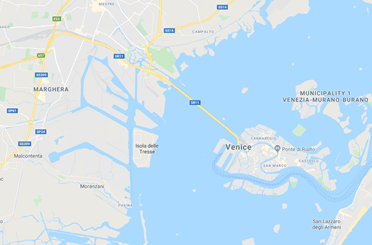
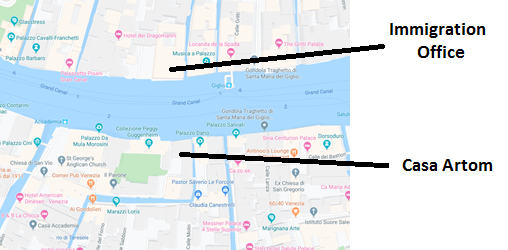
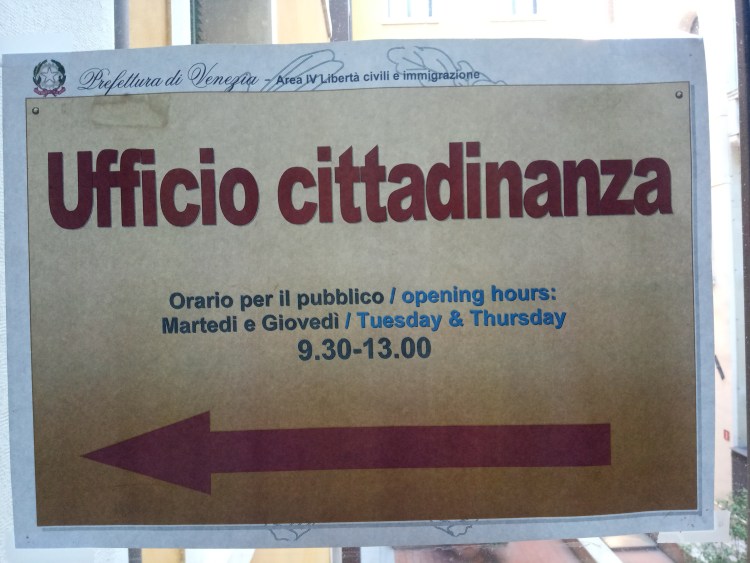
Today is the day when we establish our residency in Italy for several months. This morning early at 8:00 we left Casa Artom to meet Laura at Piazzale Roma. There we took a taxi over to the mainland to the Office of Immigration in Marghera. Laura had an appointment there for us at 9:00 am. The taxi dropped us off in a deserted-looking semi-industrial neighborhood, next to a decrepit old and yellowing building. We walked up and rang the buzzer to gain entry. No answer. A sign posted near the door explained that the Immigration Office had moved late last November to another site. That site was directly across the Grand Canal from our home Casa Artom. No one had told Laura.

So after waiting another 10-15 minutes for a taxi to come back and pick us up (same guy), we headed back over the causeway to the city of Venice. From the taxi stand at the Piazale Roma, we then walked back down to the San Marco sestieri. Quite literally, from the entrance to the building you can see Casa Artom directly across the canal! It would have taken only 10 minutes to walk here first thing.

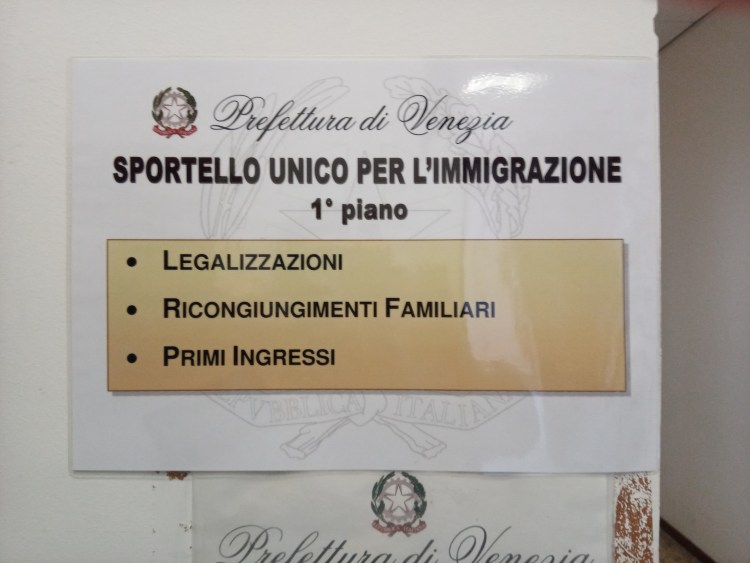
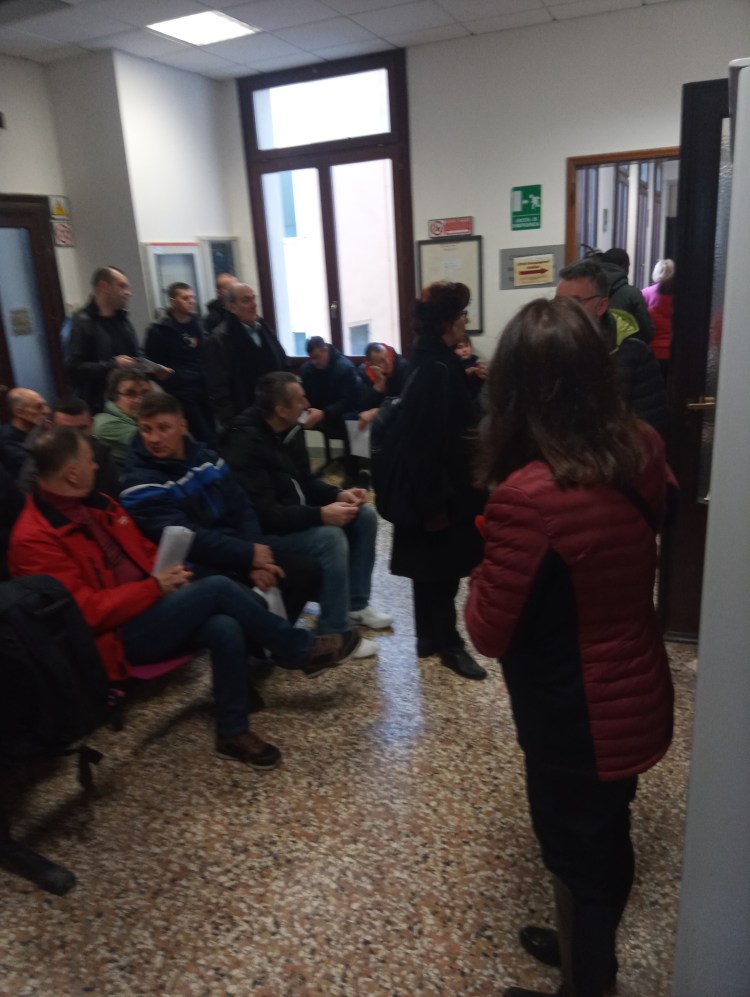
Upstairs on the 1st level the signage told us where to go. And when we walked in, the waiting area was filled with burly-looking men with close-cropped haircuts. A ticket machine was there to “take a number.” But Laura chose to jump to the front of the queue. Given the look of the he-men waiting there, I wouldn’t have done that! But the officials were very kind to her, considering our earlier jaunt miles away to find them.

So we three sat down across the desk from a nice middle-aged Italian man. His desk was littered with papers and those sort of inkpad stamps you used to see in movies at the border crossing checkpoints. He needed many different types of papers. We showed him our passports, which contained our pre-approved visas from the Italian government. But then he also needed extra copies of our passports. First I signed about a dozen papers, including one form that had six copies of the same thing. I could only think that each of these six identical forms were going to go to six more people somewhere in the government. Then they could spend time scrutinizing my information, put their own stamp of approval on it, and pass it on to someone else. The nice guy had to make copies of things, but the copier was down the hall. That took extra time. Finally after about an hour, sure enough, the guy started using his inkpad and stamps. I felt like Humphrey Bogart getting things ready for Ingrid Bergman to fly out of Casablanca. Stamp, stamp, stamp, stamp. Then the guy had to apply stickers to about three different documents. I was done. Then it was Linda’s turn, same thing all over again! We emerged from the Immigration Office at about 11:15 am.

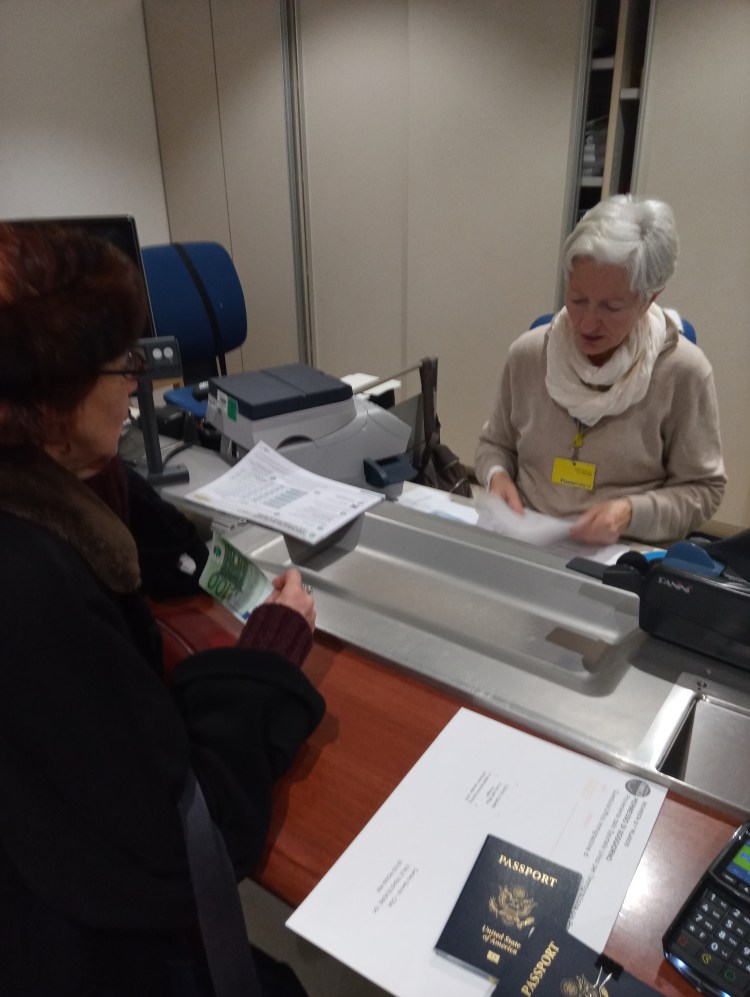
But, we were not done! The guy had given to Laura two envelopes containing some of the documents. Now we had to trek over to the Rialto post office to turn these documents in there. Once more, when we entered the lobby, many people were already waiting. After a short time her number was called, and the process started all over again. Passports, copies, more paperwork, more stamps, more stickers. This time the postal lady did Linda’s first, and it only took about 35 minutes. Then when she started on mine, her system crashed and had to be rebooted. Another 30-40 minutes later she was done with her chores. Laura then had to pay 223 euros for the two applications – only cash, no credit or debit cards. And our envelopes were being sent off to yet another Immigration Office in Rome. I think that by the time they finish processing all the forms in the different offices, we will already be back in the U.S.

We emerged from the post office sometime around 12:45. Laura’s comment on all this is that it is just such an “insane process.”

Aldus Manutius

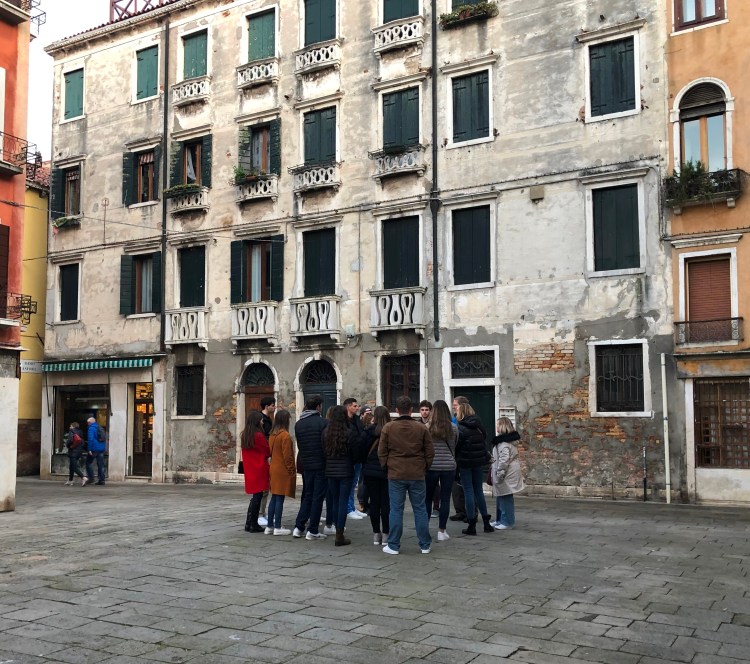
This past week the first excursion for students was to Campo Sant’Agostin. This is a tiny, quiet square in the San Polo sestiere (neighborhood), in the very center of Venezia.

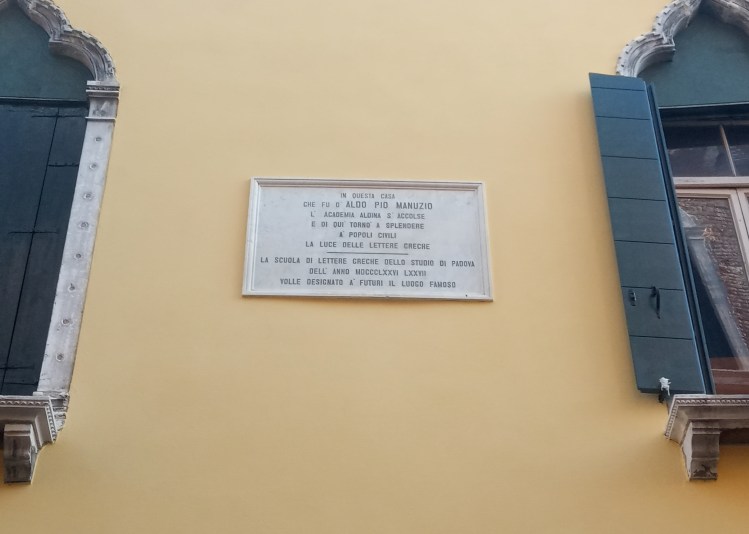
High on the second floor exterior wall of a yellow house just off the campo is a remarkable plaque, dedicated to the memory of Aldus Manutius. Born in 1449 near Rome, Manutius was educated in the classics in his formative years, and while he was subsequently tutoring he wrote two books on classical Greek philosophy that were published in Venice. He found his way to Venice in 1490, where he met Andrea Torresani and Pier Francesco. Francesco was a nephew of the Doge – good connection. With funding from these two contacts, he started Aldine Press. It was Aldine Press that was originally located at Campo Sant’Agostin. (Side note: the plaque is actually on the wrong building; the press was one block to the west).

Printing as we know it had only been invented a few years earlier, by Gutenberg in 1450 in Mainz Germany. But central Germany was not really at the crossroads of much back then. And a purge in Mainz led to a mass exodus of those with printing knowledge and technology. They came to Venice.

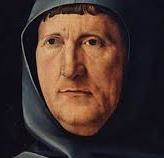
Between 1470 – 1500 more than 2 million books were printed in Venice. At the crossroads of world trade, Venice had access to raw materials (metals, ink, paper) and access to markets for produced books. Venice also had freedom of the press, because as a commercial operation that brought revenue to the city, the Doge allowed printers to do what they wanted. Printers here produced the classics for people to read for the first time. “How to” and DIY books became very popular all across Europe, including Luca Pacioli’s (pictured right) chapter in Summa de Arithmetica that essentially created double-entry book-keeping and accounting as we know it today. From that one book merchants all across Europe adopted a single standard for managing their affairs.

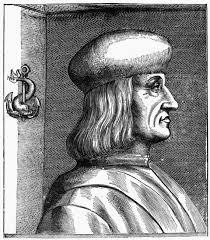
Aldus Manutius
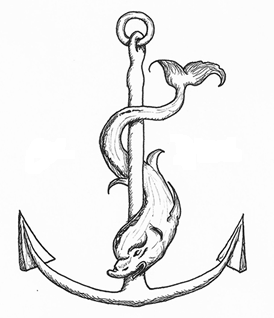
Aldine Press logo

Manutius was central in this surge in printing, even though he showed up late. The logo for Aldine Press was the anchor and the dolphin, “speed in execution, firmness in deliberation.” There Manutius invented “italic” type, replacing the block letters used previously and making print easier to read. He is responsible for standardizing what we now know as punctuation. The Doge gave him a monopoly on his own works, eliminating competition from printing the same thing. Nice to have friends in high places!

He also invented the Octave as a book format. Printing presses usually started with paper that measured 12″ x 16.5″. Fold this in half and you get a “folio” (the format for the first printing of Shakespeare’s works in the early 1600s). Fold it again and you get the “quarto.” A third fold results in the “octave,” whose final dimensions end up being 4.1″ x 6″. This size can fit in your pocket, easy to carry around. And because each sheet of printed paper could now get eight images, the cost per book produced came down precipitously, putting reading in the reach of the general population.

As a measure of his importance in the world of printing and publishing, Doubleday adopted the same logo for their line of pocket-sized paperbacks.

T Fondaco Rooftop Terrace

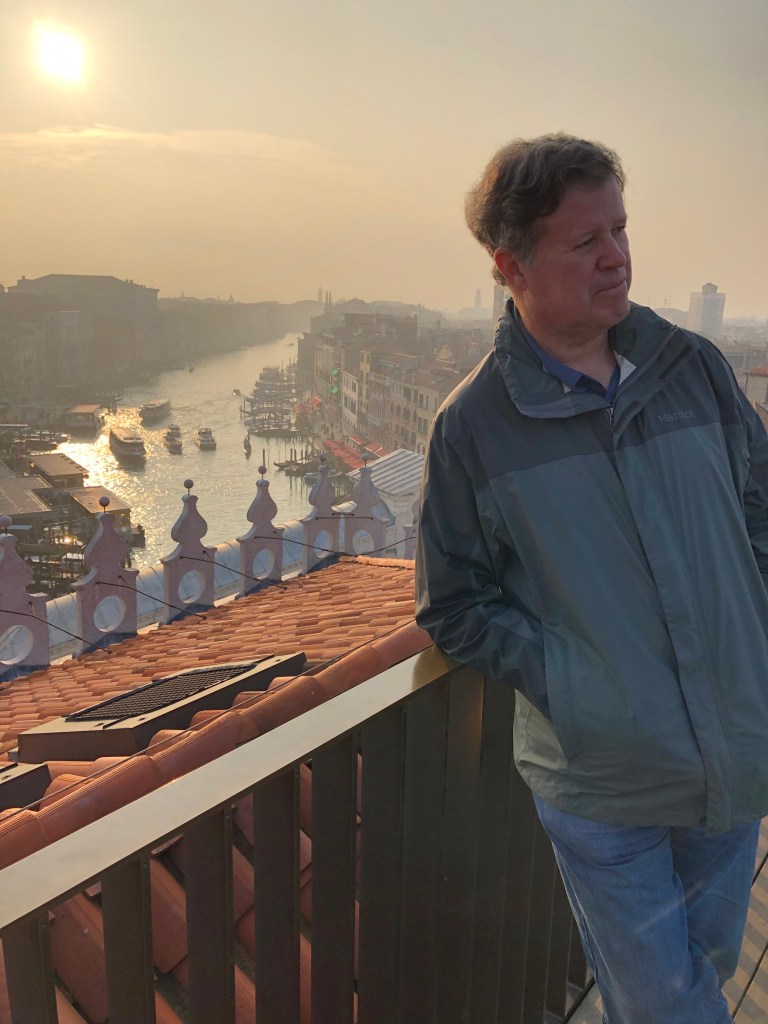
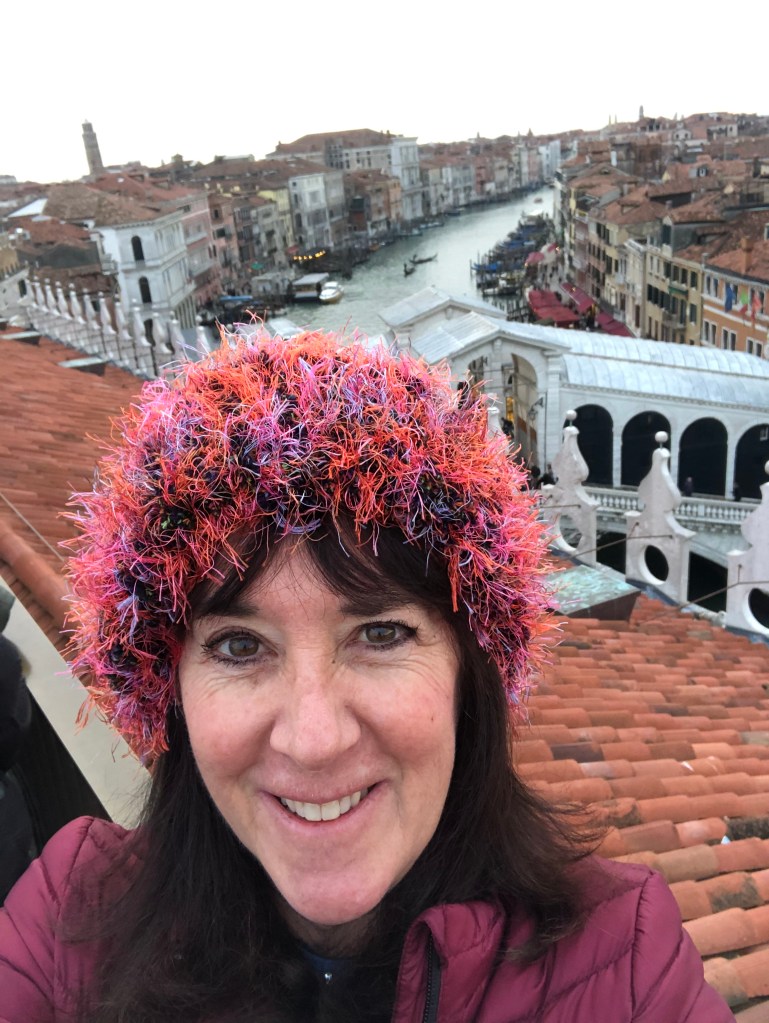
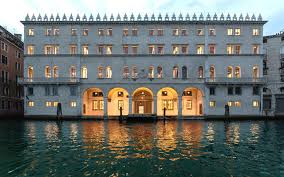
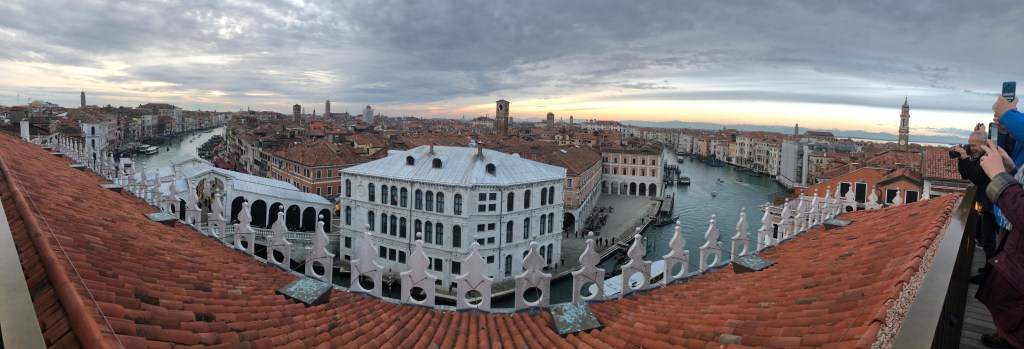
Our whole group went to the observation deck across from the Rialto Bridge to see the sunset tonight.

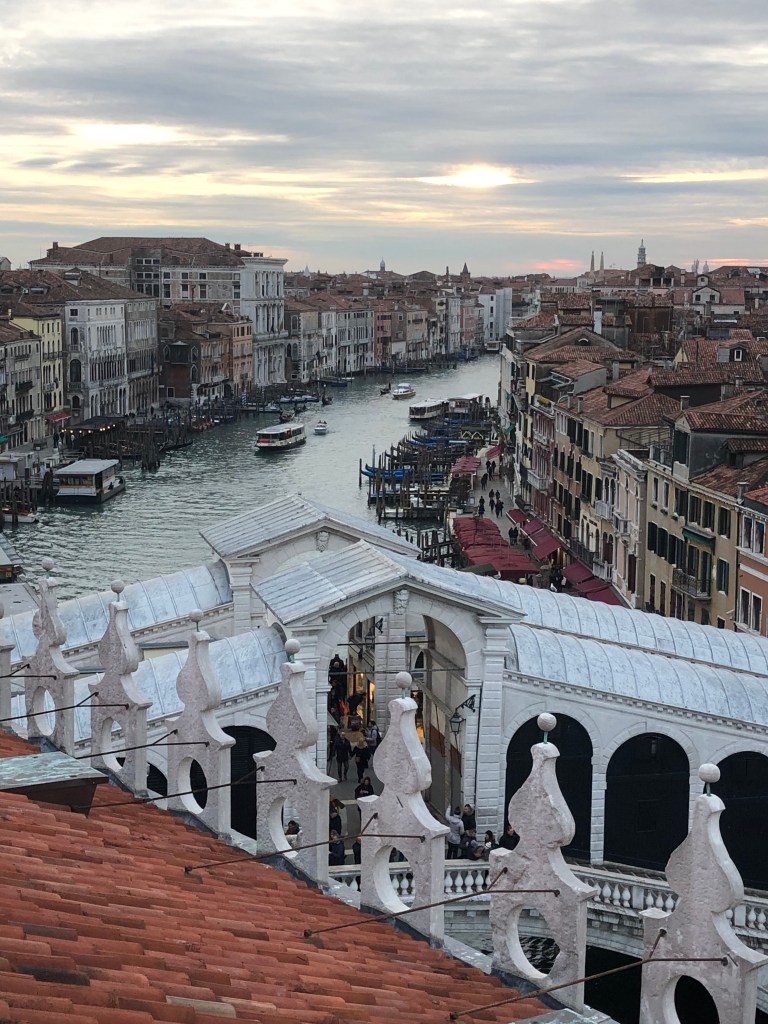
This marble palace was first built in 1228 and takes its name from when it was a base for German merchants. Over the years, the building has also served as a customs house for Napolean and a post office during Mussolini’s rule. It now has become a luxury multi-level shopping mall. The observation deck is a must see….and….it is free!

Curriculum

Courses at Casa Artom

Spring 2020

Shaul Bassi
Claudia Meneghetti

113. Intensive Elementary Italian. (4h) Intensive course for beginners, emphasizing the structure of the language and oral practice. Students acquire the fundamentals of the Italian language: basic structures and essential vocabulary are introduced through quick explanations and a set of activities that encourage their immediate use in everyday situations. Students are gradually engaged in the discussion of social and cultural aspects of Italy today, with special emphasis on their Venetian experience.

153. Intermediate Italian. (4h) Intensive exposure to speaking, listening, reading and writing at the intermediate level with special emphasis on the surrounding Venetian culture. All the main grammar patterns are studied, enabling students to improve their reading, writing, and conversational skills. One weekly hour is fully devoted to conversation in Italian on topics in Italian culture.

217. Studies of Italy. (3h) Survey course on Italian literature addressing special cultural themes in Italy to give to students in Venice a deeper and broader understanding of Italian cultural complexity. Different types of texts – short stories, essays, poems, news items, film, songs, visual material – are read both to improve the students’ acquisition of the Italian language and to address the most important aspects of Italian society and culture (family, politics, religion, gender, migration, sport, food, etc.).

Agnese Chiari

Art 269. Venetian Reinaissance Art. This course offers a general survey of Byzantine and Gothic art in Venice as an introduction to the work of major Early Renaissance painters and architects, such as a Mantegna, Bellini, Carpaccio, Codussi and Lombardo. In the 16th century the focus is primarily on the paintings of Giorgione, Titian, Tintoretto and Paolo Veronese and the architecture of Sansovino and Palladio.

Lectures in class are supplemented by visits to churches and museums of Venice.
Field-trips to Torcello and the islands of the Venetian lagoon are part of the program.

Monica Chojnacka

HST 119 (3h) Venice and the World examines the city’s thousand-year history primarily through walking lectures that take place across the city. These walking lectures cover most of Venice’s historic center while paying special attention to certain palaces, churches, streets and squares that were the site of important historical events. These walks are supplemented by readings and in-class discussions and lectures.
Assignments include participation, a quiz, a group project, an essay and a final exam.

Monica Chojnacka and Roberta Cimarosti

HMN 160A. Venice Today. The course is student-centered and interactive, based on the exploration of issues confronting the city of Venice through joint activities with the students of the University of Venice Ca’ Foscari and involving field research. Mixed teams of Italian and American students develop research projects on the following topics: Travel and Tourism, Lagoon Environment, Migration, and Cultural Heritage. At the end of the semester, the different teams present their projects to the class.

Page West

BEM 371 Strategic Management (3h)
Focuses on the derivation of competitive advantage and sustainable, superior performance by organizations. Emphasizes the shape, character, and overall direction of the total enterprise, and the activities of managers who are responsible for achieving strategic coordination and coherence across functions and divisions. Course content includes analyzing the effects of industry and competitive environments on the firm, determining the basis upon which the firm should compete, formulating and implementing integrative action plans, and strategic leadership. Strategy analysis frameworks are applied to situations including for-profit and nonprofit organizations, diversification, global strategy, and strategic change. This is a discussion-oriented class in which principles of strategic management are applied to complex case studies. Satisfies the requirement for all BEM, FIN, and ACC majors. 

BEM 375/ECN 290 Merchants of Venice: From Mercantilism to Global Capitalism (3h) GTCS
Explores how Venetian and Italian commercial history led into the development of commerce, mercantilism, and 21st century global trade. 
Satisfies BEM concentration in International or Consulting. Counts as credit toward Global Trade & Commerce minor. Satisfies and Economics major credit.

Caterina Cruciani

ECN 271 The Political Economy of Italy (3h) (D)
Traces the role of Venice as an important cultural, military, and economic power from its founding in the 8th century to today.
Satisfies the Division IV requirement.

Design a site like this with WordPress.com
Get started