It’s pretty tough finding your way around Greece, if you do not encounter anyone who actually speaks English. I belonged to a Greek society in college, but knowing the call letters for my frat, chi psi, in no way prepared me to get about Athens.
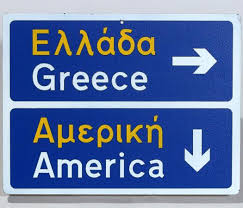
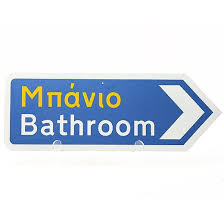
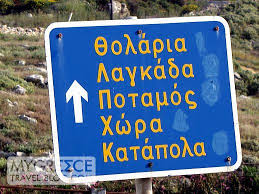
I did manage to learn how to say thank you, as something like “ef churiasto.” Otherwise known as σας ευχαριστώ. OK.
On the other hand, we did learn that many words and phrases we use today had their origins in Greek, the language today that is the same language approved as the official language way back when. Seriously, Alexander the Great issued an edict in the 4th century BC about what language would be spoken across Greece and its neighboring provinces. That is still spoken today. Turns out the Latin-based languages, of which English is derived, were often based on Greek roots.
I mentioned in an earlier post about “acropolis” meaning high city. Hence we have acro-bat, or acro-phobia, each representing things having to do with high. Then I also mentioned that “stoa” was the place where people shopped, what we now call the store.
There are other words that fascinated me.
Barbarian. The Greek language is loaded with hard consonants and often spoken gutturally. Sometimes hard to listen to when it is spoken fast. Greeks used to call foreigners who did not speak Greek by the word “barbar,” which insinuated those from someplace else who spoke with softer words. So barbarian was a foreigner. It was only later in history that it came to mean an evil foreigner.
We visited a burial mound in Mycenae called a “tomba.” Hence, our word tomb.
The Greek word for abode – actually floating house, referring to boats and such – is something akin to “naus.” Hence, our aurally familiar word house.
The town of “Delphi” was named after Apollo turned himself into a dolphin.
The Greek letter “delta,” which we use to describe the change from the river to the sea, when used in science stands for change.
When we visited Epidaurus and saw the huge outdoor amphitheater, it was explained to us that the actors in the comedies and tragedies performed there used to step into a tent set up just behind the stage, for changes of costume. The tent was called a “skene,” and today we know this as scene. Since there were no real sets in these original plays, the actors coming on stage in new costumes set the scene.
“Kylix” is the Greek word for cup, which became our chalice.
And when we heard about democracy and voting techniques in ancient Greece, occasionally there were votes to “ostracize” some member from a community. The votes were cast using small pieces of broken vases, called “ostracon.”
 2020 Vision of Venice