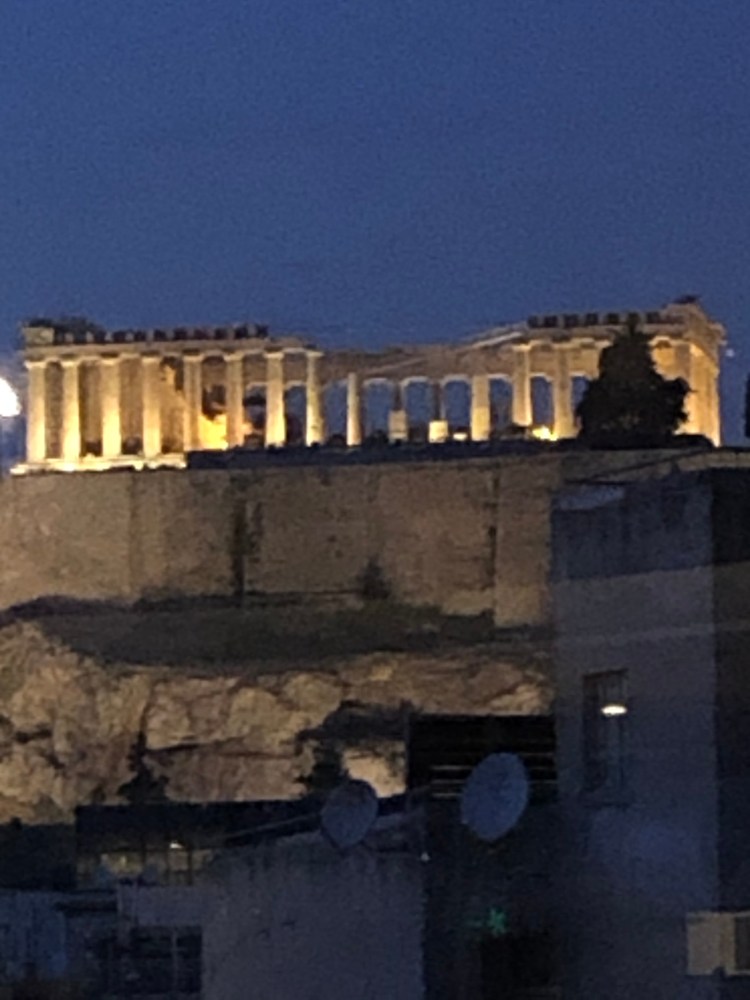
Athens has a height restriction, so none of its buildings interfere with the view of The Acropolis. This and Mt. Lycabettus are the two natural landmarks in the city. And you can see them from everywhere.
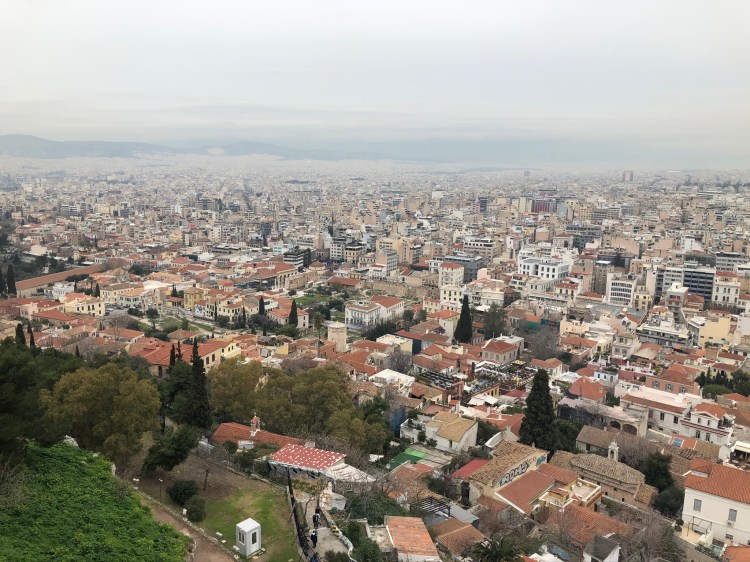
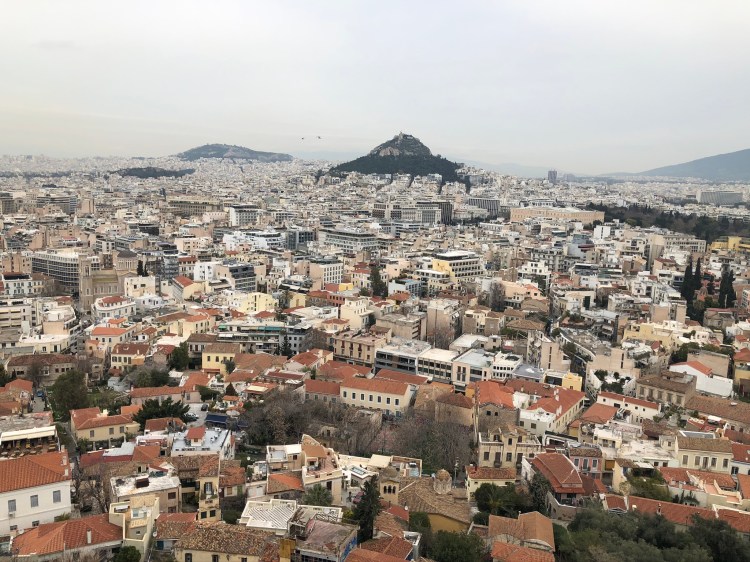
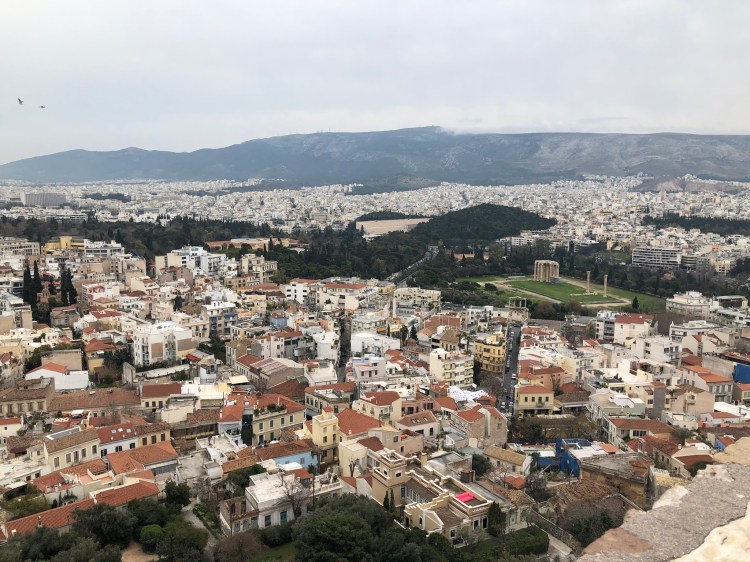
As with most ancient city states The Acropolis was the location of the first settlement in the area, some 4000 years ago or so. Then as the population gradually grew, and Athens gained power and presence in the ancient world, official buildings were located atop the rock and houses were relocated below. Then finally the top became home only to temples honoring the gods.
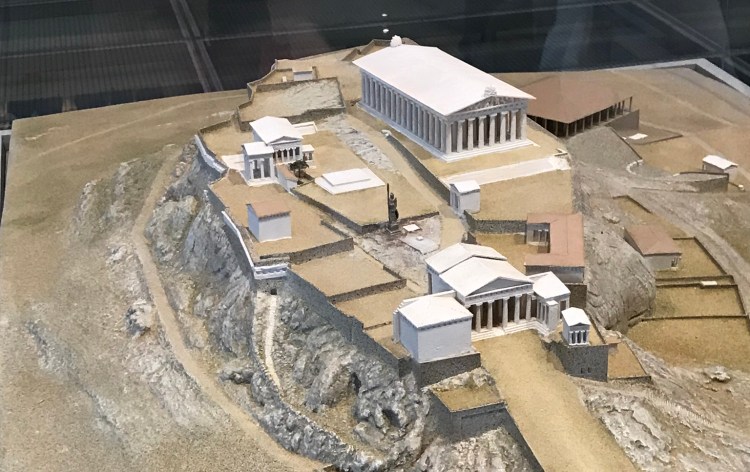
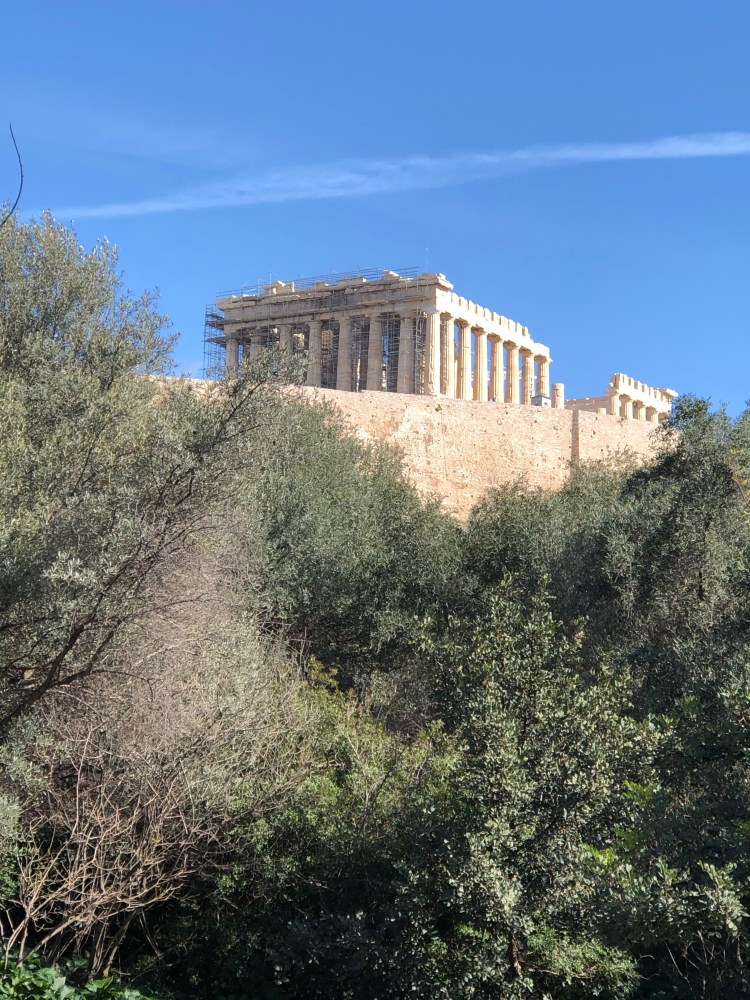
On Friday we met our small group in the Paka neighborhood of Athens and headed for The Acropolis. The approach from the pedestrian thoroughfare downhill takes you up through cedar and oak trees along winding paths to its base. Past the official entrance the trail becomes steeper with more and more steps. Not for meek, in fact one elderly couple had to stay behind. Suddenly from around a corner you emerge facing the Propylaea, with the Temple to Nike Athena straight above you to the right.
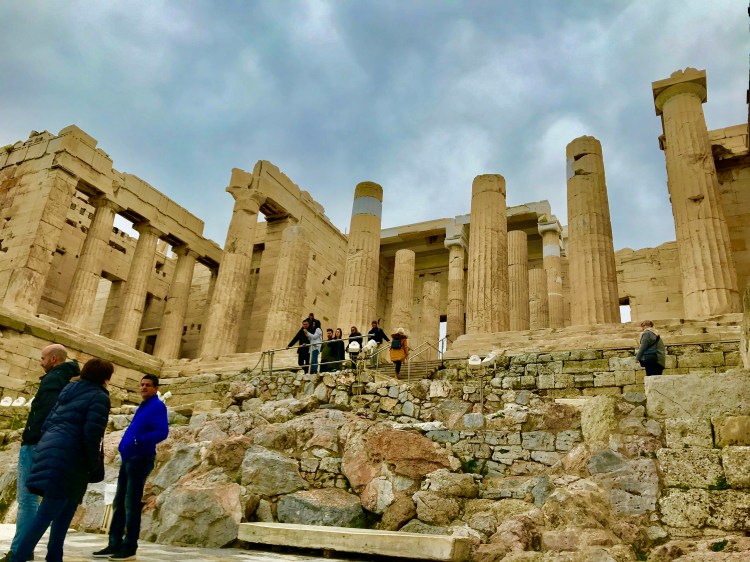
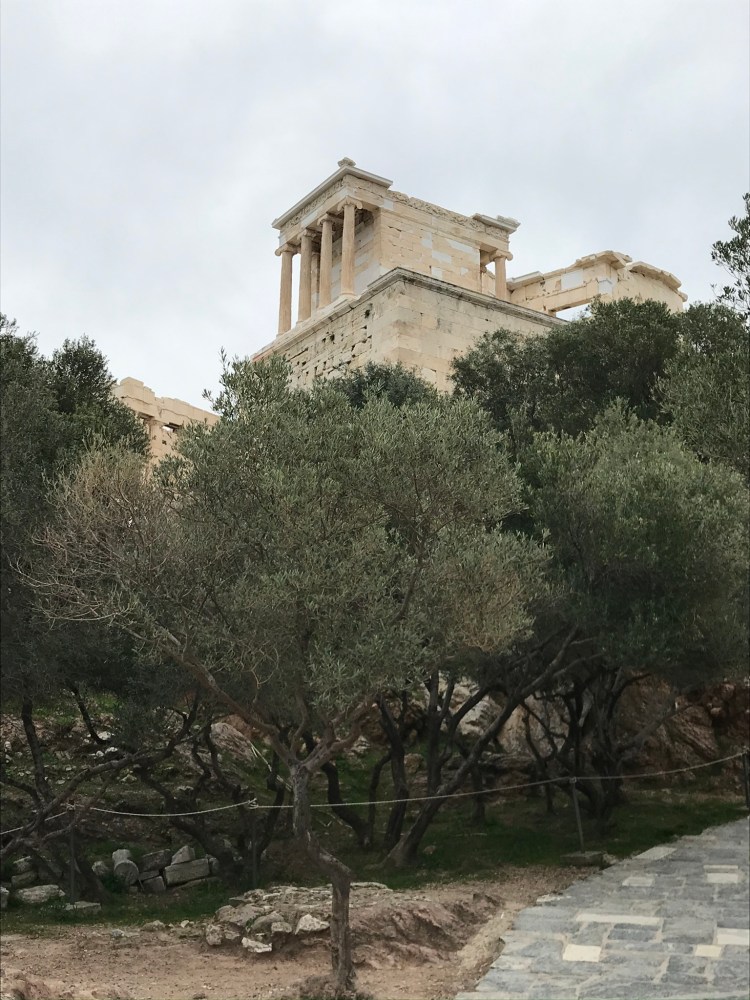
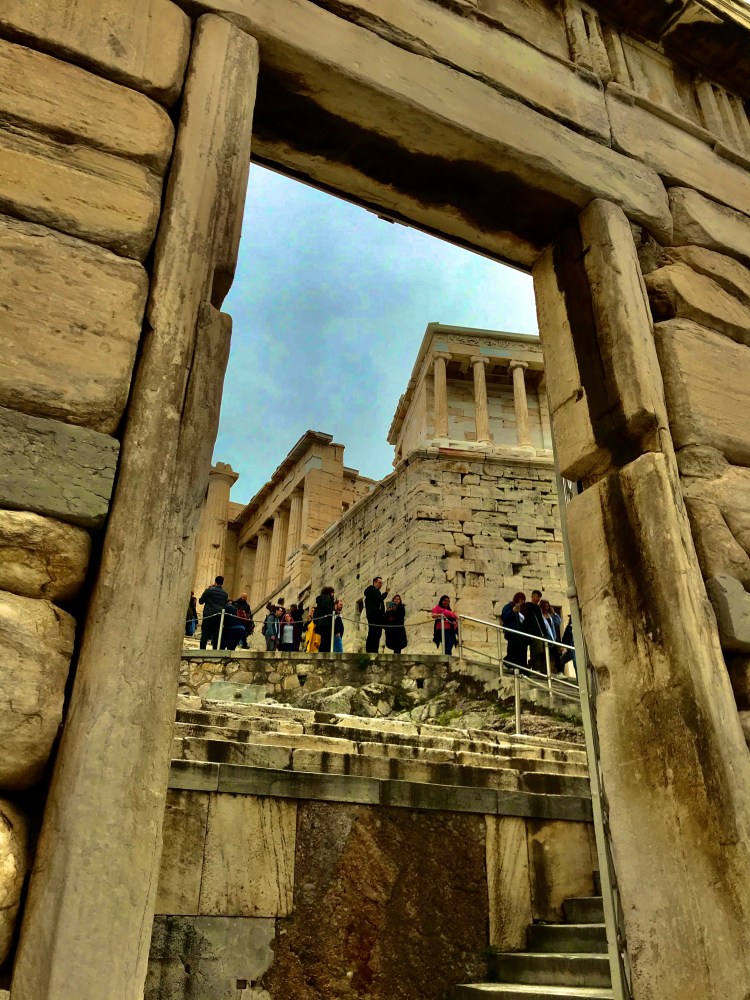
The name Nike Athena reflects the myth that Athena fought a battle with Poseidon for the possession of this high rock and land, and victory belonged to her. Nike is the Greek word for “victory,” so often you will see statues of Athena with wings otherwise called “winged victory.”
(Note: While Nike brand shoes have the Greek mythology of victory as their heritage, competitor Adidas was started in the 1920s by a German fellow named Adolf Dassler. He shortened both his names to create the brand name Adi-das. Further note: in the 1936 Olympics in Munich, when Hitler was about to rampage, German company Adidas provided metal-spiked running shoes to none other than African-American track and field champion Jesse Owens. So I guess they each have their claim to victory!)
Up through the opening, up more steps still – all white marble – and suddenly the Parthenon is revealed in startling glory. Built between 447 – 438 BC, this huge temple is also dedicated to Athena. Seven columns wide and 17 columns long, it retains the classic ratio of temples built all across ancient Greece. Each column is a bit wider at the base than at the top, and each column leans in slightly toward the temple’s center. These characteristics provided greater support for the exterior façade and roof.
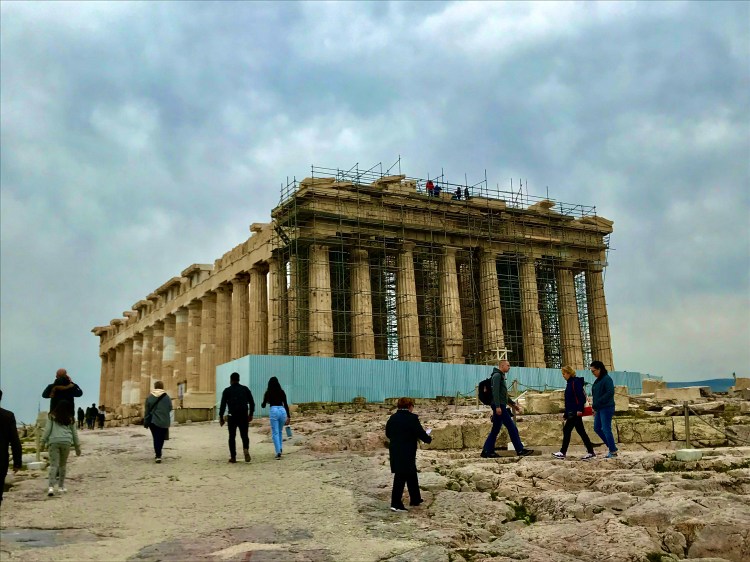
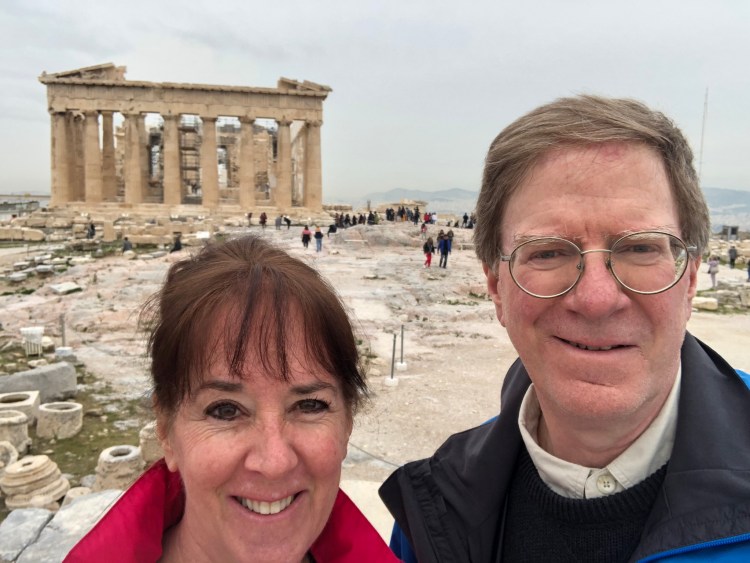
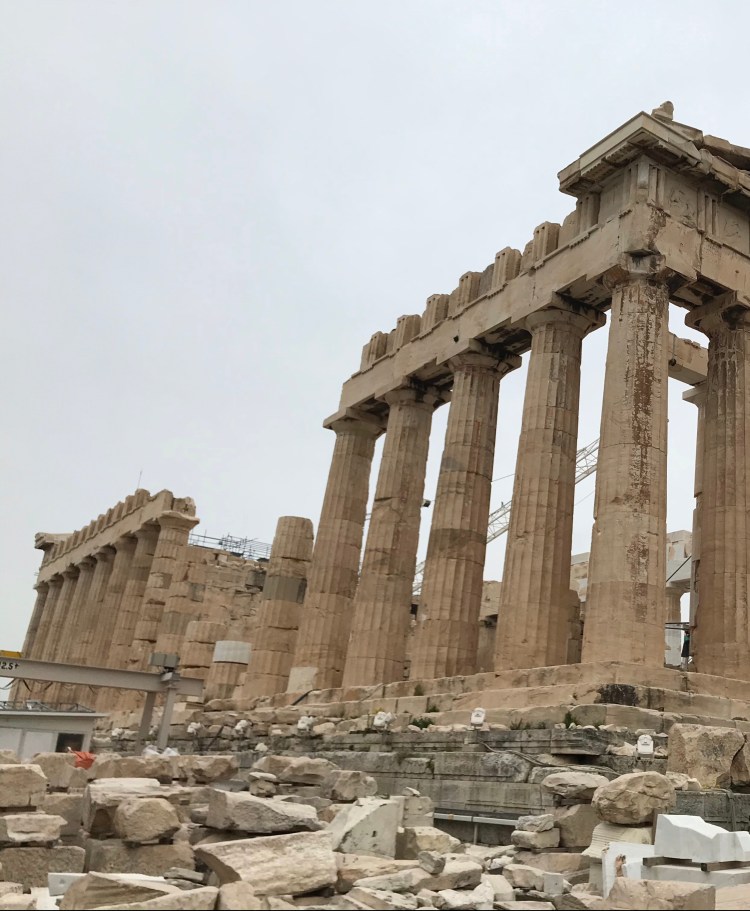
As with many ancient structures, over the eons the Parthenon’s function changed. Until the demise of ancient Greece in the 300-400’s AD it served as a temple, first to Athena and then to Roman gods during the height of the Roman Empire. Then with the fall of Rome and the rise of Byzantium and Christianity from the east, under which Greece was then ruled, it became a place of Christian worship. Still later under Ottoman Empire influence it became a mosque. And now it is where tourists worship the past. In the late 1600s the Ottomans in Athens were besieged by the Venetians. The Ottomans stored gunpowder and munitions in the Parthenon, until the Venetians lobbed a bomb directly into the structure. It blew, and the damage to the roof and the south side that we see today still remains.
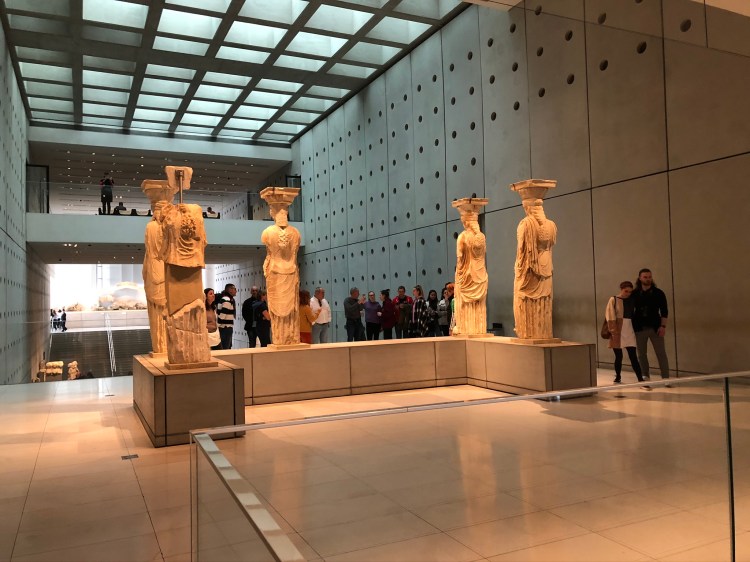
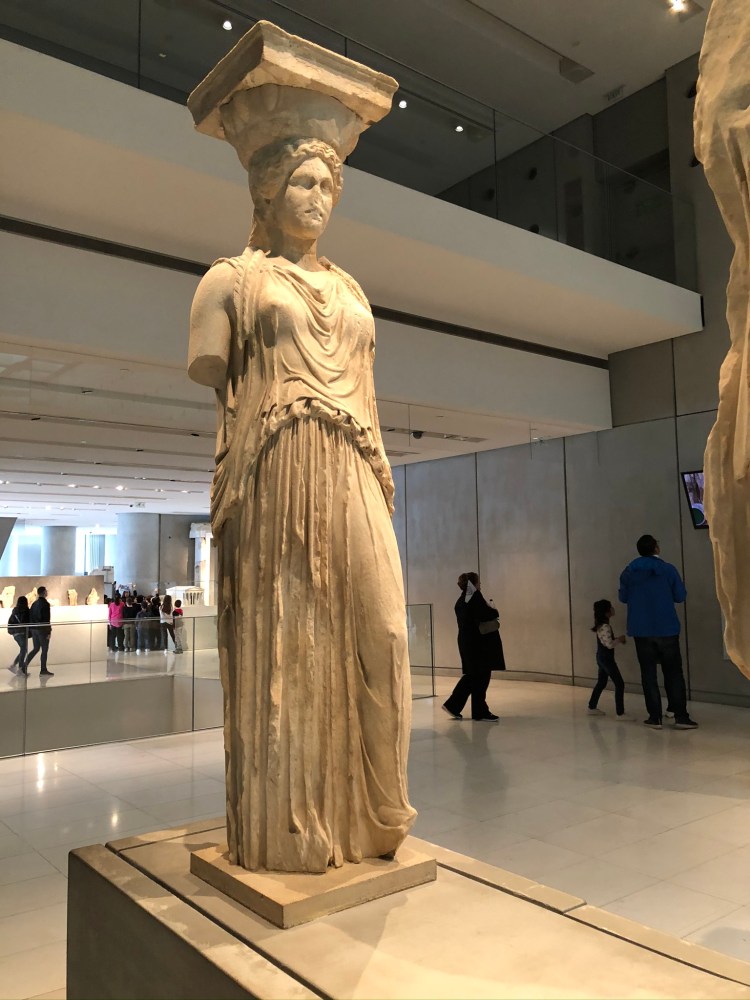
To the west of the Parthenon is the Erechtheum, dedicated to (who else?) Athena but also to Poseidon. It is famous for its “Porch of the Maidens”, with six draped female figures as supporting columns. We saw some of the original maiden columns in the Acropolis Museum later in the day.
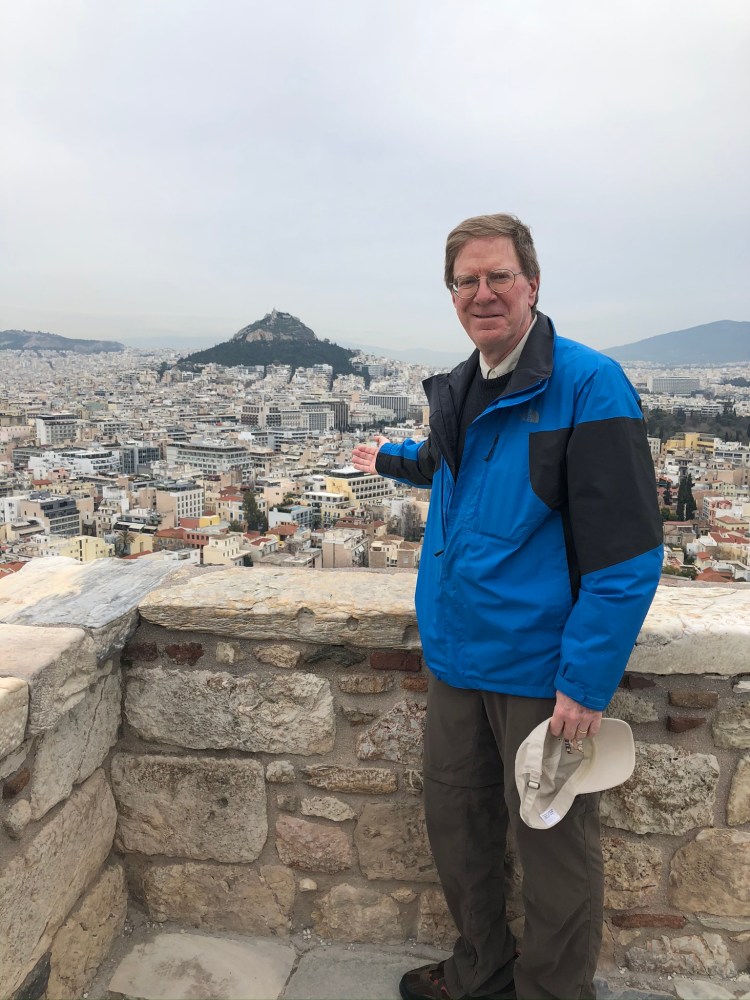
On the far east end of The Acropolis is the overlook toward Mt. Lycabettus. In 1968 when I was here in Greece with my high school group, I took an afternoon to hike to the top of the mount. There’s a chapel to St. George up there. Along the way I stumbled upon a Greek military installation containing field artillery aimed at the nearby airport. Greece had just gone through a military coup a year earlier; the military that took over was fearful of foreign powers flying in and taking over the country. I was stopped by the army guy, who was pretty ticked off that I had discovered their secret site. Whoops!
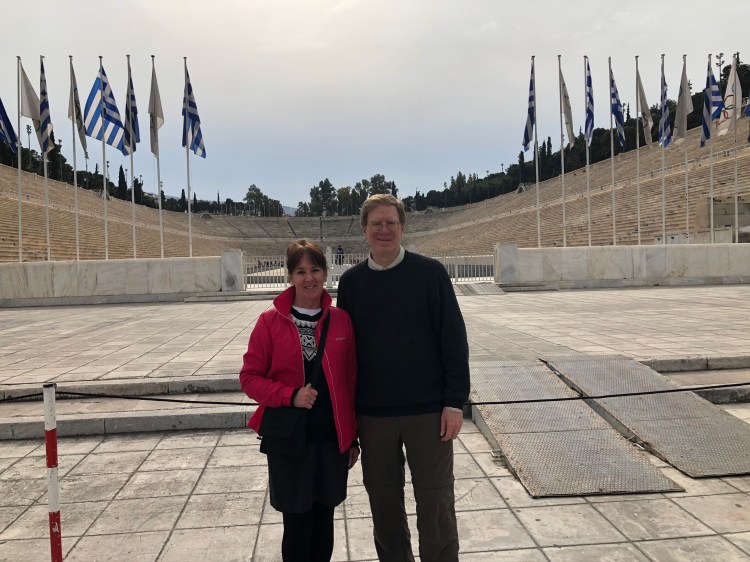
Which takes us to the rest of the day. After leaving the hilltop, a short bus ride through the city took us past the modern Olympic stadium built in 1896 for the return of the games, the Parliament, a temple to Zeus, and finally to the Acropolis Museum.
The Museum is a very special place. Situated just below the Acropolis, it opened in 2009. The top level of the museum, as you can see from the photo, is a rectangle that is set awkwardly above the main building. This top rectangle is exactly the same size and height, and is oriented in precisely the same direction, as the Parthenon which you can see out its huge windows looming right above it. Then inside this top level are positioned the friezes taken from the Parthenon ruins, in exactly the position they occupied on the original building. The friezes tell mythological stories in panels – sort of like a comic strip – and interestingly include pictures of Athenians alongside gods in some of the panels.
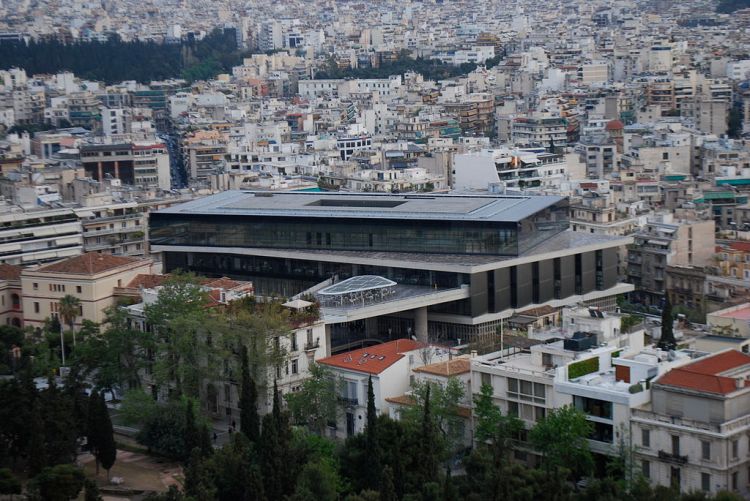
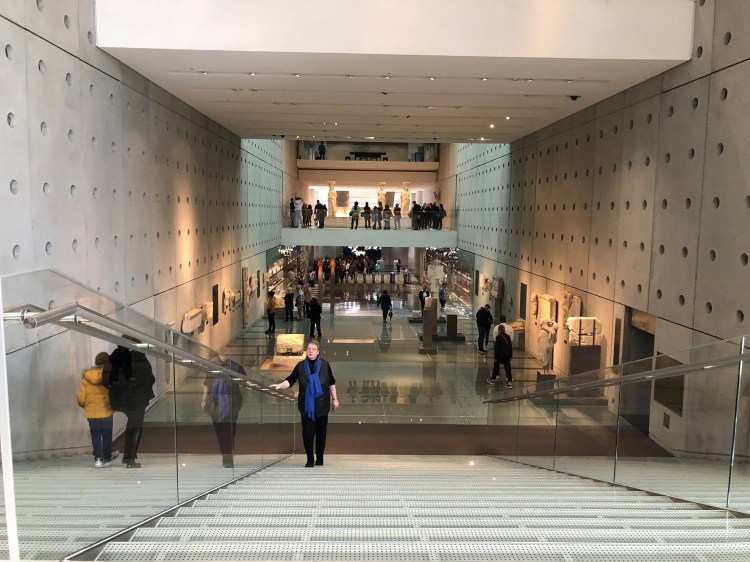
Unfortunately, many of the original friezes are neither on The Acropolis nor in the Museum. In the 1820s Lord Elgin was the British representative to the Ottoman Empire in Greece. The Ottomans cared not at all for mythological Greek art. So they allowed Elgin to remove friezes and take them to England. The UK government later sold them to the British Museum. And there they remain to this day. Since they are the property of the British Museum, and not the UK government, the Greek government has had a difficult time getting them back. The matter is tied up in international courts. With the building of the Acropolis Museum, the so-called “Elgin Marbles” really ought to come home now.
Lower floors of the museum contain statues and other finds from excavations on the acropolis. Then underneath the entire museum is an archaeological excavation of early Athens settlements at different times in its history. This exhibit just opened for the first time in 2019. Layer after layer the dig goes down, exposing settlements in the early AD centuries to those in BC centuries.
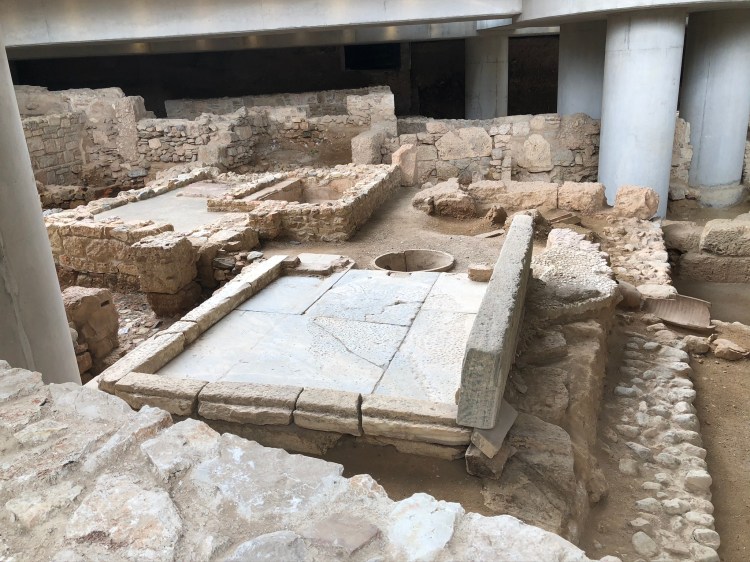
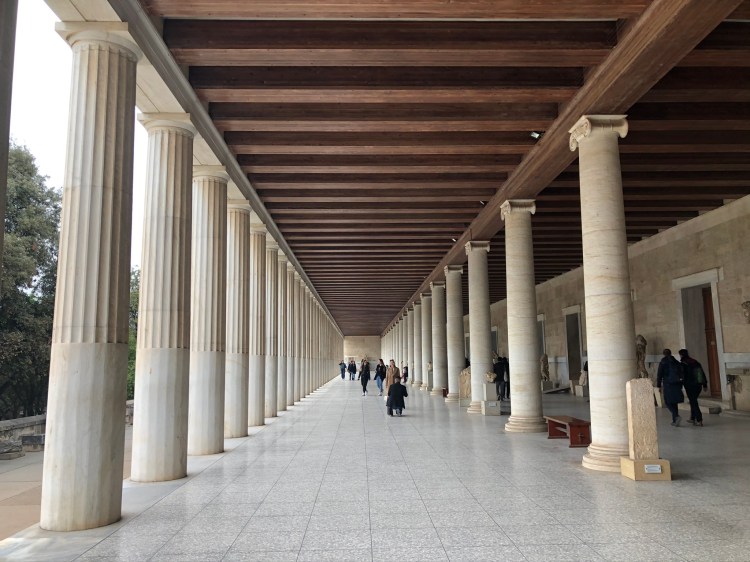
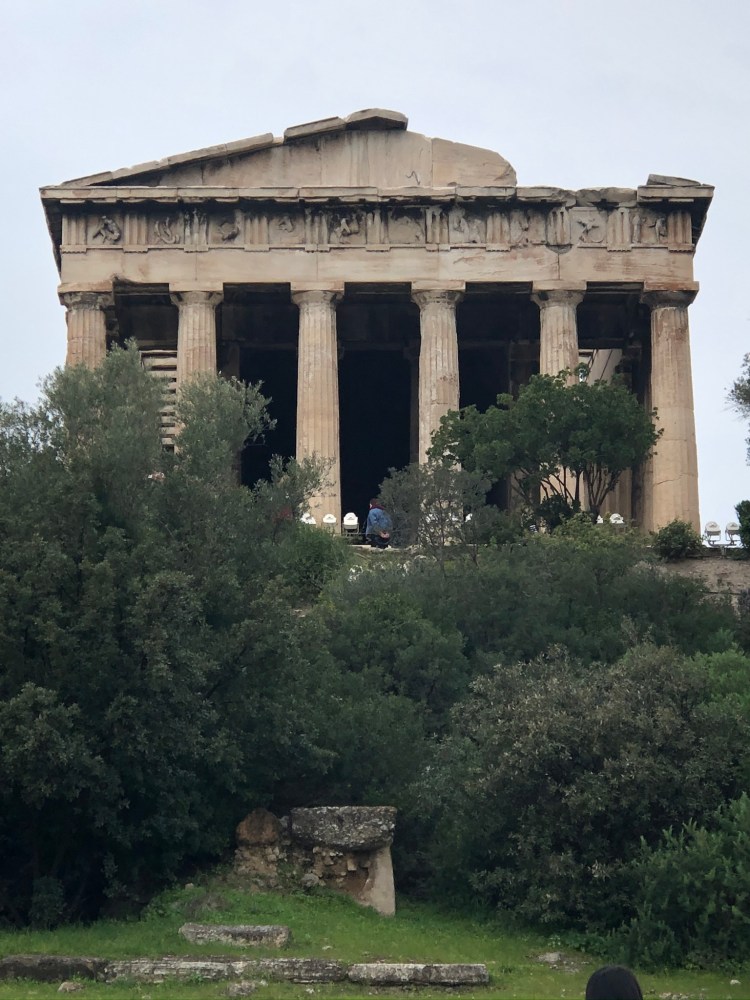
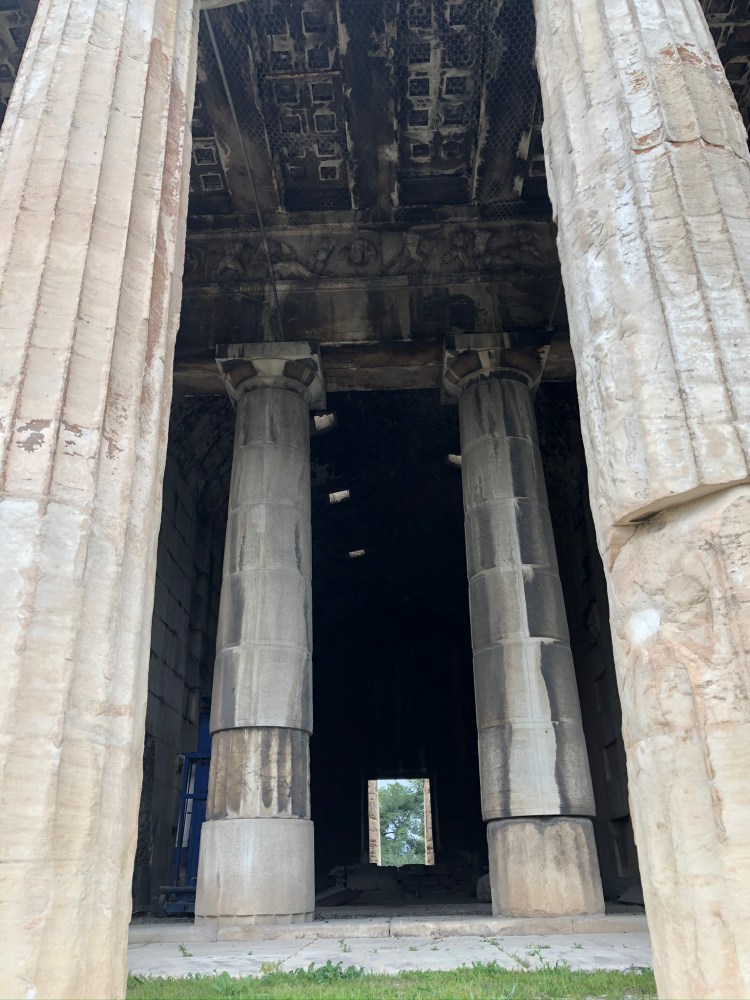
By the time we finished the museum it was early afternoon. Nearby we lunched at a restaurant that has fantastic gyros. Greek food is filling! But we kept going, and walked on the pedestrian way around the south and west sides of the Acropolis, down the hill to the ancient Agora. This was the center of politics and markets. A Stoa along the west side housed shops. A theatre provided entertainment for thousands, and you can wander around the largely intact Temple of Hephaestus, who was the patron god of metal working, craftsmanship, and fire. But the primary interest of the agora is that this is where representatives from Athenian society gathered democratically to make laws and vote. This was the seat of democracy.
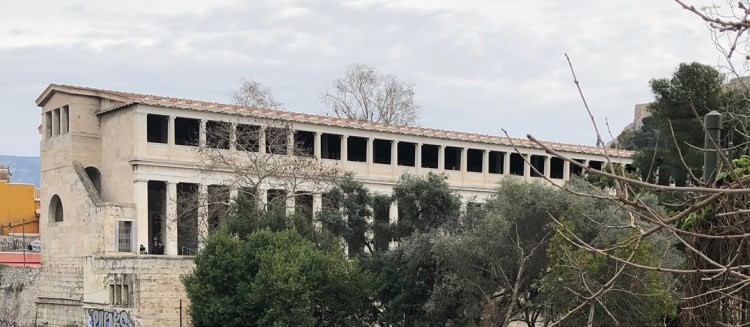
After a long day, having seen much and with much to think about and talk about, we wandered back up the pedestrian way underneath the Acropolis and then back down the hill on the other side to our peaceful hotel room.
 2020 Vision of Venice