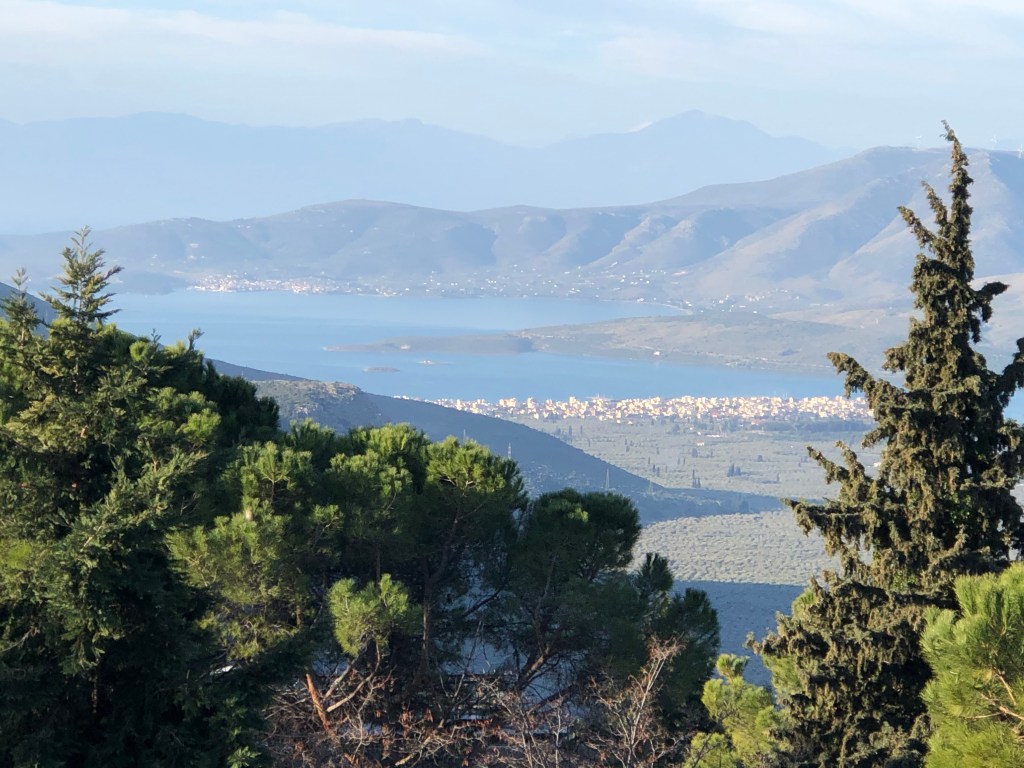
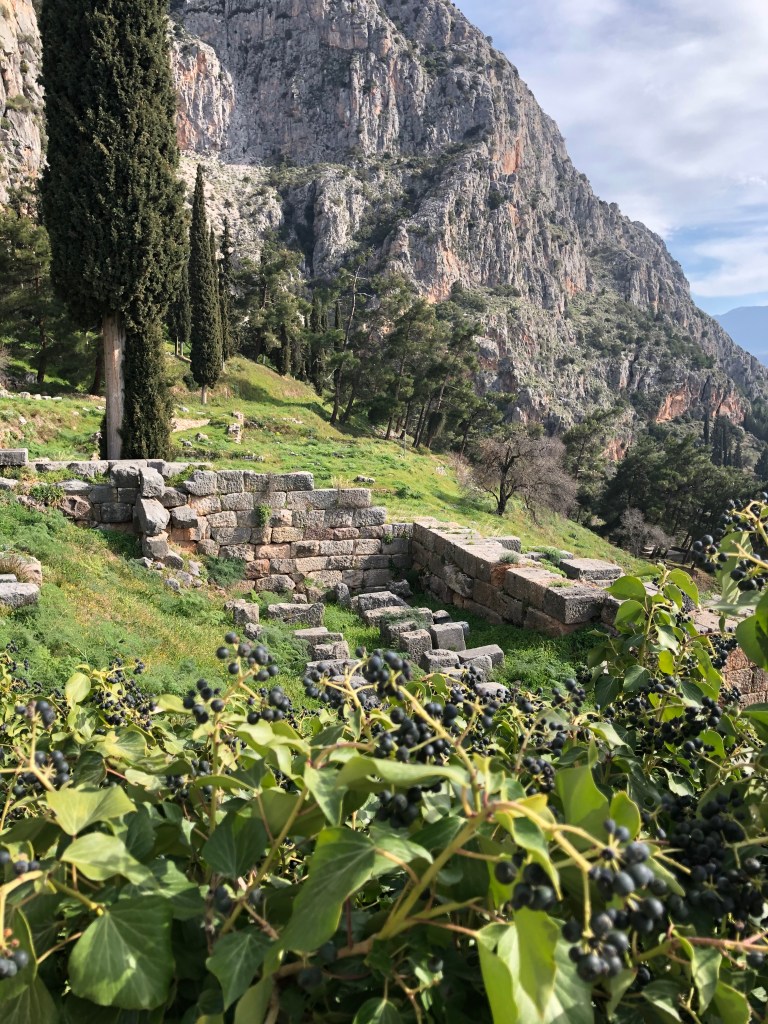
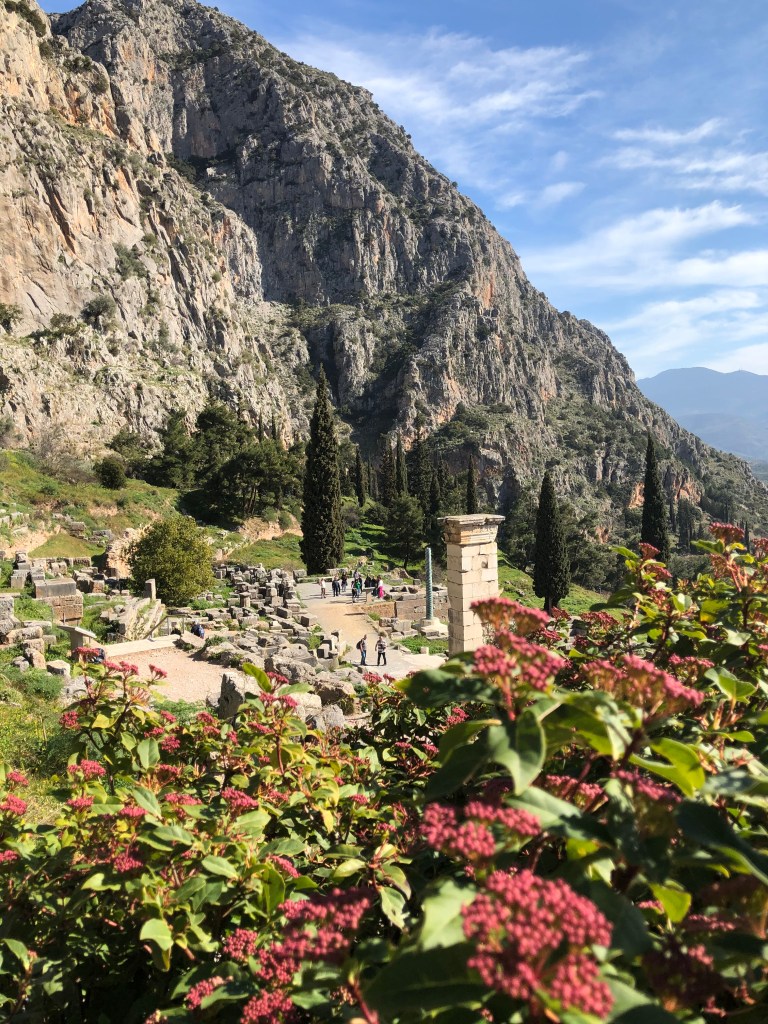
With awe-inspiring and spectacular views high on the southern slopes of Mt. Parnassus, this is home to the prophetess known as the oracle (a.k.a. the Pythia or sibyl), the mouthpiece of Apollo on earth. So glad we spent the night here before our visit to the ruins. The night sky followed by misty morning mountain views was all I needed to get into a mood for ancient Greek mythology.
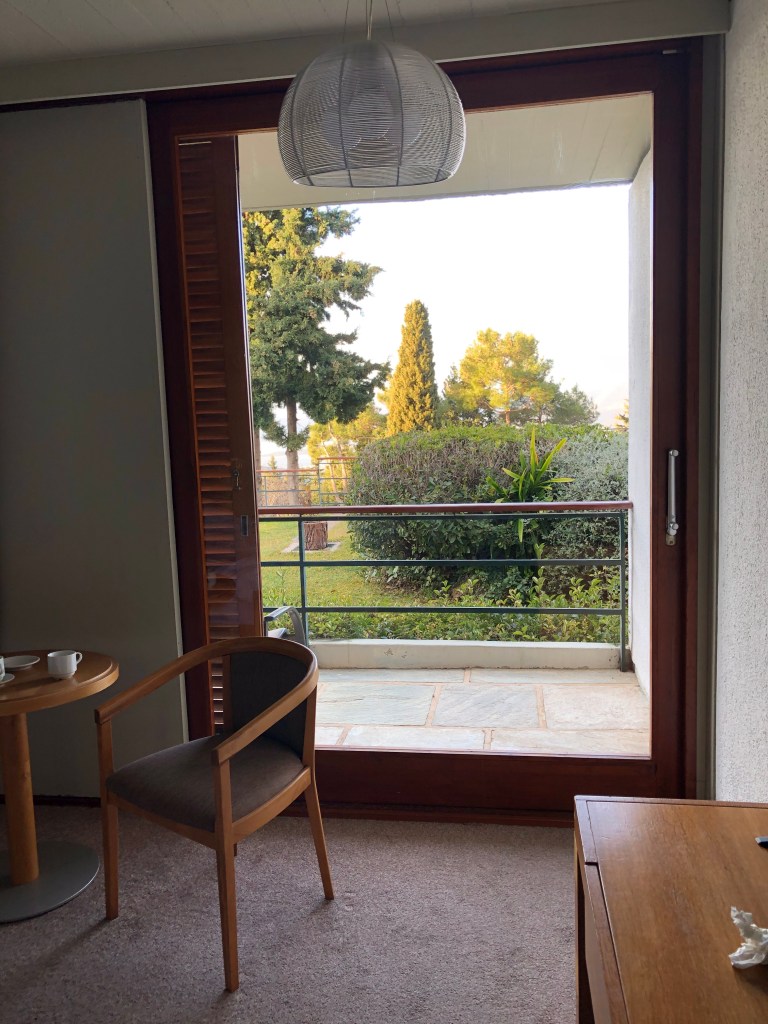
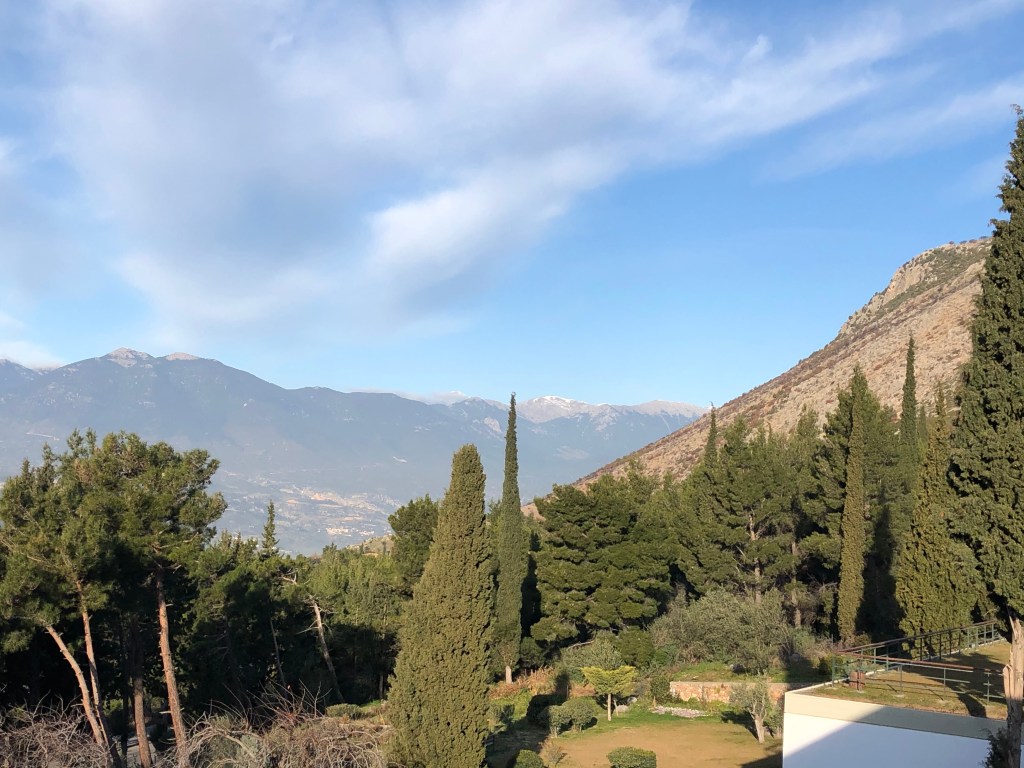
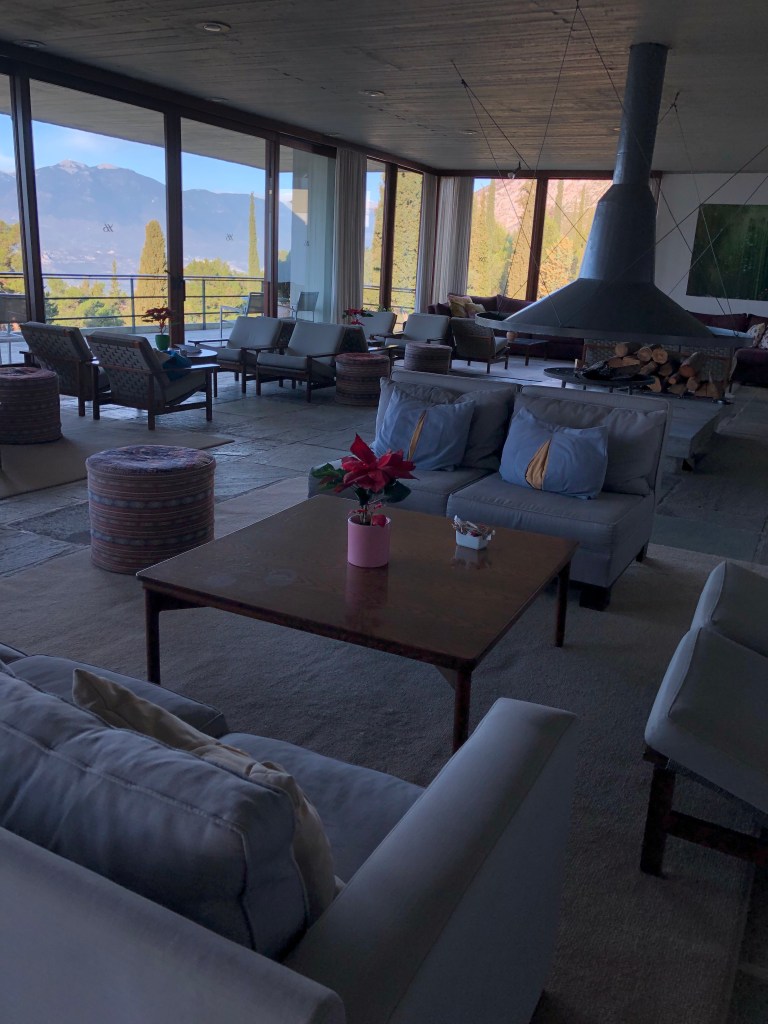
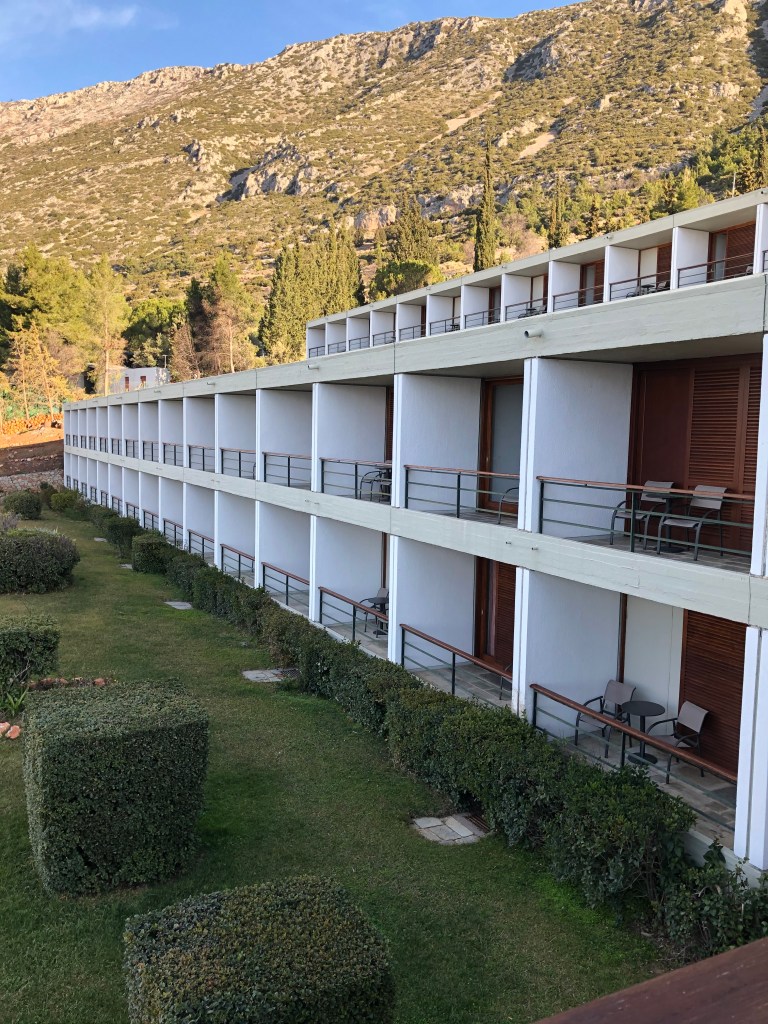
A short drive after a fabulous breakfast and we were ready to tackle our third day of “school”!
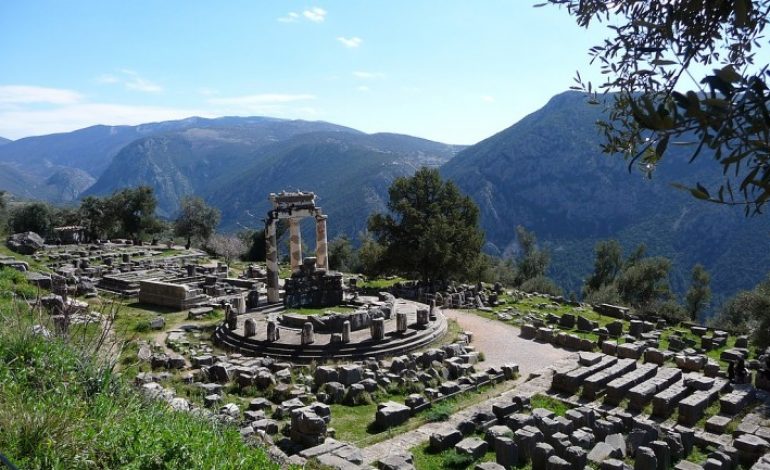
Archaeologists showed up here in 1892 and cleaned up this area. Legend has it that Delphi was the center of the world determined by Zeus. It was here that a priestess (the sibyl) worshiped Gaia, the mother of the gods. A serpent called the Pythia, or Python, guarded the ravine. Apollo showed up one day in the guise of a dolphin (hence Delphi) and killed the Pythian snake. The sibyl became known as the oracle who served Apollo. Eventually the Pythian Games (which rivaled the Olympics) took place here. Even when Greece was conquered by the Macedonians (Alexander the Great) and later the Romans, the sanctuary was preserved. For over 1,000 years Apollo spoke to the mortals through his prophetess, until A.D. 394 when Christians shut down the pagan site.
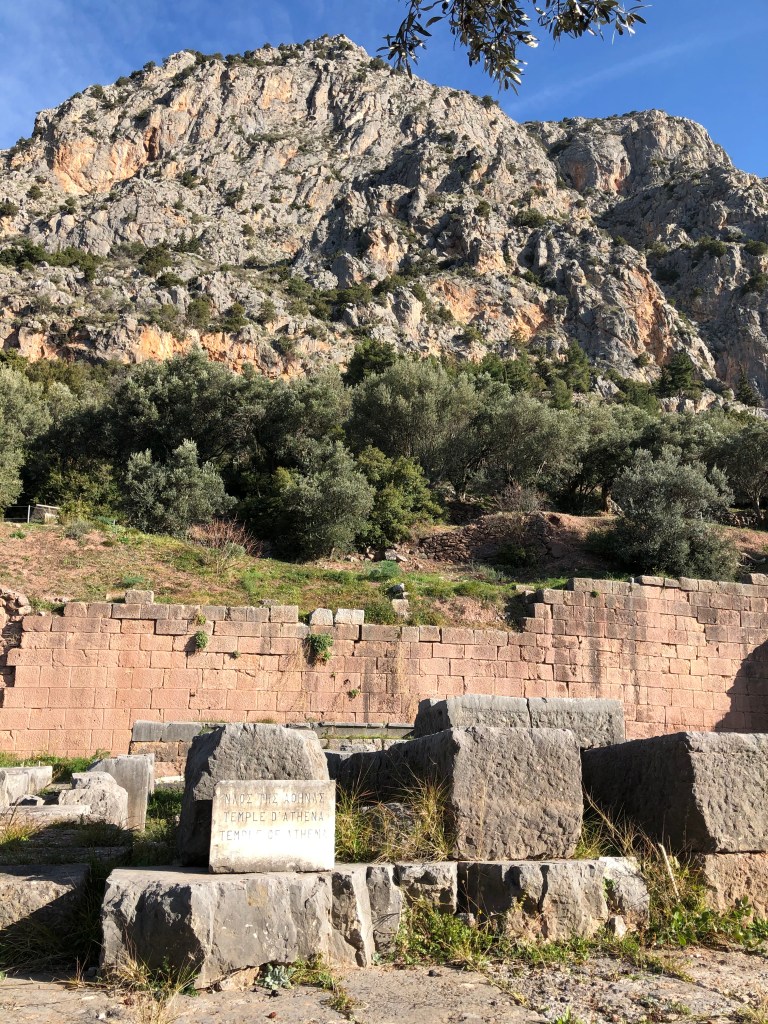
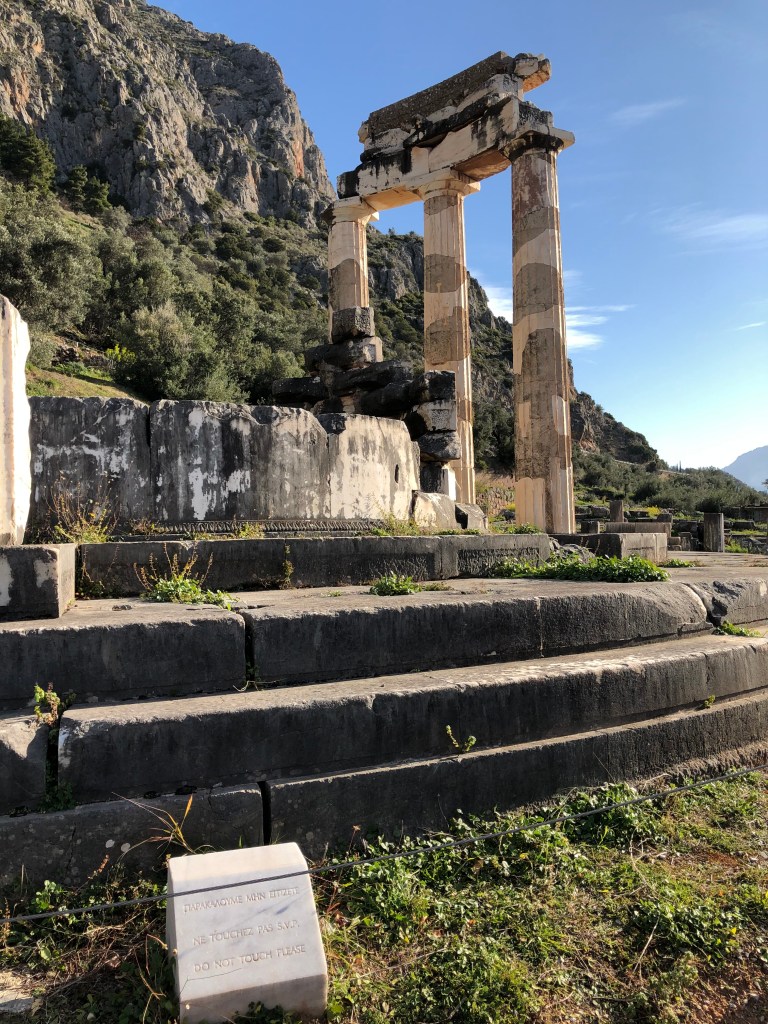
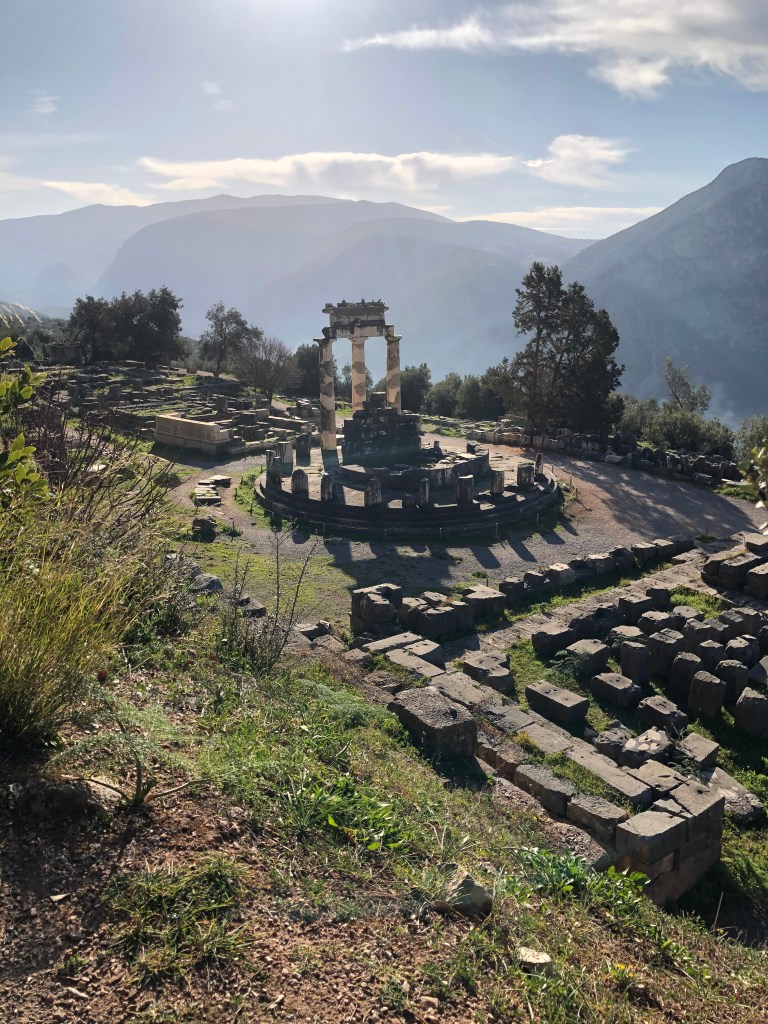
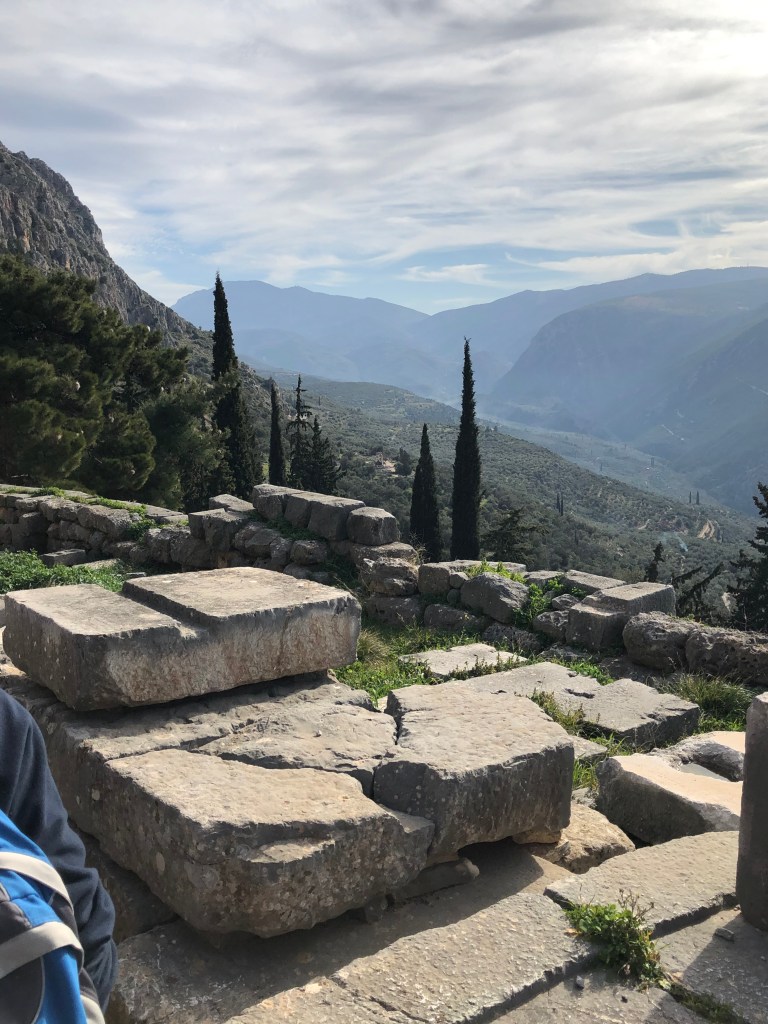
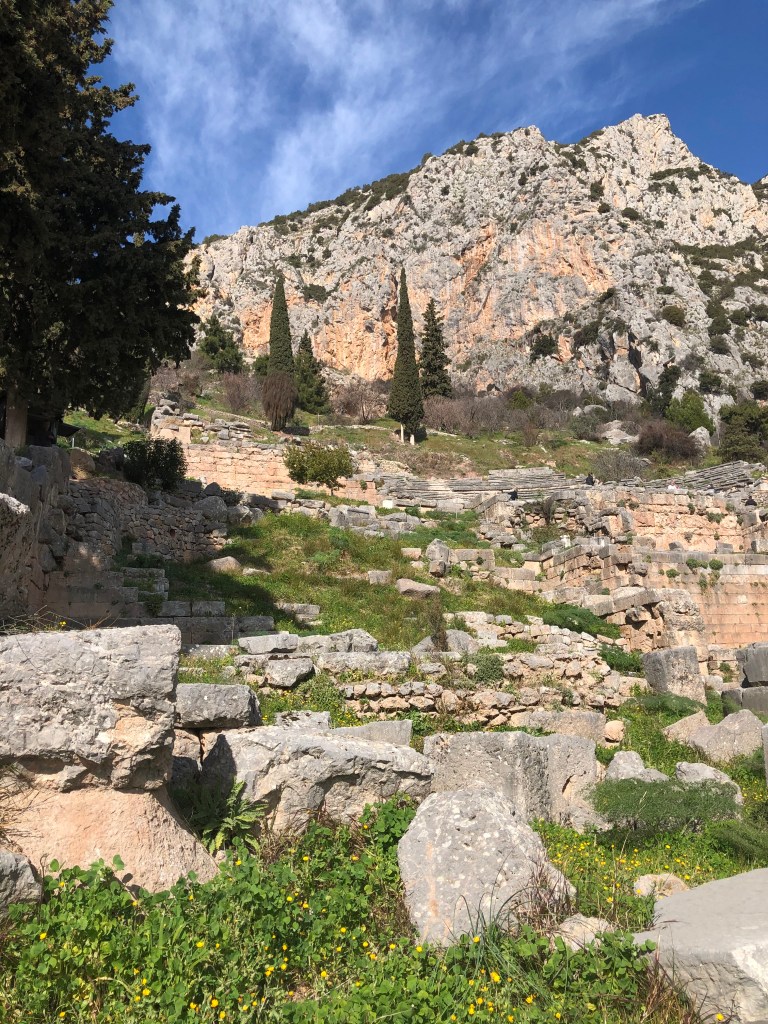
Our morning was spent listening to Stathis tell his stories and slowly climbing the steep rock face on switchback trails up to the Temple of Apollo and the theater.
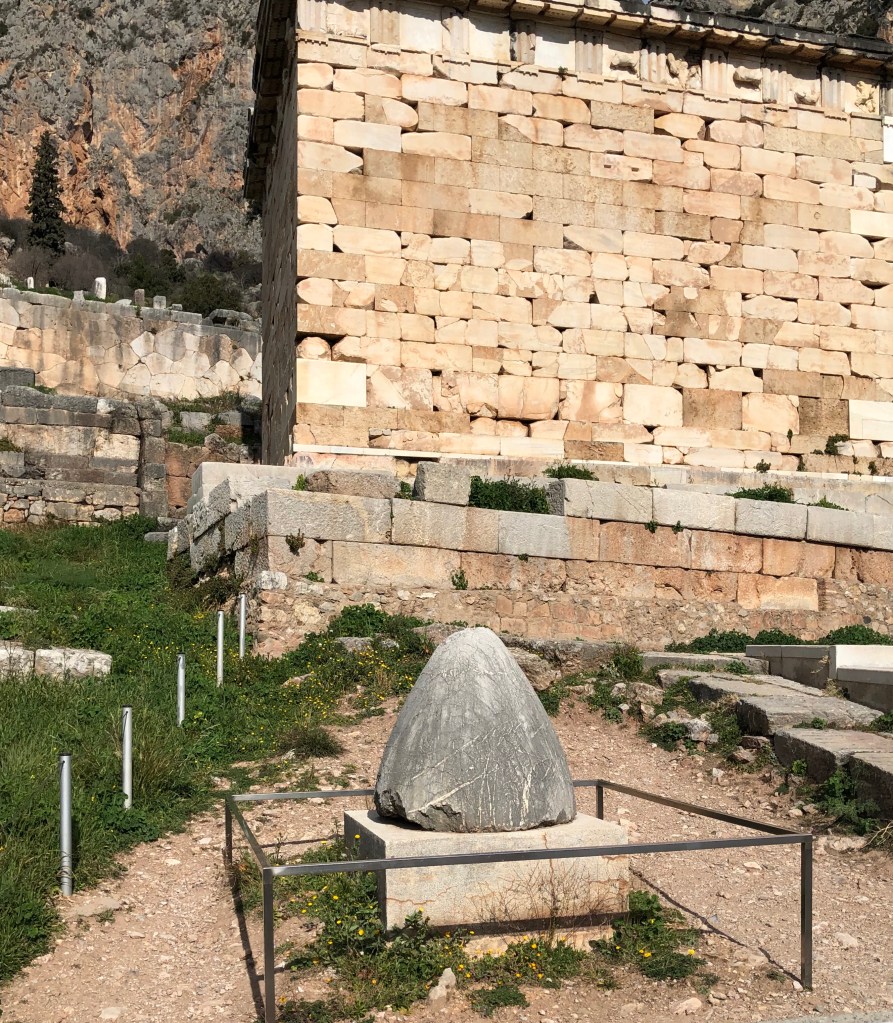
One strange stone cone-shaped monument is called an omphalos or navel! This was the center of the world, remember? So a navel represents that. Legend has it that Apollo’s mother Gaia sent two eagles flying off to go around the world, and after flying a long distance they met at this spot.
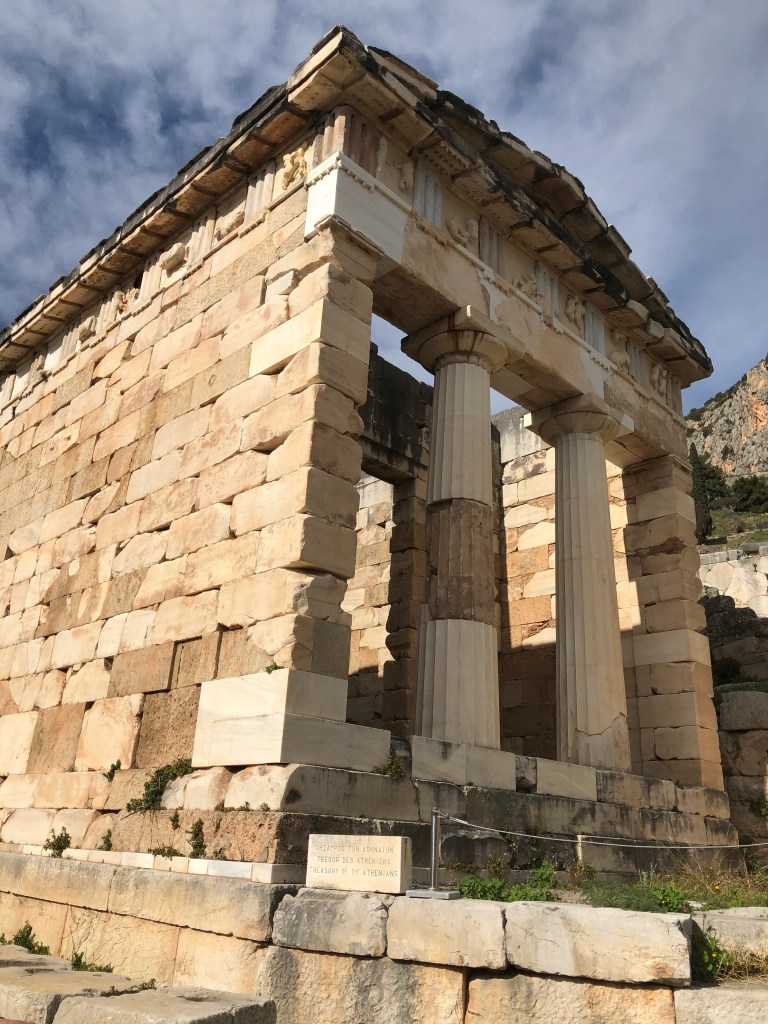
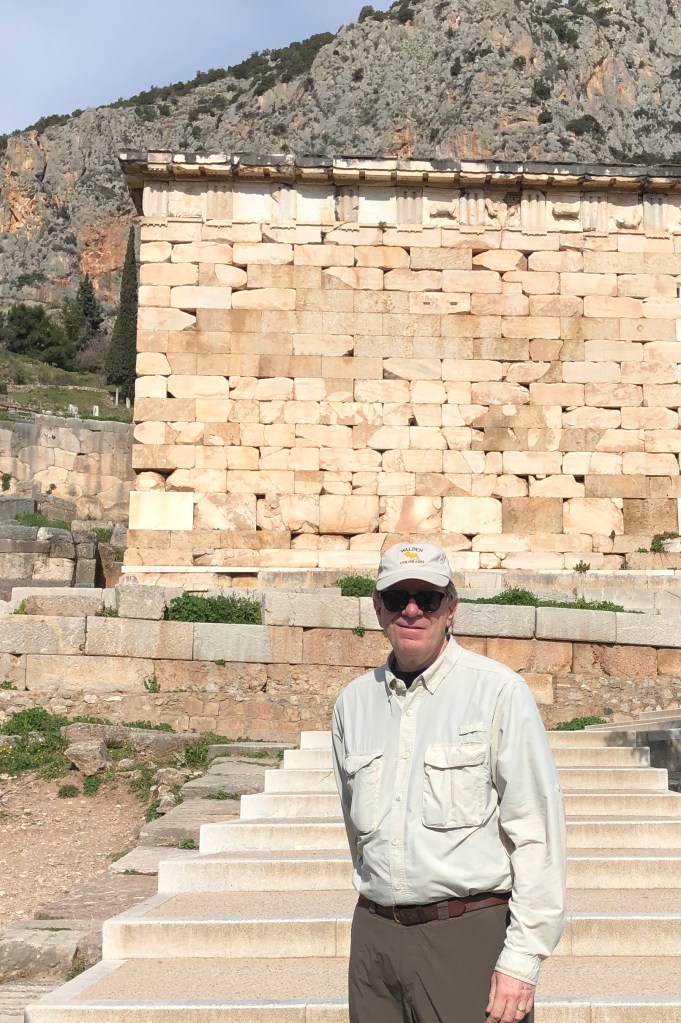
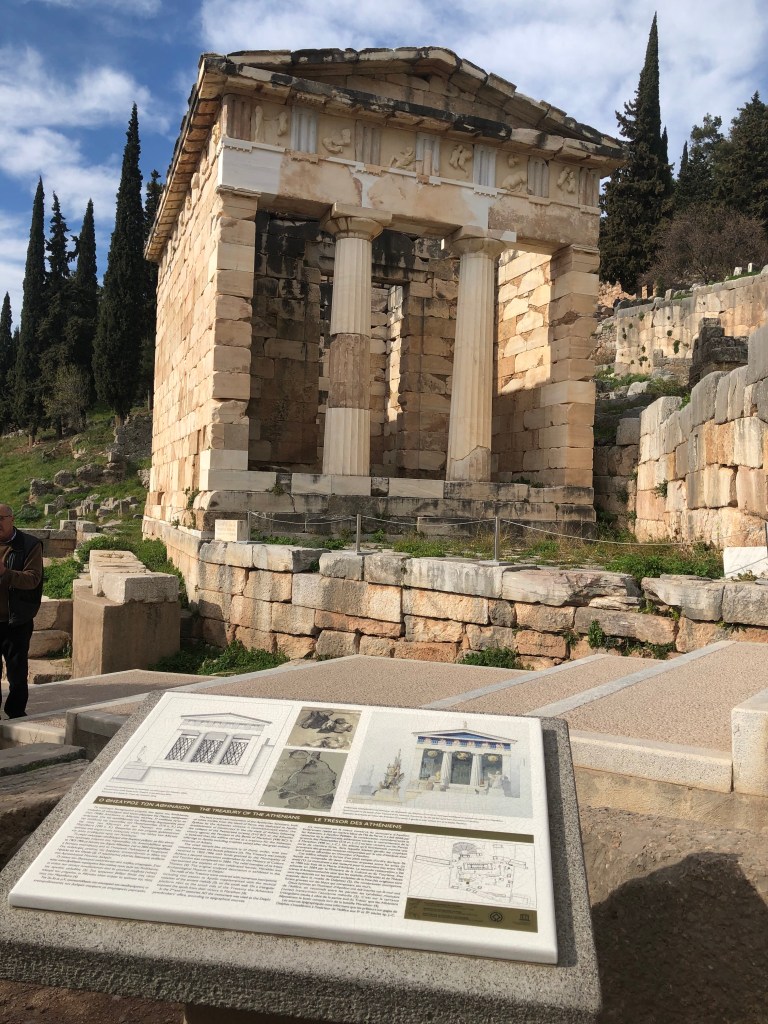
The Treasury, built of white marble, commemorated either the establishment of Democracy in Athens or the victory against the Persians at the Battle of Marathon in 490 B.C. “We just don’t know.”
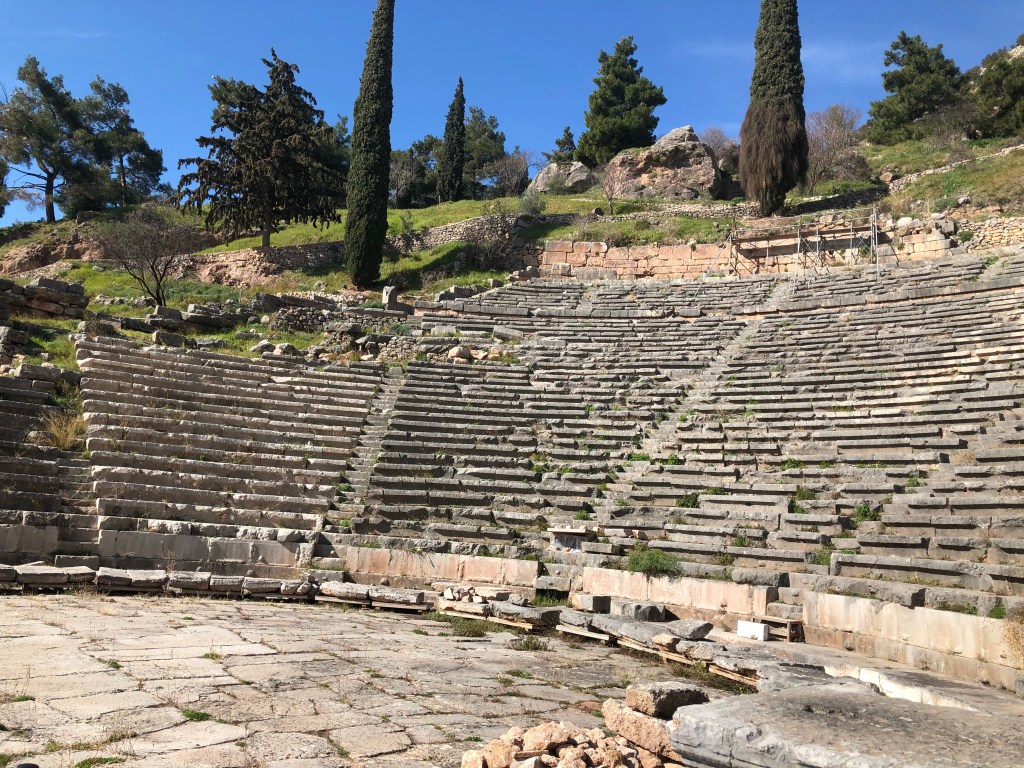
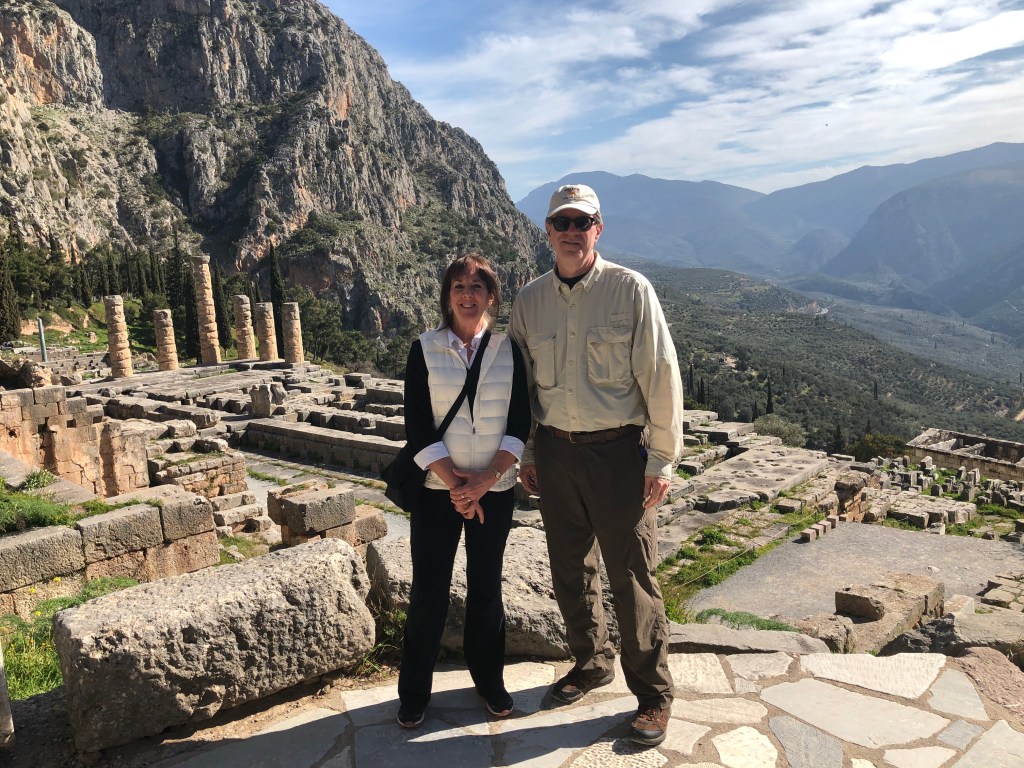
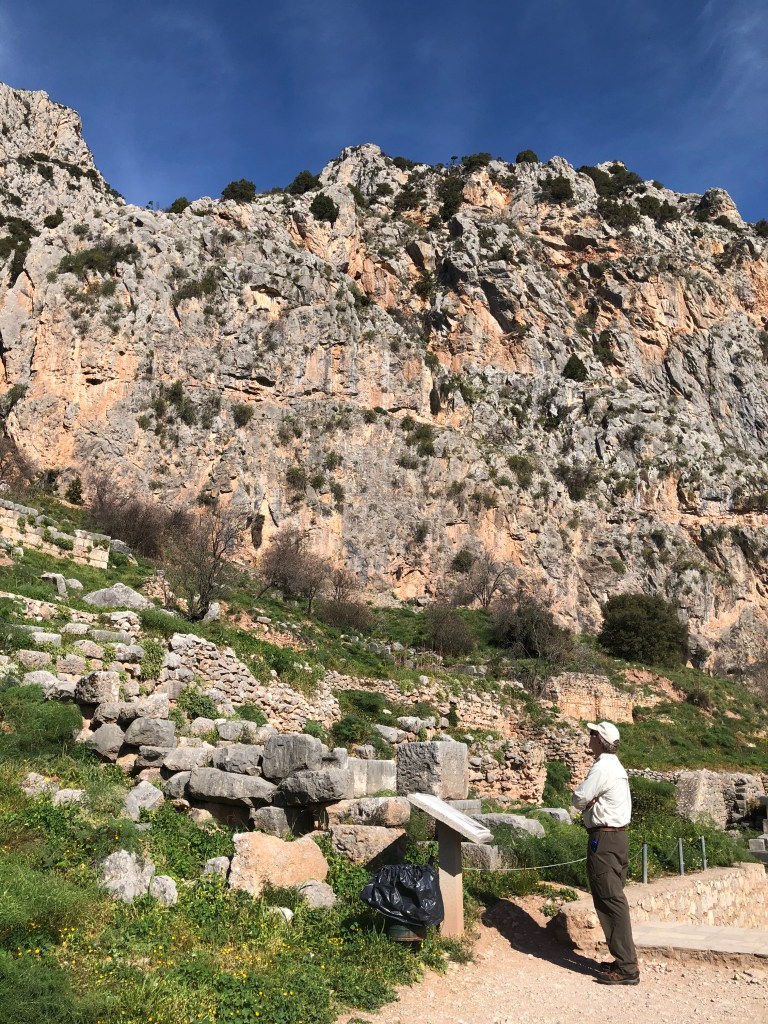
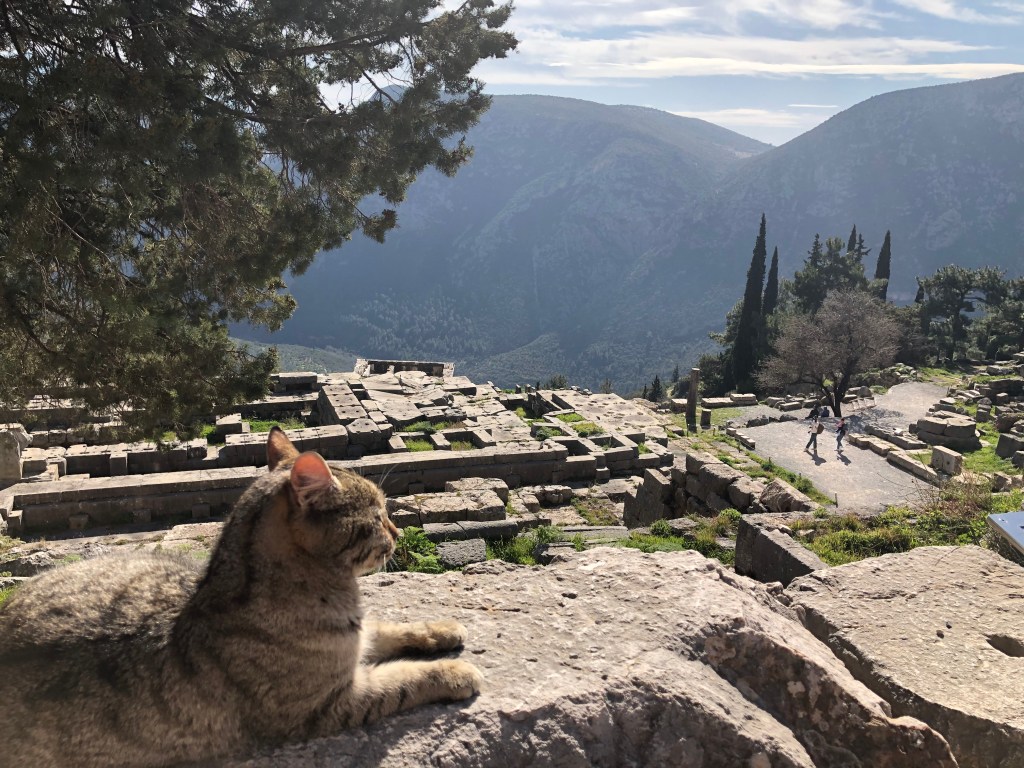
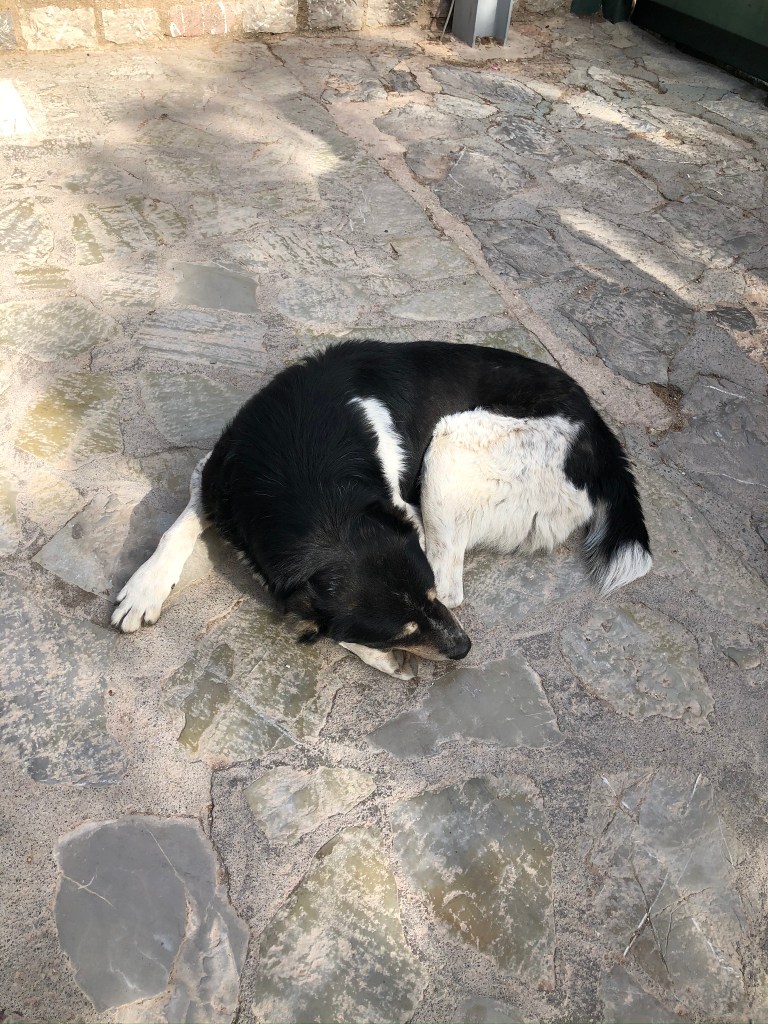
Cats and dogs are everywhere!
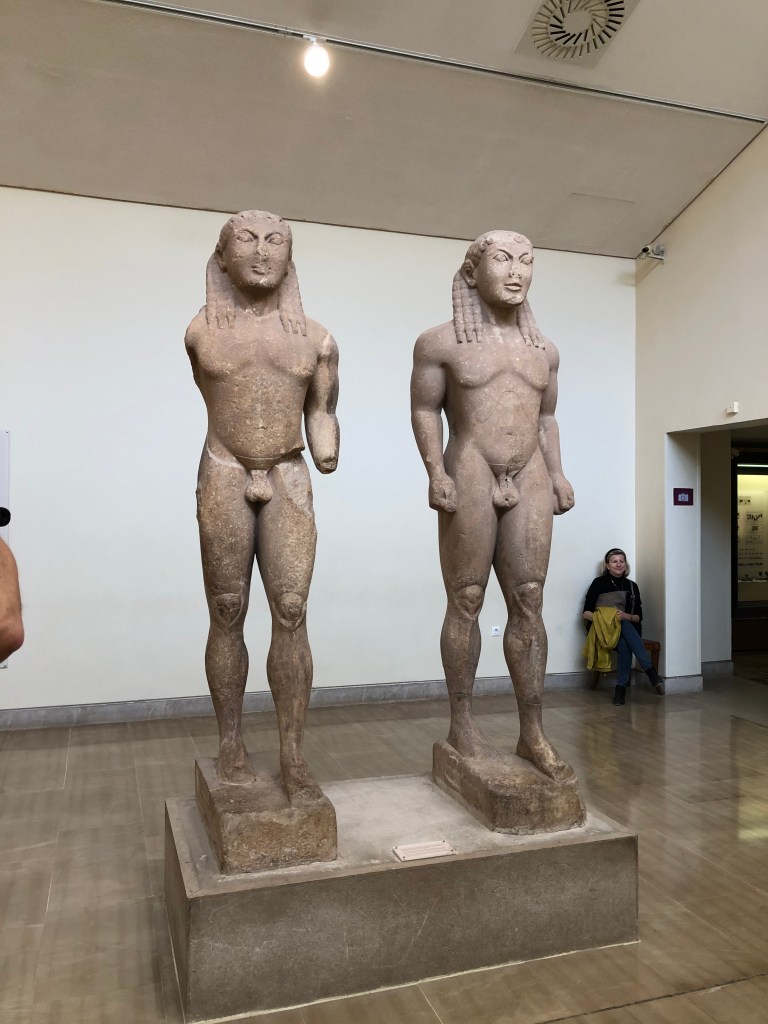
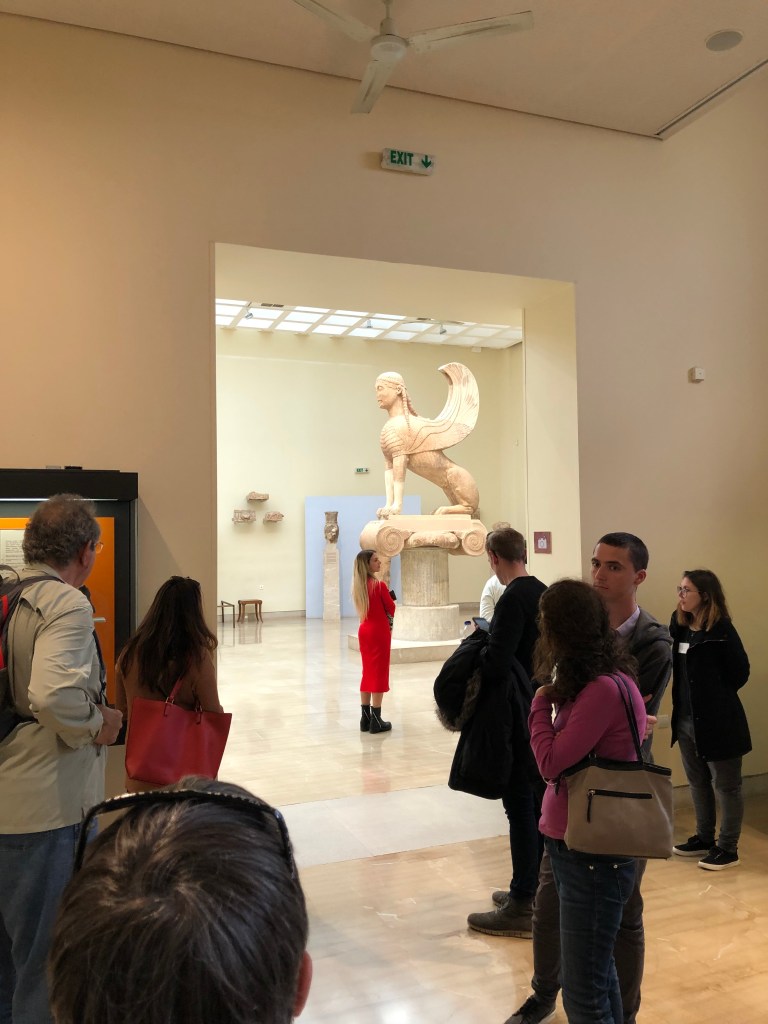
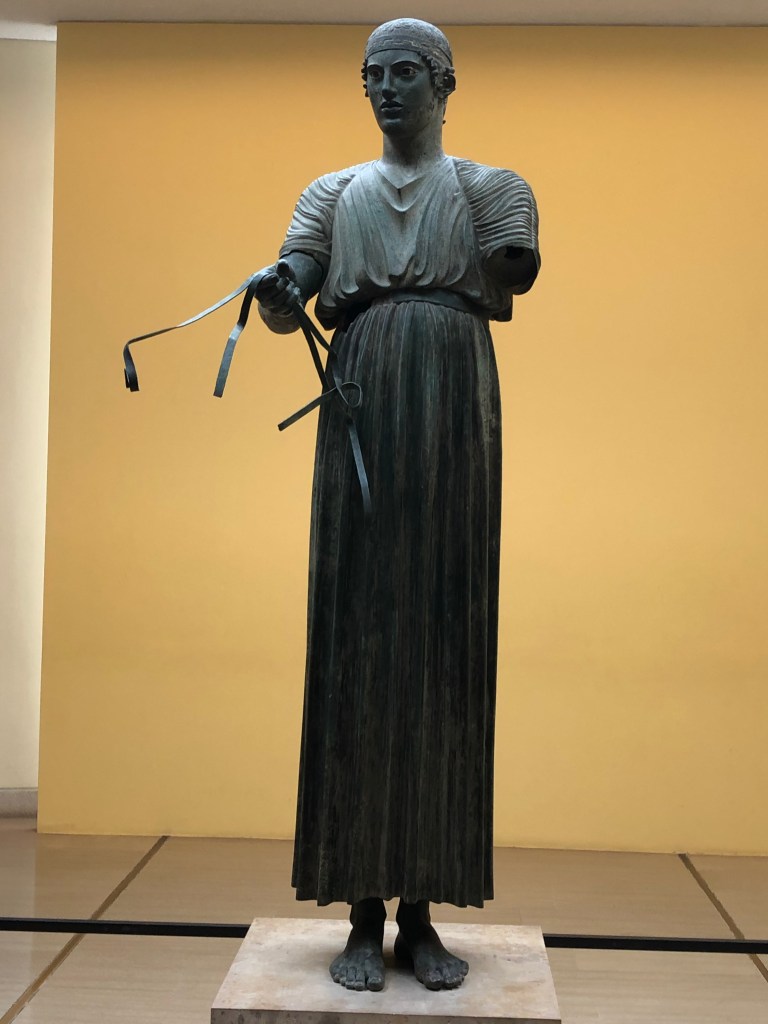
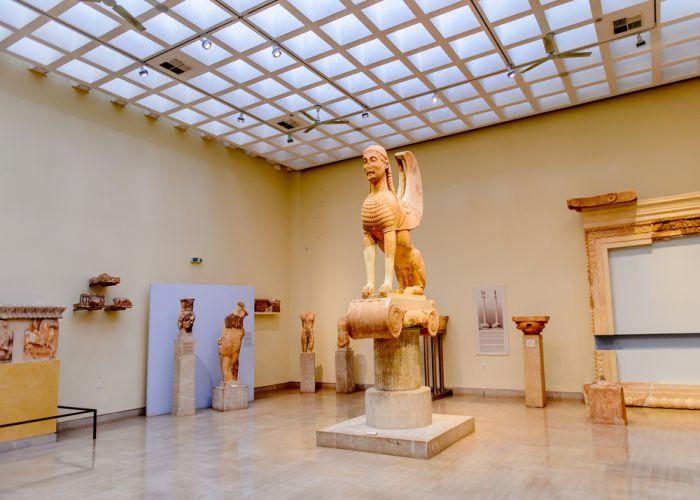
The Archaeological Museum here was well done. Housed here are the Twin Kouros Statues, the Sphinx of Naxos, and the Bronze Charioteer.
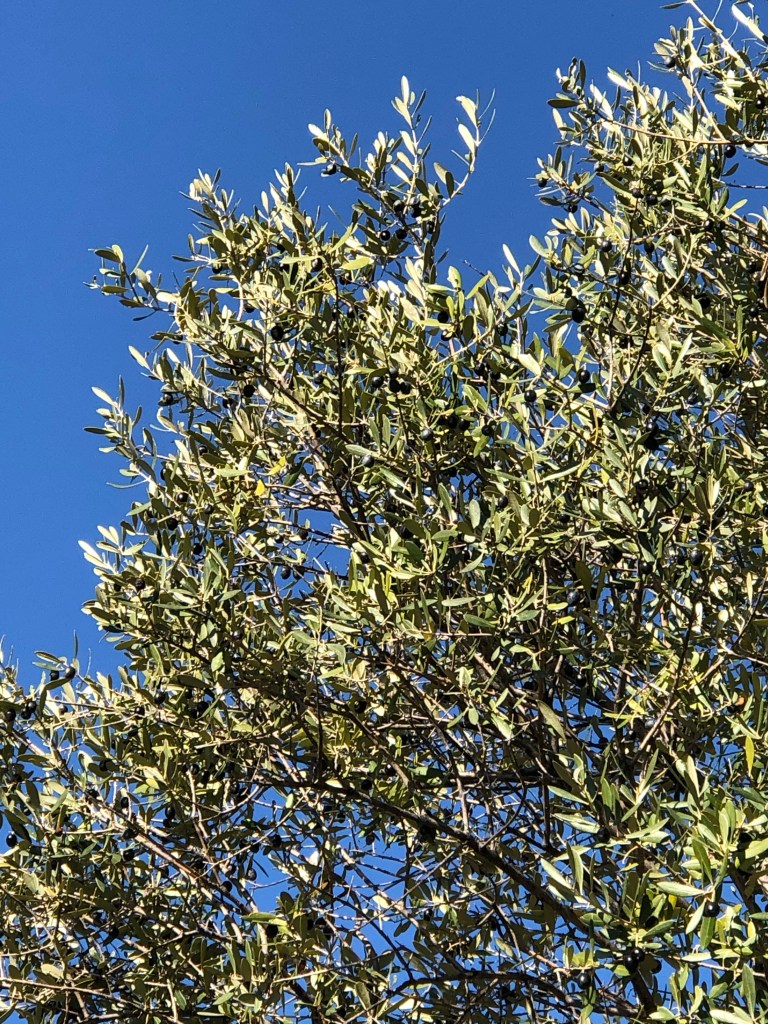
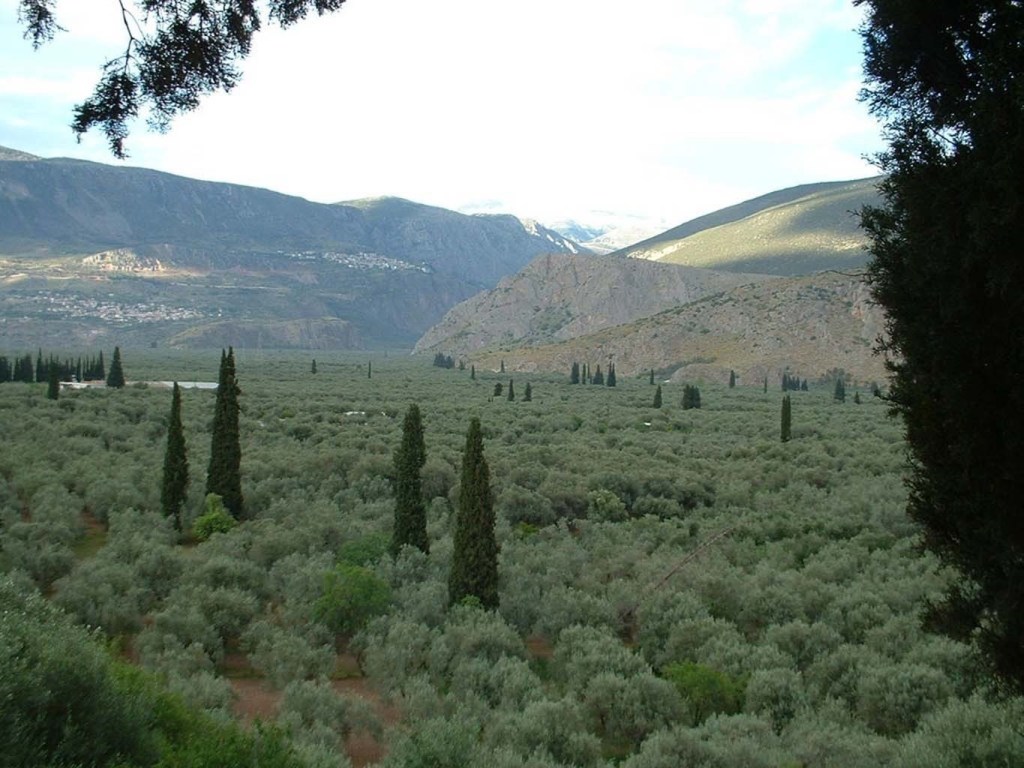
There are over a million olive trees on the slopes here. 70% of them are more than 150 years old. This olive grove is the largest continuous grove in the country and belongs to the famous Delphic Landscape.
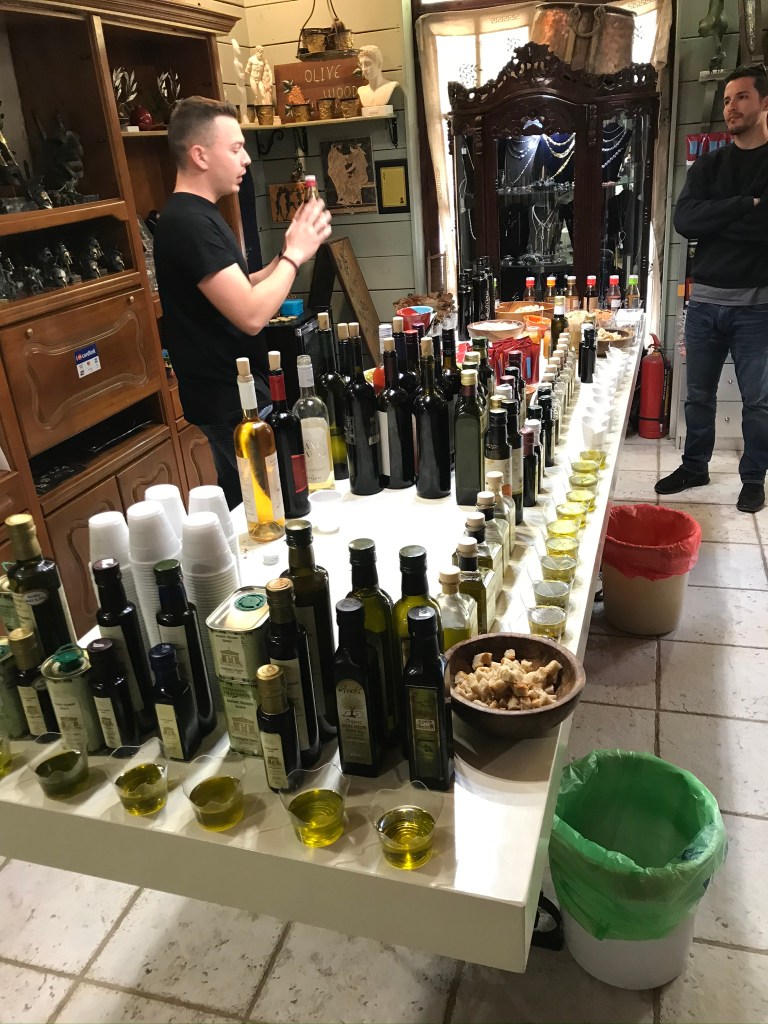
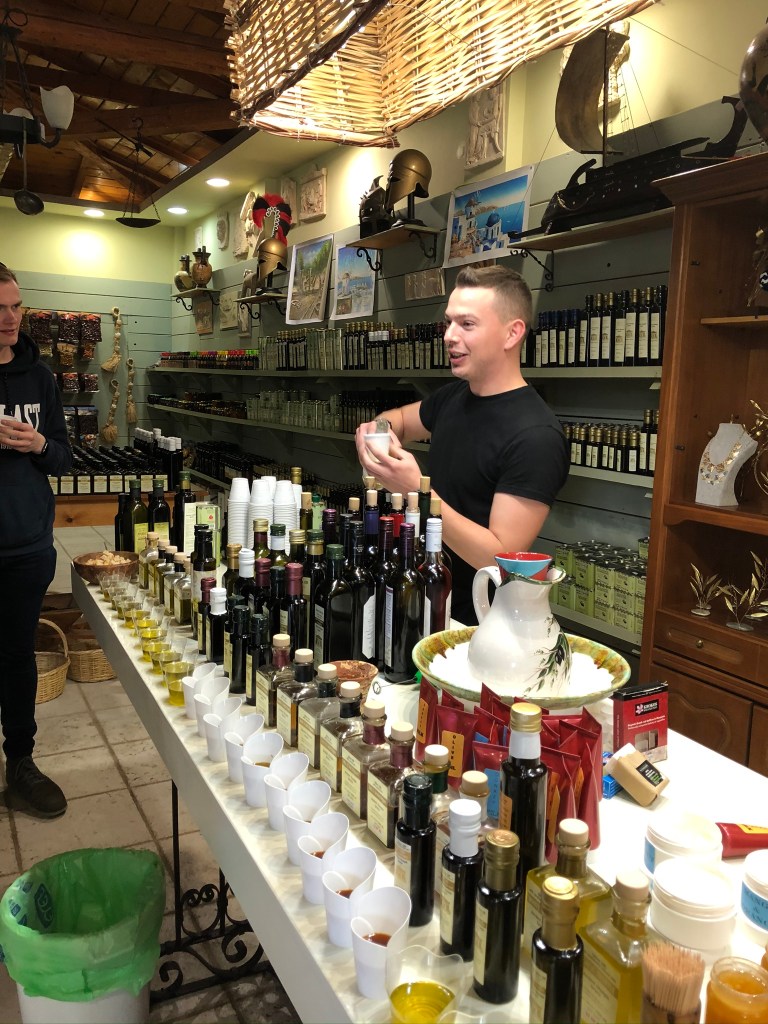
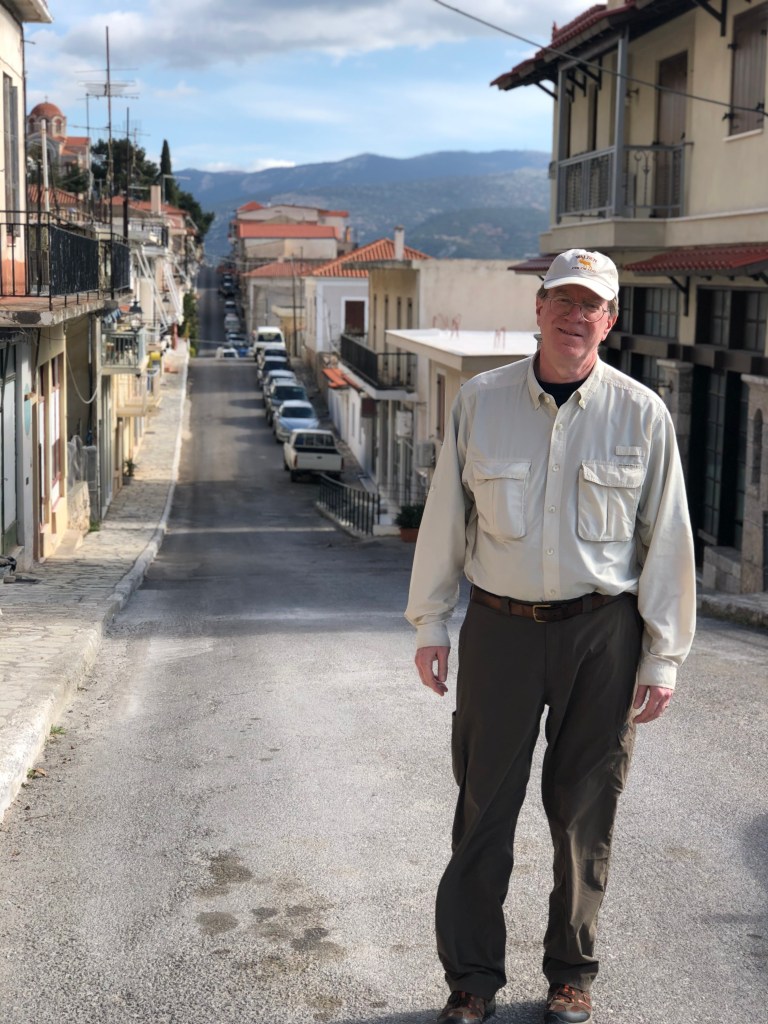
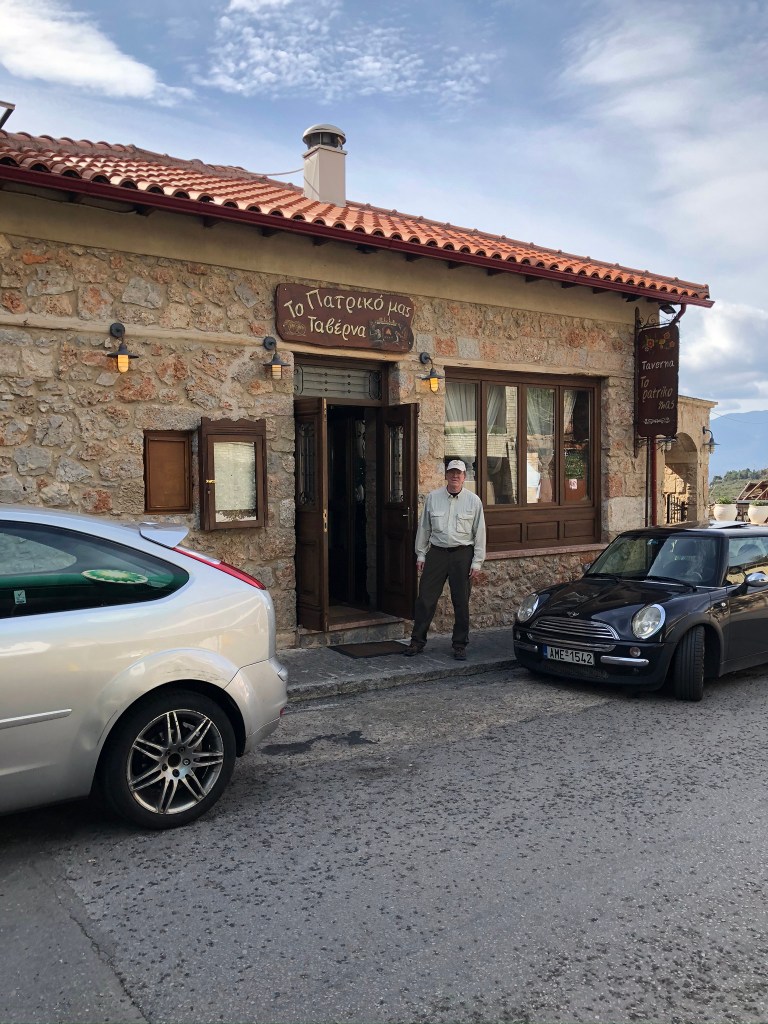
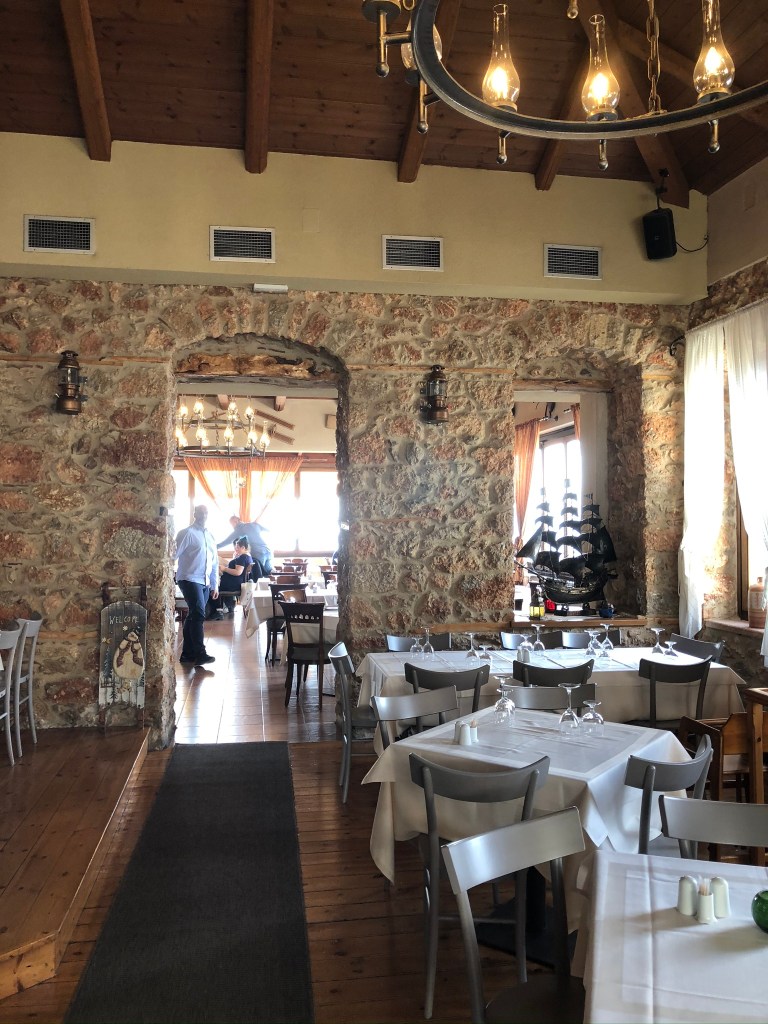
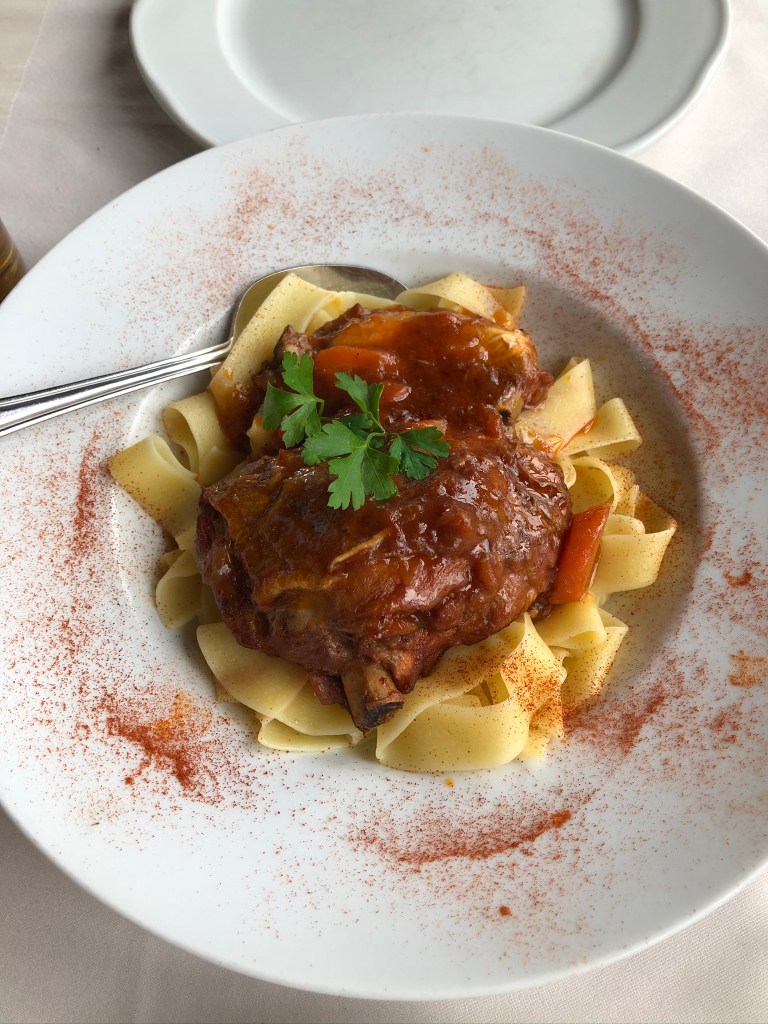
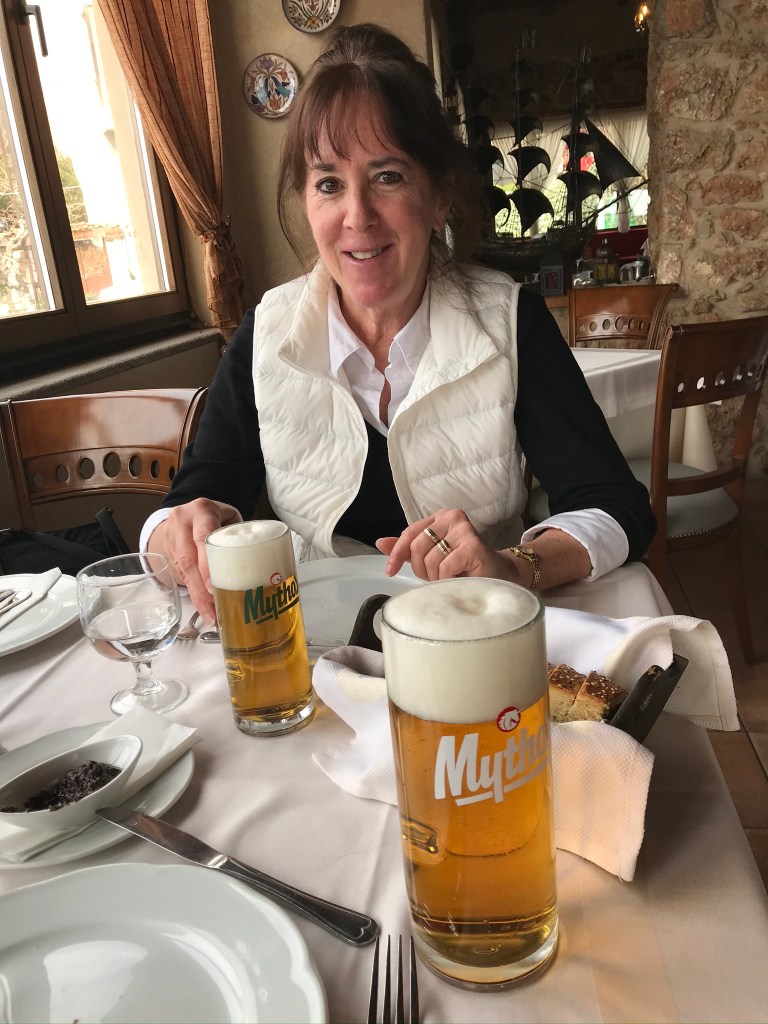
The tiny town of Delphi with its two roads running parallel, hanging on cliffs and connected by steep staircases, was the perfect spot for a lunch of salad (Greek with tomatoes and feta cheese) and traditional roasted rooster cooked in red wine called kokoras kokkinisto (not chicken, but who could really tell?)
 2020 Vision of Venice