Venice was in its prime from about 1100 – 1500 AD. We departed Venice this week, during a one week semester travel break, to head back in time. We’re talking 4000 years before Venice peaked out, and 4500 years before our lives as we know them today.
On Sunday we flew into Athens and holed up in a nice hotel near the base of the Acropolis. We will get to the Acropolis and ancient Athens in a few days still. Instead, on our first morning we loaded into a small shuttle with 10 other travelers and headed out of Athens, across the Corinthian Canal, and down into the Peloponnesus – the “island” that makes up most of southern Greece. Our first destination was Mycenae.
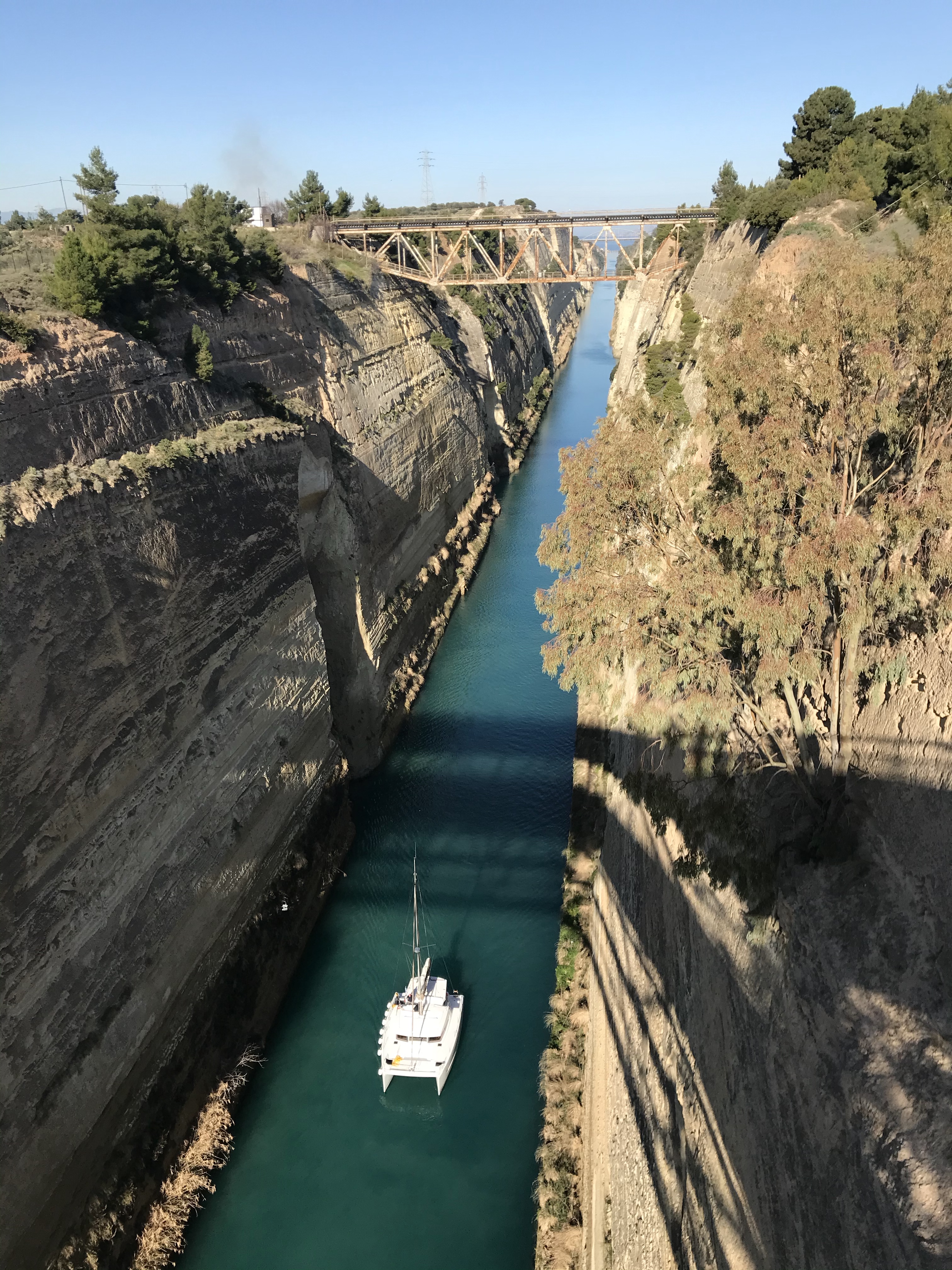
In the 1880s-90s engineering caught up with need. German engineers figured out how to cut a deep channel, about 100 meters deep, down through rock along the length of the run. The canal opened in 1893, where it was dedicated by King George II of Greece (cousin of Queen Victoria) and Emperor Franz Joseph of the Austrian Empire. The canal is deep and narrow, and boats with a draft of no more than about 8 meters can navigate through.
When I was 15 and on a long school trip through Europe, I actually went through the canal on board a tramp steamer from Venice to Athens. I remember waking up at 5 am to go out on deck and witness the passage. “Will the circle be unbroken?”
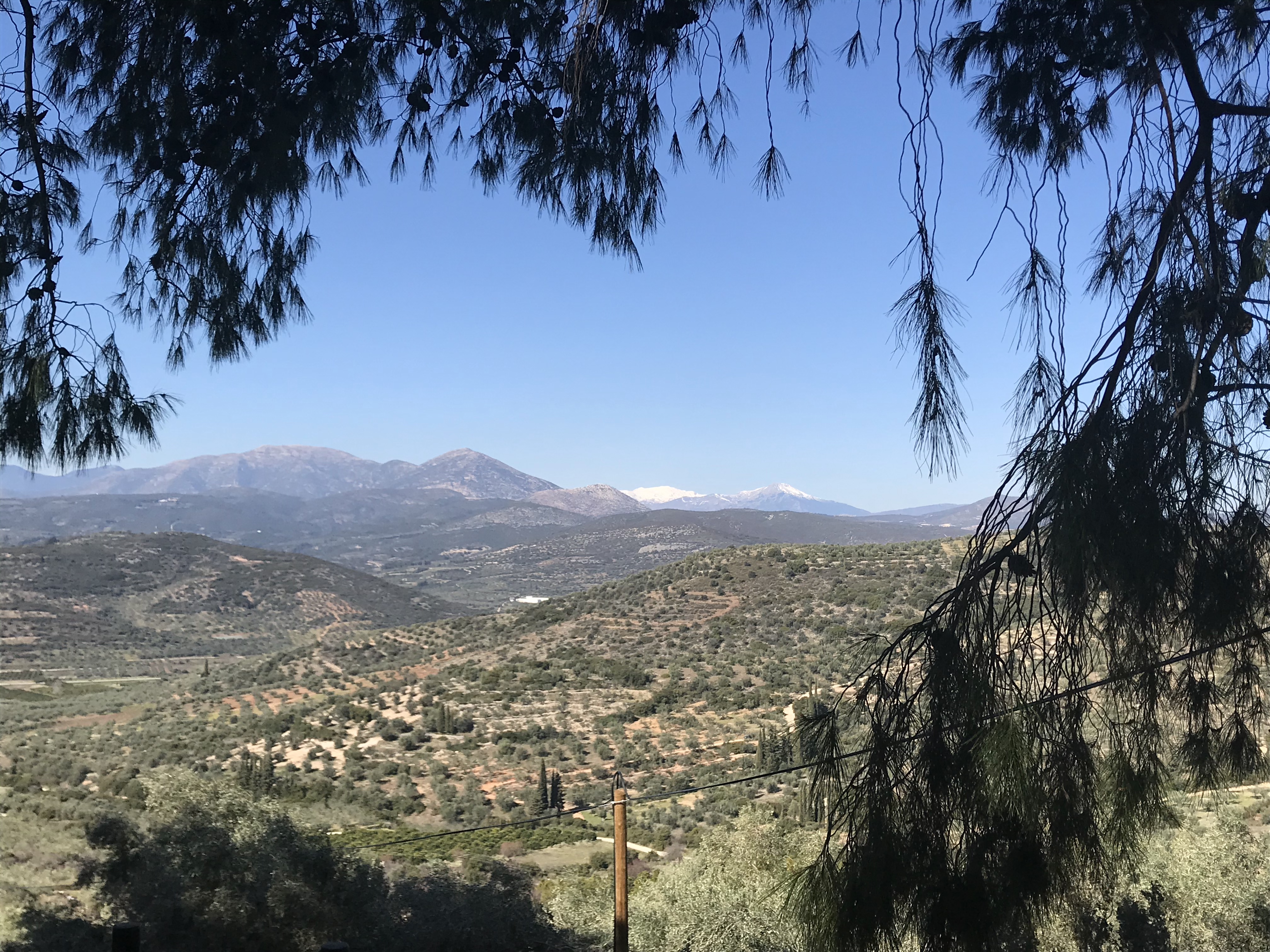
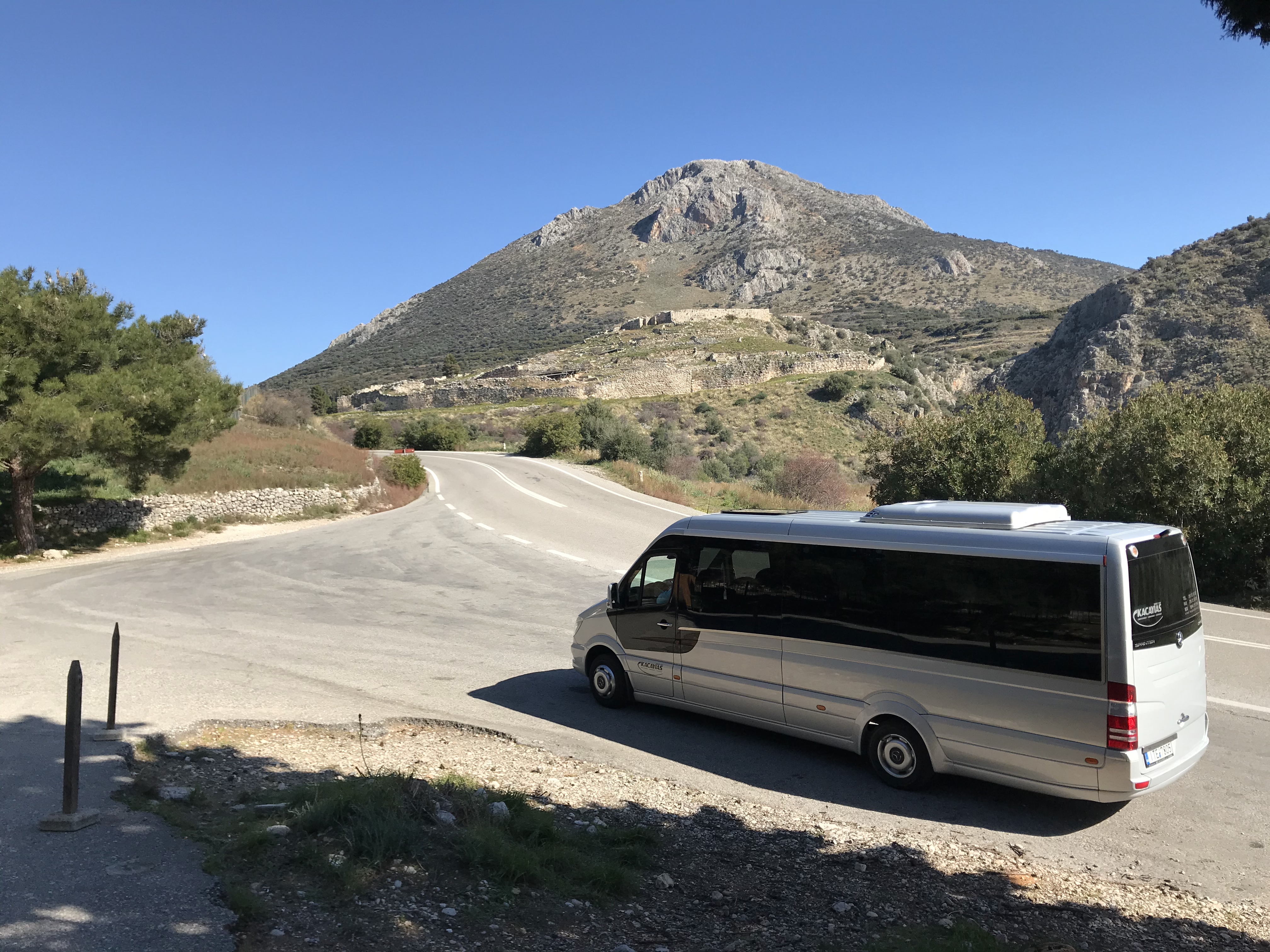
From there we crossed the Corinthian mountains, which used to be the northern-most border of ancient Sparta in its prime, down into the Argolida province and on to Mycenae. (Side note: Jason came from Argolida and his men were named the Argonauts). Mycenae was settled between 3500 and 2500 BC. By 2500 it was the most powerful society in the then-known world. The most famous king, of course, was Agamemnon, who took his army to Troy, sacked the city, and brought Helen back to his brother Menelaus who was king of Sparta.
Like many Greek towns, and paralleling the way towns were built and fortified for thousands of years, the center of the settlement was the walled fort at the top of a steep hill. On our way to Mycenae we passed many such forts, and they are each called “acropolis” which is Greek for “high city” (acro as in acrobat, polis meaning city). So although The Acropolis is associated with Athens, nearly every ancient town had an acropolis.
Archeological digs have unearthed much of the Mycenaean settlement. Near the very top of the acropolis are round burial circles, excavated to a depth of about 10-15 feet, in which were found the remains of 19 people. Clearly these were important people, to be buried in these small number of circles.
Agamemnon was gone from Mycenae for years while he took down Troy. The story goes that he took himself a mistress while there, and together they had another child. When he returned from Troy he brought the young woman and the baby with him, then asked his wife Clytemnestra (sister of Helen of Troy) if it would be ok for the new girl and his new baby to live with them all. (Yes, the 2 brothers were married to the 2 sisters). That night Clytemnestra killed Agamemnon by slicing him up. Some stories say he was killed by Aegisthus, who was Clytemnestra’s lover.
In one of the round burial circles was found the bones of an older man, a young girl, and those of a young baby. A gold death mask found in the tomb is said to be Agamemnon’s death mask, and is on display at the National Archeology Museum of Athens.
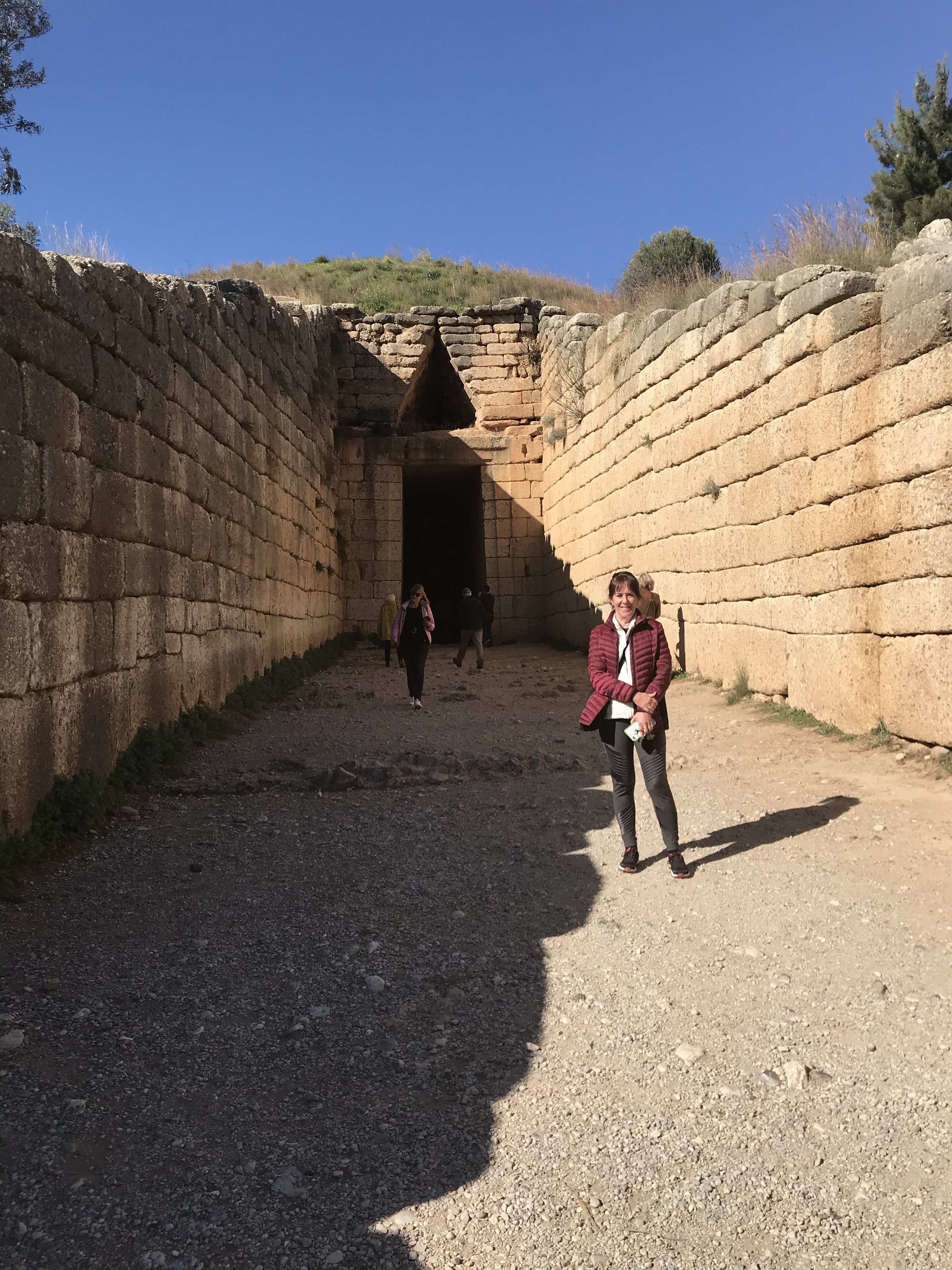
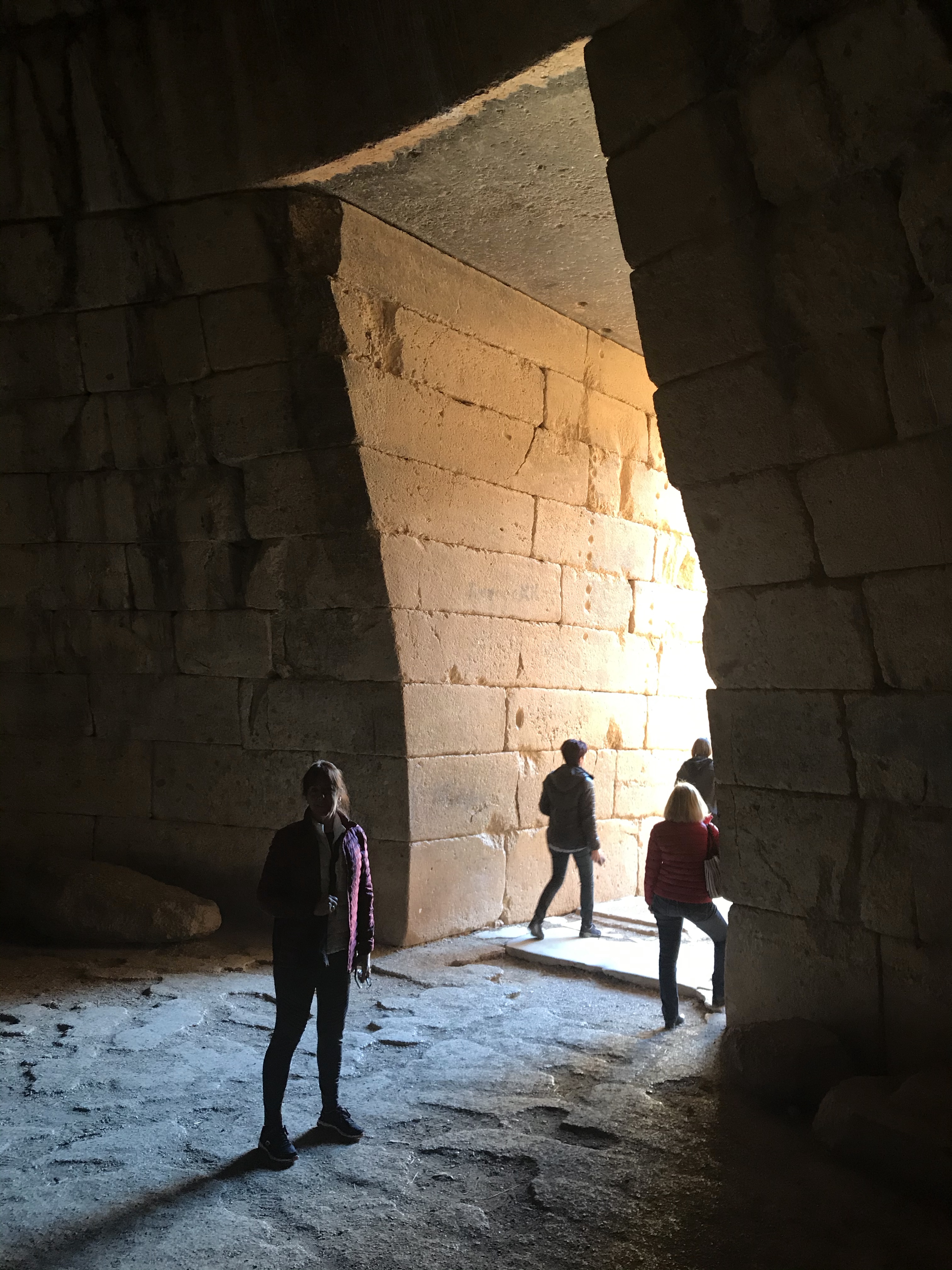
Nearby the acropolis of Mycenae is a massive burial mound, believed to be the tomb of some other great king. All of the ruins here and all across Greece have been mostly stripped and robbed of their treasures over the centuries, by Romans then by Christians in addition to rogue scavengers. It was only the excavations begun in the late 1800s that have recovered relics like the death mask. Today what remains are the ruins and the mythical stories that are passed down. Many of these started with Homer who is believed to have lived in the 9th century BC.
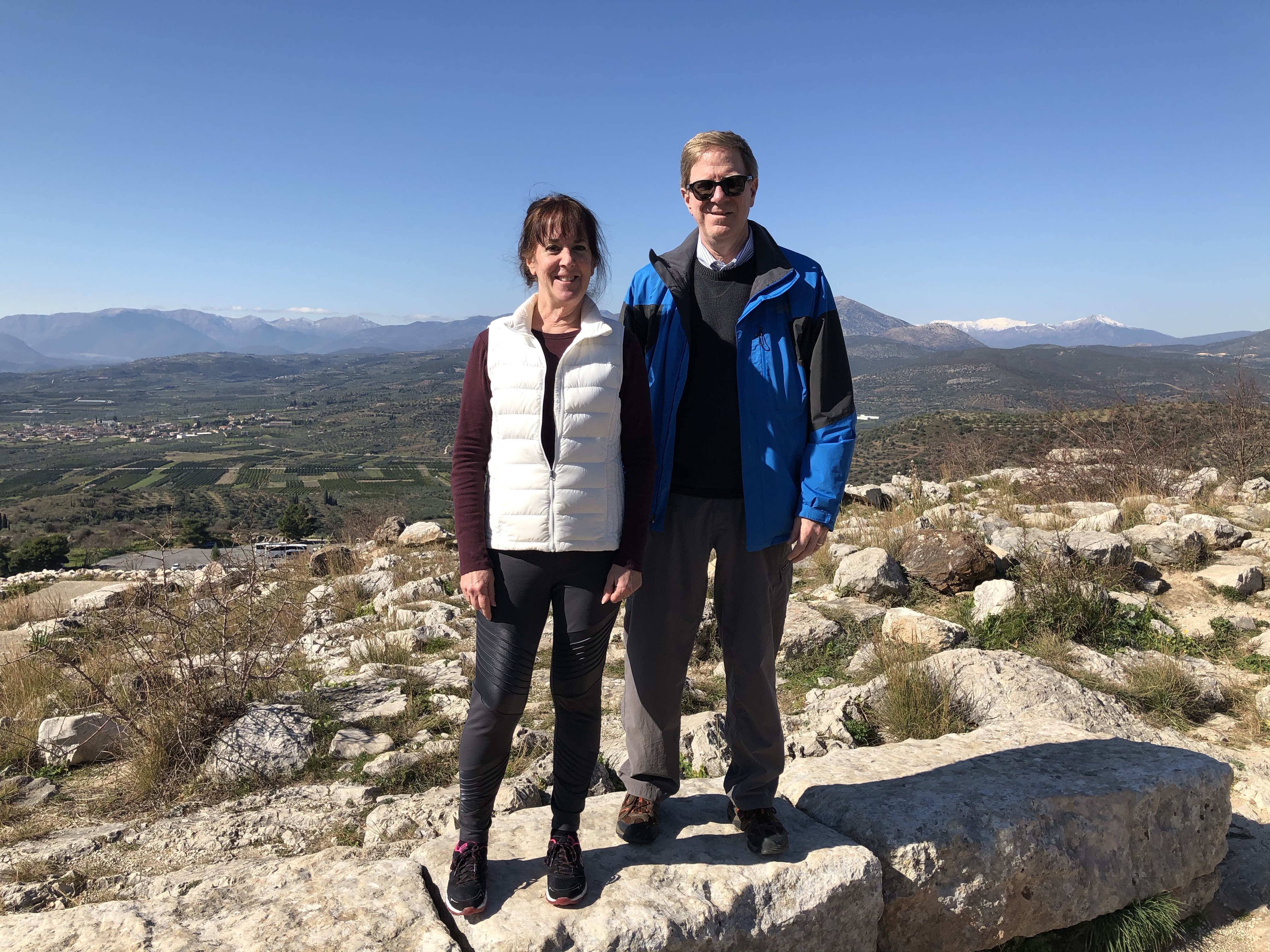
From the top of the acropolis you can see clear down the valley to the Aegean Sea. The Mycenaeans ruled both the land and the sea. They were there for hundreds of years, but for reasons unknown the culture declined. In the period between 1500 – 500 BC, this great city state of Ancient Greece descended into relative obscurity.
Much later on we hear once again about Mycenae. They were defeated in a mighty war by the rising Spartans, who also defeated the Athenians, and who then ruled over Greece. But this was during the Peloponnesian War in the 400s BC.
Then the Persians invaded Greece, and still later on first Philip of Macedonia and then his son Alexander became mega-conquerors and ruled the world.
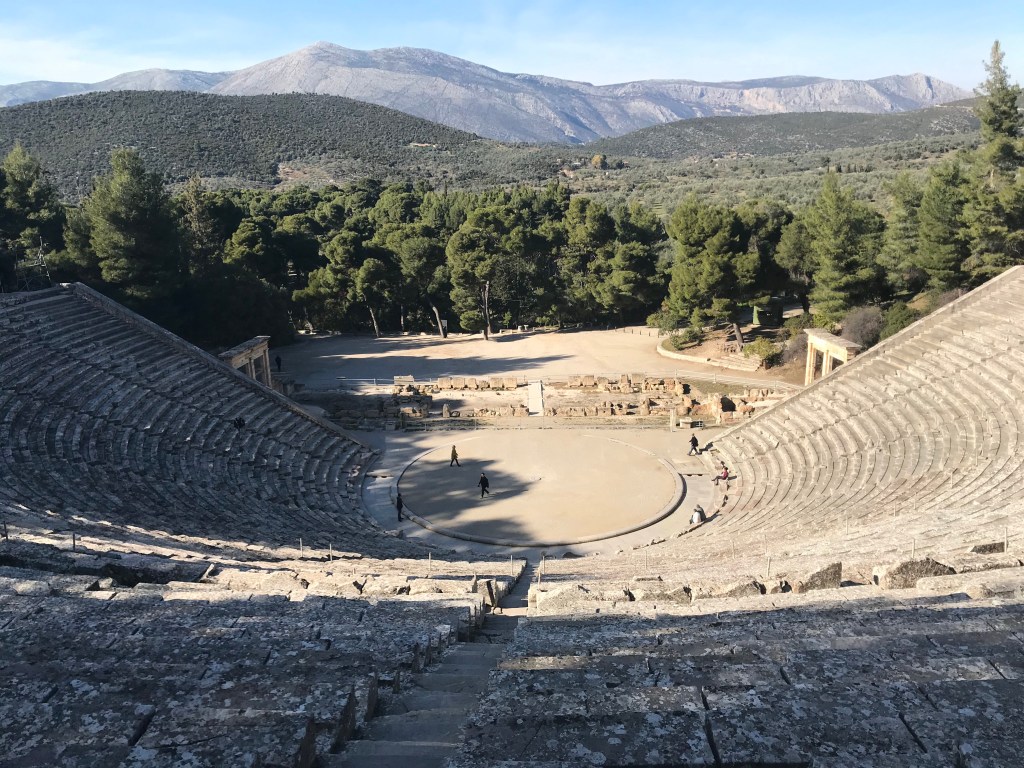
In the afternoon we continued south toward the sea, and stopped at Epidaurus. Popular from the 8th century BC until Roman times AD, this was a center for healing and theater. The natural theater, built into the side of the hill, can seat 8,000. Here only Greek tragedies and comedies were performed. The acoustics in the theater are said to be among the best in the world. On our quiet afternoon there, with no throngs of tourists about, one could stand in the center, speak in a regular voice, and be heard perfectly clearly at the very top row.
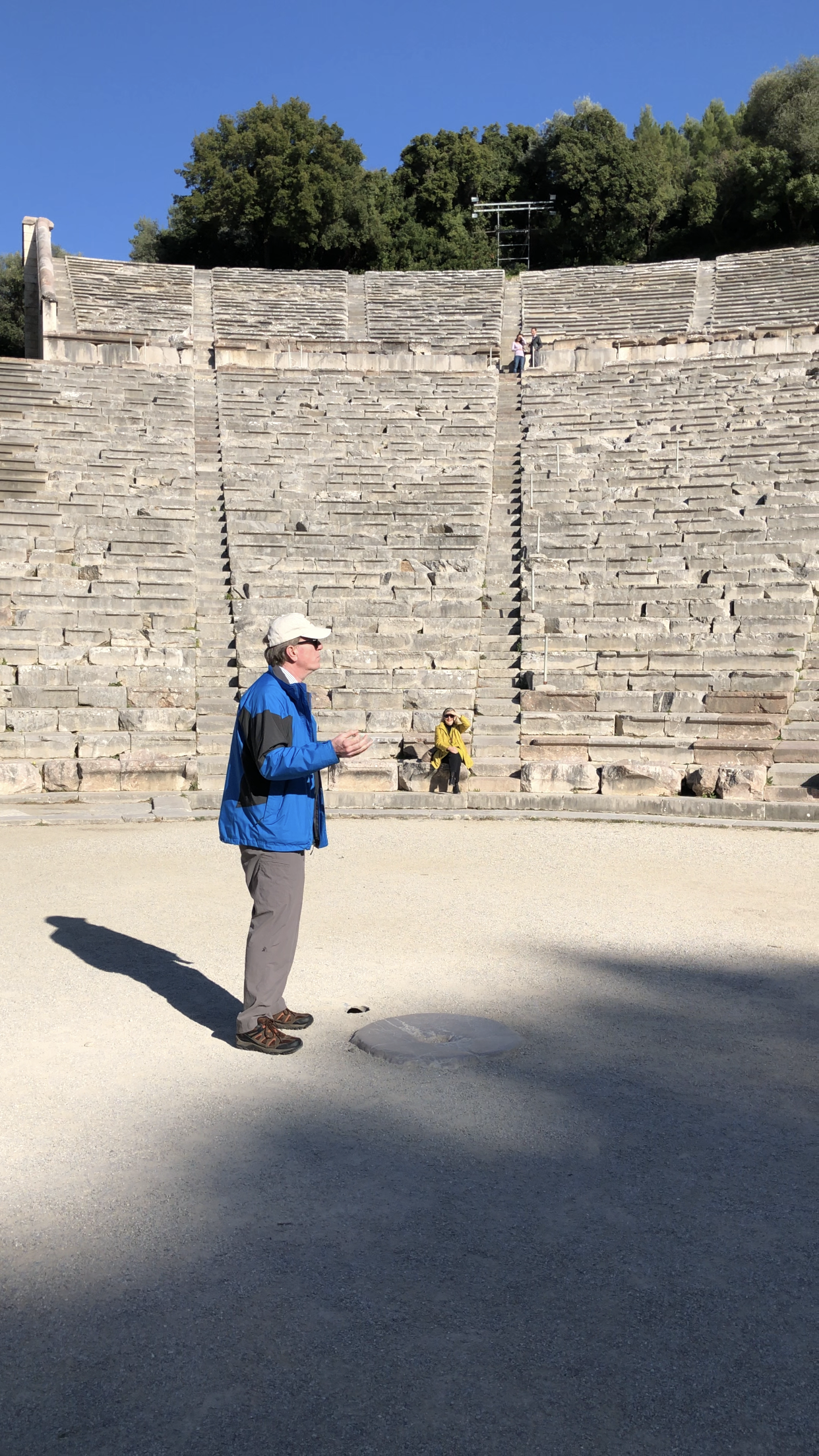
I broke the tradition by standing there and reciting a soliloquy from Hamlet. At least it maintained the tradition of tragedy.
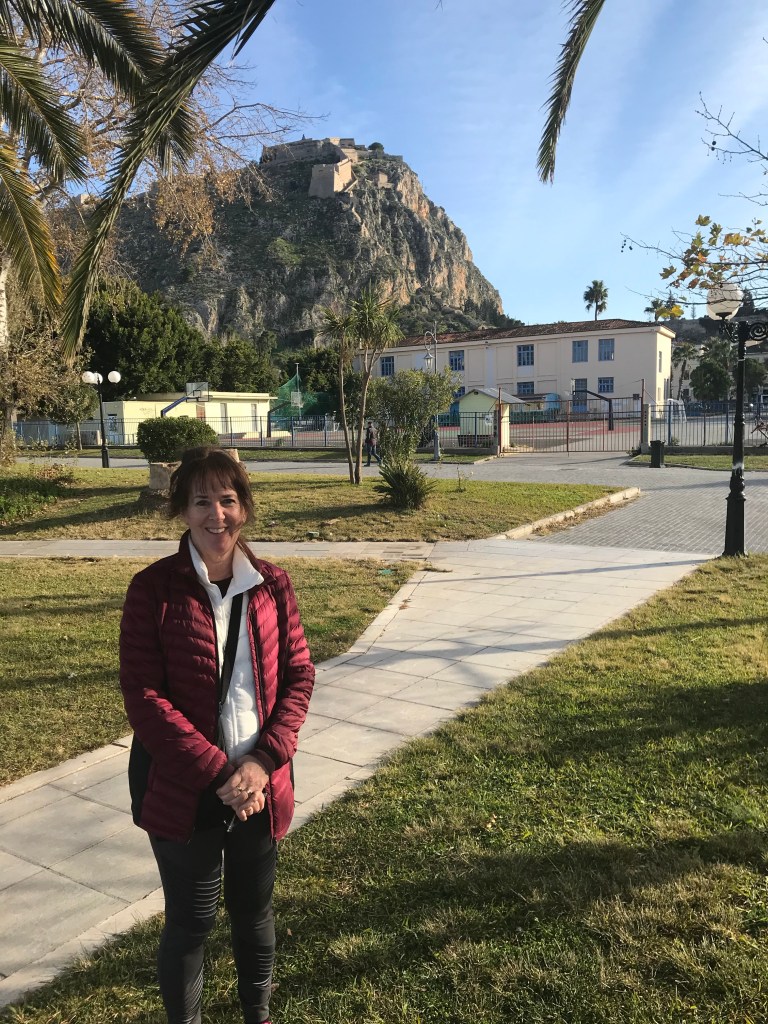
Finally, on to Nafplio, a port city on the Argolic Gulf opening out on to the Aegean Sea. A chance to wander around the old town and view the old medieval fort built on the overlooking cliff, and then a refreshing cappuccino sitting by the sea. Time to head for our hotel and a much deserved rest.
 2020 Vision of Venice