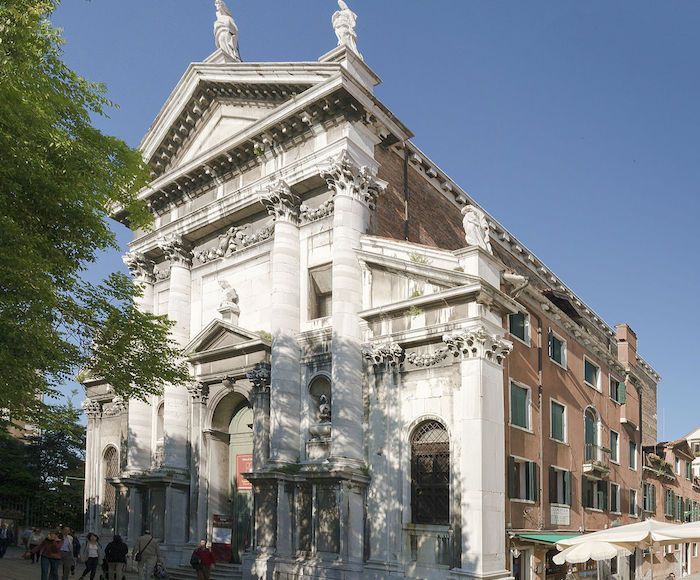
Just over the Ponte dell’Accademia, across the small campianello San Vidal on the San Marco side, is the Chiesa San Vidal (Church of St. Vitale). The church was founded in 1084 by Doge Vitale Faller, dedicated to his patron saint. More recent restorations in the 15th and 17th centuries make the church seem positively “modern.” Inside it sports one long nave, not a cross design, with side altars.
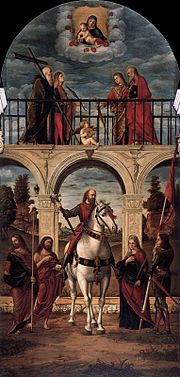
According to legend, San Vitale witnessed the execution of Saint Ursicinus of Ravenna. San Vitale was on the sidelines, encouraging him to die like a good martyr. Once Ursicinus was dead, Vitale took his body away for burial. In doing so, he caught the attention of the persecuting judge, Paulinus, who consequently ordered Vitale to be tortured and then buried alive. Vitale was thrown into a deep pit and covered with stones. This all happened about the time Nero was fiddling.
The Chiesa has a musical history. Dario Castello lived in the parish (around 1630), and served as head of the compagnia dei Musichi d’Instrumenti da fiato. Tradition has it that in the church was placed the sepulchre of the famous Venetian musician Baldassarre Galuppi (died in 1785). On the feast day of Saint Vidal, Bonaventure Furlanetto wrote and directed a three voiced vesper in which the famous double bass player Domenico Dragonetti had a solo (in 1799 he played a duet with Ludwig van Beethoven).
The musical tradition continues today. Now the Chiesa is home to Interpreti Veneziana, a troupe of musicians who stage concerts throughout the year. On Thursday this week we attended and listened to three pieces: 1) Vivaldi’s “Le Quattro Stagione” (The Four Seasons), 2) Vivaldi’s “Concerto for Violin, Strings and Harpsichord, and 3) Paganini’s “Variations of skill on a single string on the theme of Gioacchino Rossinni’s Mose for cello and strings.”
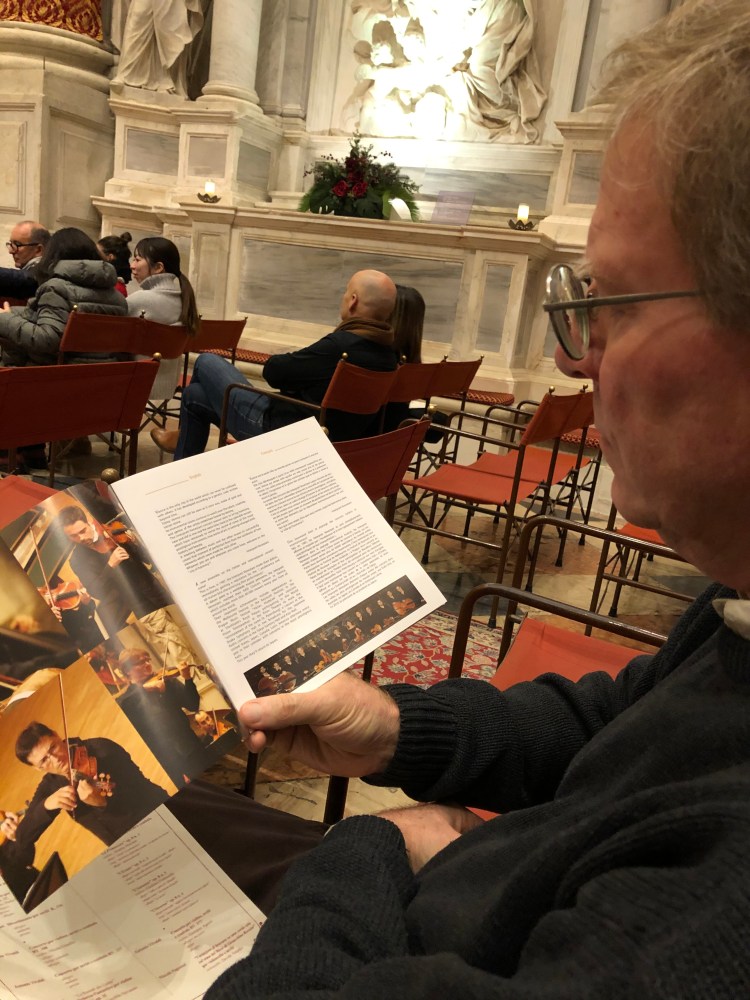
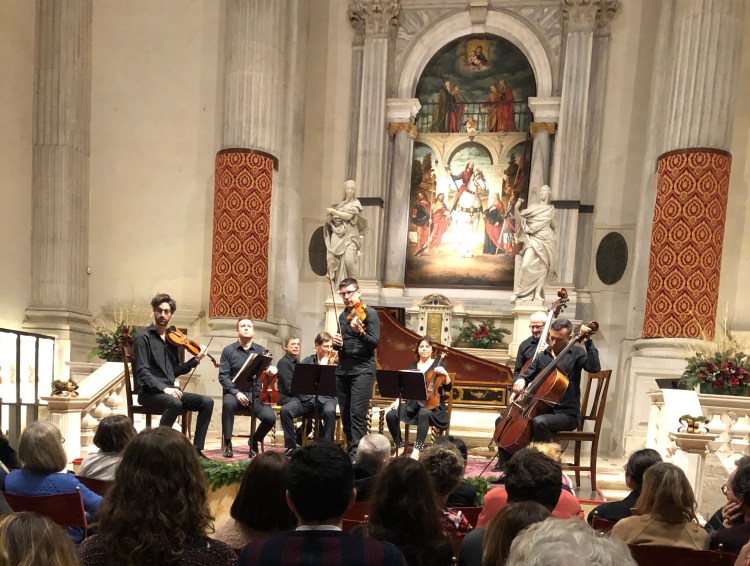
To listen to short segments of each, click the link below. The cello player was a hoot to watch!
 2020 Vision of Venice